
Albanian Unrest Escalates as Arson Hits Education Ministry Amid Political Crisis
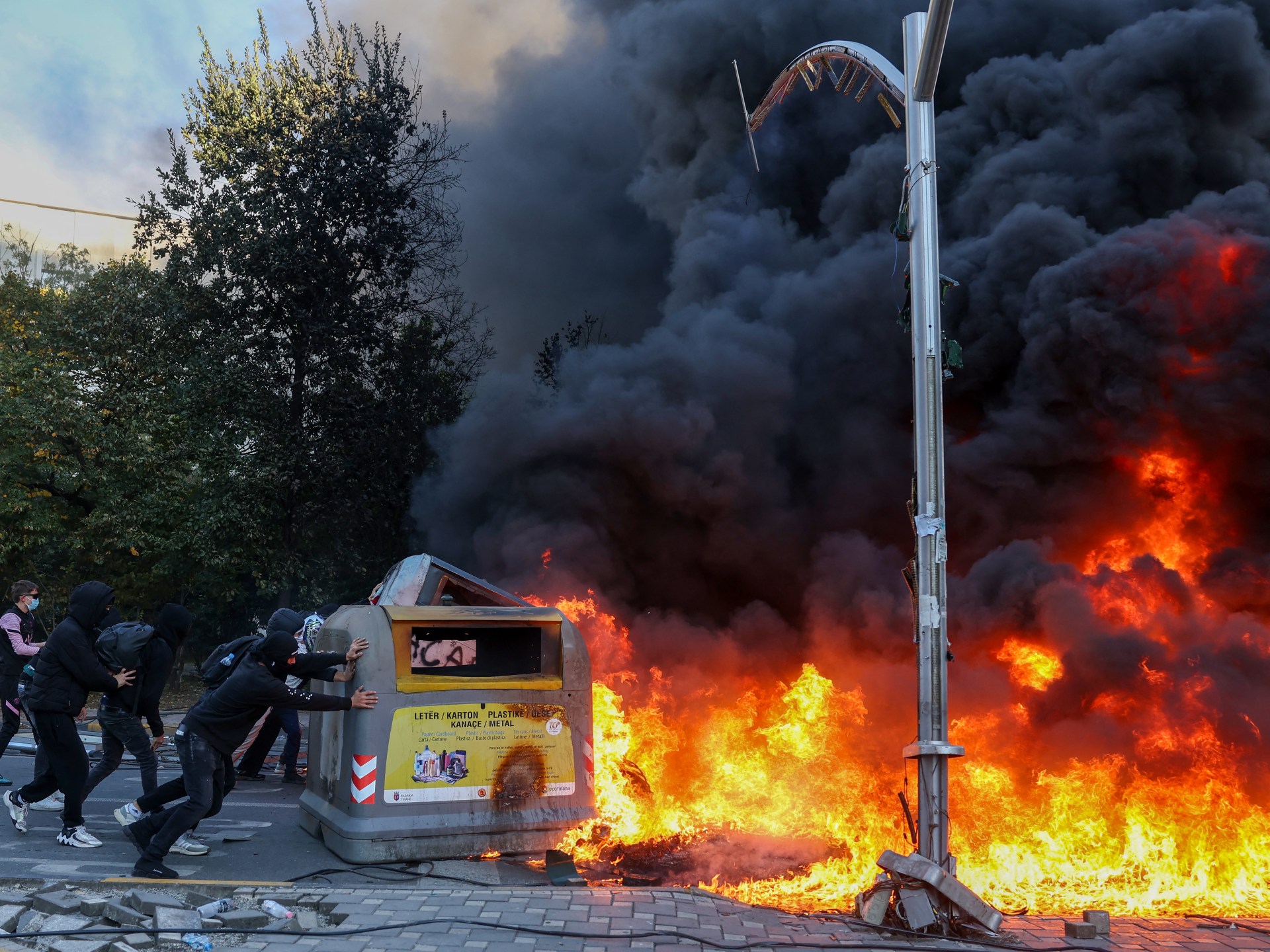
Violent protests in Albania entered their third day as demonstrators set fire to the Ministry of Education in Tirana, triggering police clashes and arresting at least 16 additional activists.
Geopolitical & Core Developments
Tensions across Albania reached a critical flashpoint as anti-government demonstrations entered their third consecutive day in the capital, Tirana. Clashes intensified outside government headquarters, culminating in a blaze at the Ministry of Education after demonstrators hurled flares, firecrackers, and petrol bombs at the state structure. Albanian riot police deployed water cannons and tear gas to disperse crowds, subsequently detaining at least 16 additional demonstrators. The unrest reflects deepening polarization driven by opposition coalitions alleging systematic state-level corruption, electoral irregularities, and economic mismanagement under Prime Minister Edi Rama's administration.
The unrest traces back to weeks of simmering political paralysis, exacerbated by judicial proceedings against key opposition figures and accusations that state institutions have been compromised. The physical assault on ministerial buildings represents an escalation from peaceful rallies to militant civil confrontation. State security services have tightened cordons around prime legislative and diplomatic corridors across Tirana, warning that further attacks on public infrastructure will be met with full statutory enforcement.
[Global Trade](/news/yemen-war-scenarios-houthi-red-sea-trade-impact) & Economic Ripples
While Albania represents a modest segment of gross global trade, prolonged instability in Tirana carries direct consequences for the Western Balkans' logistics and energy corridors. Albania acts as a vital transit hub along the Adriatic corridor, housing crucial infrastructure including pipeline connections and regional maritime transit hubs like the Port of Durres. Heightened civil strife threatens to disrupt domestic customs operations, regional freight haulage, and critical trans-Balkan supply chains linking southeastern European markets with northern counterparts.
Furthermore, sovereign debt markets monitor domestic unrest closely. Protracted volatility risks expanding Albania’s sovereign bond spreads, inflating borrowing costs and souring investor sentiment for ongoing infrastructure development projects funded by international concessional lenders. Foreign direct investment across Albania's emerging renewable energy and extractive mining sectors could encounter delays as corporate risk committees reassess near-term regulatory and operating environments.
Related Intelligence: Pakistan and Russia Explore Expanded Bilateral Trade and Economic Ties
International Reactions & Diplomatic Stances
Diplomatic missions in Tirana, including the European Union Delegation and the United States Embassy, issued joint calls urging restraint and non-violence. European officials underscored that while the right to peaceful assembly remains a core democratic pillar, attacks against public institutions and police forces undermine democratic legitimacy and Albania's institutional reform agenda. Brussels monitors the situation attentively, as adherence to the rule of law and institutional stability are primary benchmarks in Albania's European Union accession negotiations.
Human rights observers and international monitoring groups have voiced concern over the proportional use of force by domestic law enforcement, alongside calls for transparent legal processing of detained protesters. In contrast, regional analysts suggest neighboring capitals are watching closely, anxious that violent urban unrest could trigger cross-border political agitation in volatile pockets of the Western Balkans.
Strategic Outlook & Future Scenarios
The trajectory of the crisis hinges largely on whether the governing Socialist Party opens a formal institutional dialogue with parliamentary and extra-parliamentary opposition factions. If the executive branch maintains an uncompromising stance, Tirana will likely experience recurring waves of urban disruption, potential transportation wildcat strikes, and systemic strain on urban commerce.
In a secondary scenario, increased mediation by European Union envoys may compel the government to concede targeted electoral or legislative reforms to placate international observers before scheduled regional diplomatic summits. Failure to arrest civil volatility will almost certainly decelerate Albania's accession timeline, weakening foreign direct investment inflows and keeping political risk premiums elevated across Southeastern European asset markets.
Join Our Official WhatsApp Channel
Receive live commodity alerts, policy changes, and commercial intelligence directly on WhatsApp.