
Achakzai Rejects PM House Talks, Demands Unconditional Political Engagement
Opposition leader Mahmood Khan Achakzai rejects talks at official government venues, deepening the political impasse and heightening economic uncertainty across Pakistan.
The Core Development
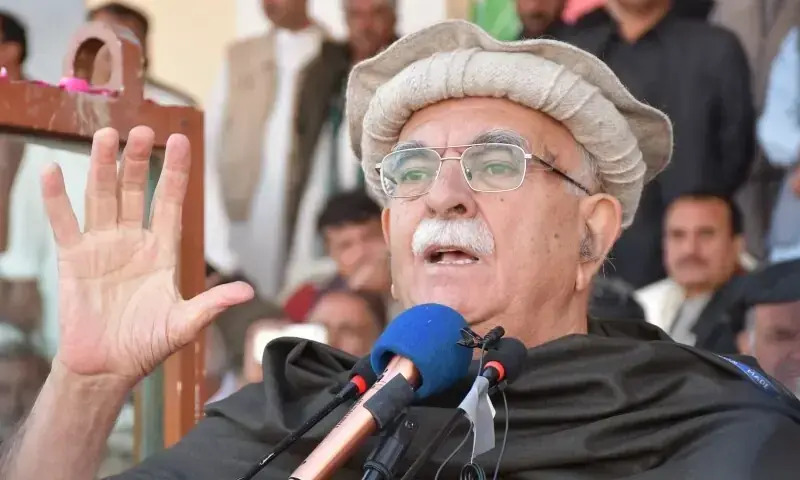
In a hardline political stance that underscores the deep legislative and constitutional polarization in Pakistan, Leader of the Opposition in the National Assembly Mahmood Khan Achakzai has categorically refused to engage in formal negotiations at state-controlled venues. Speaking to the media at Parliament House following a high-stakes meeting of opposition leaders on Thursday, Achakzai addressed recent overtures extended by Prime Minister Shehbaz Sharif's administration. The reconciliation push, spearheaded by Prime Adviser Rana Sanaullah, had formally invited Achakzai and Pakistan Tehreek-e-Insaf (PTI) Chairperson Barrister Gohar Ali Khan for a roundtable discussion with the premier to ease mounting political tensions.
While Achakzai did not completely foreclose the possibility of dialogue with the executive branch, he drew a firm, unyielding red line regarding the venue and legitimacy of the administration. Declaring the incumbent prime minister illegitimate, Achakzai asserted that entering the Prime Minister House, the Prime Minister Office, or the National Assembly Speaker chamber would compromise the integrity of the opposition mandate. Instead, employing vivid populist rhetoric, he stated his willingness to negotiate anywhere in the country, even sitting under a tree or visiting the private residence of any political adversary, provided the talks occur outside official state apparatus symbols.
Commercial & Economic Implications
For the domestic business community, foreign investors, and financial markets, the hardening stance of opposition leadership signals a continuation of political volatility that directly impedes economic recovery. Pakistan's financial ecosystem is currently navigating a fragile macroeconomic stabilization program negotiated with international lenders. Sustained political friction and the absence of a broad-based national consensus invariably delay critical structural reforms, including privatization initiatives, tax administration overhauls, and energy sector adjustments.
Wholesale distribution networks, retail trade sectors, and supply chain logistics remain highly sensitive to domestic stability. Uncertainty surrounding government longevity and policy continuity dampens private sector capital expenditure. When legislative dialogue breaks down into institutional gridlock, the resulting market apprehension translates into sluggish consumer demand, inflationary pressures, and a constrained foreign direct investment inflow. Commercial enterprises operating within Pakistan's urban hubs require policy predictability to forecast inventory, manage import quotas, and secure working capital lines.
Related Intelligence: Tennessee Execution Failure Sparks International Legal and Ethical Scrutiny
Stakeholder Perspectives & Market Reactions
Industry bodies, corporate leaders, and trade associations have expressed mounting frustration over the incessant political maneuvering between the ruling coalition and opposition factions. Chambers of commerce across Karachi, Lahore, and Islamabad have repeatedly petitioned political leadership to prioritize economic stabilization over partisan confrontations. Business executives argue that protracted disputes over electoral legitimacy and procedural protocol distract policymakers from addressing pressing structural challenges, such as high utility tariffs, tax anomalies, and export competitiveness.
Legal and constitutional experts remain divided on the viability of Achakzai's conditional dialogue framework. While some analysts view his refusal to visit official offices as a legitimate tactical posture to maintain political autonomy, others warn that circumventing established state institutions sets a concerning precedent for parliamentary democracy. Official statements from the ruling coalition maintain that the door for unconditional dialogue remains open within the bounds of the Constitution, yet progress stalls as procedural disagreements overshadow substantive policy debates.
Forward Outlook & Key Watchpoints
As Pakistan navigates a critical fiscal juncture, the immediate trajectory of government-opposition relations will serve as a primary indicator for market sentiment. Key watchpoints for institutional investors and business analysts include potential back-channel negotiations, legislative committee participation, and any shifts in the opposition strategy regarding parliamentary oversight. Unless a functional framework for bipartisan dialogue is established outside traditional flashpoints, the ongoing standoff threatens to obstruct vital legislative business, leaving key economic legislation vulnerable to prolonged delays and intensifying market anxiety.
Join Our Official WhatsApp Channel
Receive live commodity alerts, policy changes, and commercial intelligence directly on WhatsApp.