
WFP Cuts Gaza Food Aid by Half Million Amid Global Shortfalls
The World Food Programme is slashing monthly assistance to 500,000 Palestinians in Gaza due to funding deficits, halving support amid ongoing airstrikes and severe regional instability.
The Core Development
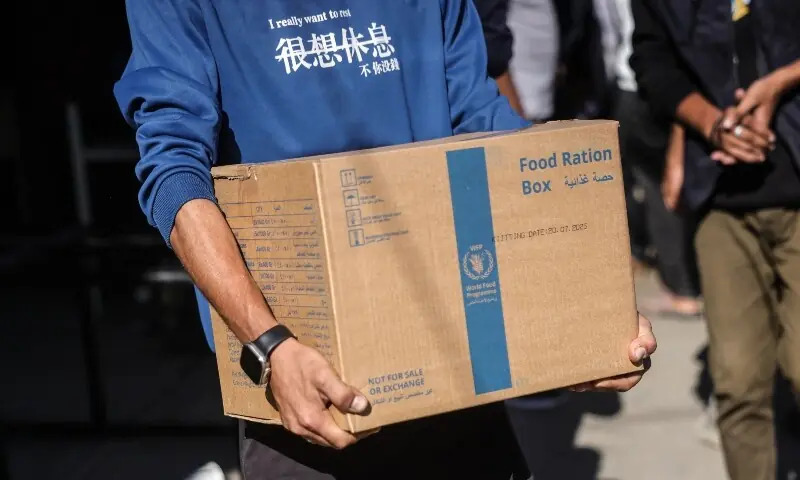
The United Nations World Food Programme (WFP) announced on Monday that it is being forced to terminate monthly food and cash assistance to approximately 500,000 residents across the Gaza Strip. The drastic reduction stems directly from an acute deficit in international donor funding, occurring precisely as the enclave faces ongoing conflict, structural devastation, and widespread food insecurity.
Following these structural cutbacks, approximately 1.1 million Palestinians—roughly half of the enclave's population—will remain on the agency's registers to receive either physical food packages or direct cash vouchers. However, the WFP underscored that the quantum of support delivered to these remaining beneficiaries will be substantially curtailed. Shaun Hughes, the WFP Country Director, confirmed the retrenchment from the agency's operational hub in East Jerusalem, stating that operational conditions on the ground remain extraordinarily volatile. Despite past humanitarian efforts having mitigated famine thresholds, relentless airstrikes, repetitive population displacements, and the near-total destruction of civilian infrastructure have prevented any sustainable local economic recovery. The agency reiterated that conditions have far from normalized to justify reductions in external food security cushions.
Commercial & Economic Implications
While the direct humanitarian tragedy unfolds in the Levant, the financial and logistical fallout ripples through global multilateral budgets and regional supply chains, carrying tangible implications for peripheral emerging markets such as Pakistan.
International humanitarian agencies rely heavily on global procurement mechanisms, purchasing wheat, pulses, edible oils, and packaged nutrition from regional commodity hubs. Sharp curtailments in institutional funding indicate a broader contraction in donor liquidity across Western capitals, which are increasingly reallocating budgetary resources inward or toward geopolitical defense priorities. For commercial operators and commodity traders in Pakistan, this shifting donor landscape alters institutional procurement volumes. Pakistan's agricultural trade, particularly its commercial export of non-basmati rice and processed grains to multilateral organizations, faces fluctuating tender allocations.
Furthermore, heightened destabilization across Middle Eastern shipping lanes and corridors continues to levy high risk premiums on regional logistics. Importers and wholesale distributors in Karachi face elevated marine insurance rates, erratic bunker fuel surcharges, and prolonged transit schedules for containerized freight traversing adjacent maritime routes. These recurring operational friction points exacerbate domestic cost-push inflation across essential food baskets and imported ingredients.
Related Intelligence: Athens Property Influx Strains Local Economy Amid Middle East Tensions
Stakeholder Perspectives & Market Reactions
Humanitarian bodies and international relief organizations have reacted with alarm, warning that dropping half a million individuals from baseline feeding programs will inevitably trigger severe nutritional deterioration and accelerate secondary health crises. Civil society groups emphasize that relying on sporadic private commercial cargo cannot replace systematic institutional feeding when purchasing power within Gaza has been entirely eliminated.
From a regional market perspective, trade associations and commodity analysts note that donor fatigue is becoming institutionalized. In Pakistan, cross-border commercial monitors point out that non-governmental organizations and philanthropic networks are experiencing mounting domestic demand, which restricts their capacity to mobilize international capital. Market analysts emphasize that when global agencies retreat due to fiscal exhaustion, the burden shifts toward fragmented bilateral relief initiatives that often lack the logistical scale to stabilize prices or secure regular bulk supply lines.
Forward Outlook & Key Watchpoints
The coming fiscal quarters will serve as a critical test for international humanitarian financing frameworks. The primary watchpoint centers on whether the WFP can convene an emergency pledging conference to mobilize bridge financing from non-traditional sovereign wealth funds in the Gulf Cooperation Council (GCC) to reverse these cuts.
Concurrently, market observers must track global agricultural commodity benchmarks across the Food and Agriculture Organization (FAO) price indices. Any sudden upward volatility in global grain and oilseed values will further diminish the purchasing power of the WFP's depleted cash reserves, threatening additional service suspensions. For regional stakeholders and logistics operators, monitoring port throughput, freight insurance benchmarks, and state-level bilateral aid pledges will remain essential to assessing both humanitarian stability and regional commodity flows.
Join Our Official WhatsApp Channel
Receive live commodity alerts, policy changes, and commercial intelligence directly on WhatsApp.