
US Vice President Vance Breaks With Trump Over Netanyahu Endorsement
US Vice President JD Vance has declared neutrality regarding Israeli domestic politics, breaking from Donald Trump's direct endorsement of Prime Minister Benjamin Netanyahu ahead of impending electoral cycles.
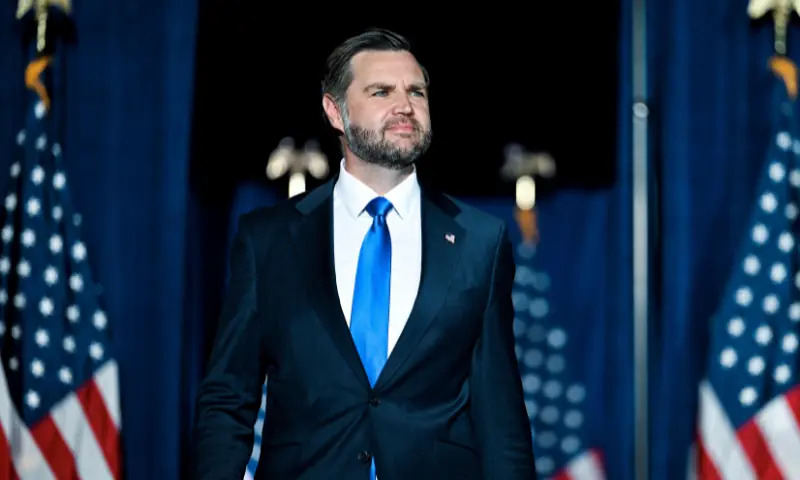
The Core Development In a notable departure from the political posture of former President Donald Trump, US Vice President JD Vance publicly stated that he will refrain from endorsing Israeli Prime Minister Benjamin Netanyahu or interfering in Israel's domestic electoral process. Speaking in an interview with journalist Mark Halperin, Vance underscored that his endorsement portfolio remains strictly domestic, directing his political capital toward the upcoming [United States](/news/us-recalibrates-middle-east-strategy-beyond-oil-security-paradigm) midterm elections.
"I'm not anti-endorsing him. I'm not pro-endorsing him. I'm not getting involved in Israeli elections," Vance stated during the exchange. "I endorse American candidates and that's where I'm focused on is the midterms." This measured distance contrasts sharply with Trump, who has frequently demonstrated vocal, transactional public alignments with Netanyahu. The clear policy bifurcation within Washington's conservative leadership highlights an evolving internal debate regarding foreign interventionism, overseas commitments, and the strategic calculus of US engagement in Middle Eastern political affairs.
Commercial & Economic Implications For global frontier markets, including Pakistan, political [friction and](/news/gaza-strikes-regional-friction-maritime-risk) shifting geopolitical doctrines in Washington have direct economic transmission channels. Middle Eastern political stability heavily influences international crude oil pricing, maritime transit security, and global shipping insurance premiums. When high-ranking US executives display divergent foreign policy stances, energy markets face heightened volatility as traders re-evaluate risk premiums on Brent crude.
For Pakistani commercial enterprises, wholesale distributors, and retail importers, fluctuating geopolitical postures translate directly into landed cost unpredictability. Any diplomatic realignment that alters regional security dynamics in the Middle East impacts petroleum pricing in Pakistan, which subsequently drives domestic freight rates, agricultural input costs, and consumer goods inflation. Wholesale trade hubs in Karachi, Lahore, and Rawalpindi remain exceptionally sensitive to imported inflationary pressure, where shifts in the energy basket quickly compress retail margins and weaken household purchasing power.
Related Intelligence: Lethal Strikes in Gaza Heighten Regional Friction and Maritime Risk
Stakeholder Perspectives & Market Reactions Diplomatic analysts and foreign trade strategists have interpreted Vance's comments as an indicator of an "America First" retrenchment that prioritizes domestic economic objectives over unconditional foreign political alignments. Legal scholars and policy observers note that maintaining an arm's-length approach to foreign leadership contests aligns with standard diplomatic protocols, despite recent years of unconventional political interventions.
Within South Asian financial circles, institutional investors and currency traders are closely monitoring how emerging factional divisions within US leadership could recalibrate Washington's engagement with multilateral lenders and regional trade corridors. Commercial bodies in Pakistan, including the Federation of Pakistan Chambers of Commerce and Industry (FPCCI), frequently highlight that geopolitical friction across the Middle East disrupts supply chain logistics, alters remitted capital flows from the Gulf Cooperation Council (GCC), and creates secondary shocks across emerging equity markets.
Forward Outlook & Key Watchpoints In the coming months, market participants will monitor whether Vance's neutral stance signals a broader realignment within conservative US foreign policy circles or remains an isolated rhetorical divergence. Critical watchpoints include legislative debates on foreign military aid in Washington, ongoing diplomatic realignments in the Middle East, and potential volatility in international energy benchmarks.
For Pakistan's policy makers and commercial sectors, managing imported inflation requires continued vigilance over international crude contracts and foreign exchange reserves. As political narratives shift ahead of US midterms and international elections, businesses must hedge against unexpected supply chain realignments, ensuring resilient inventory management to counteract secondary trade disruptions.
Join Our Official WhatsApp Channel
Receive live commodity alerts, policy changes, and commercial intelligence directly on WhatsApp.