
US-Led Coalition Concludes Decade-Long Iraq Mission Amid Regional Shifts
The US-led coalition concludes its decade-long military mission in Iraq, shifting bilateral security dynamics and regional stability parameters.
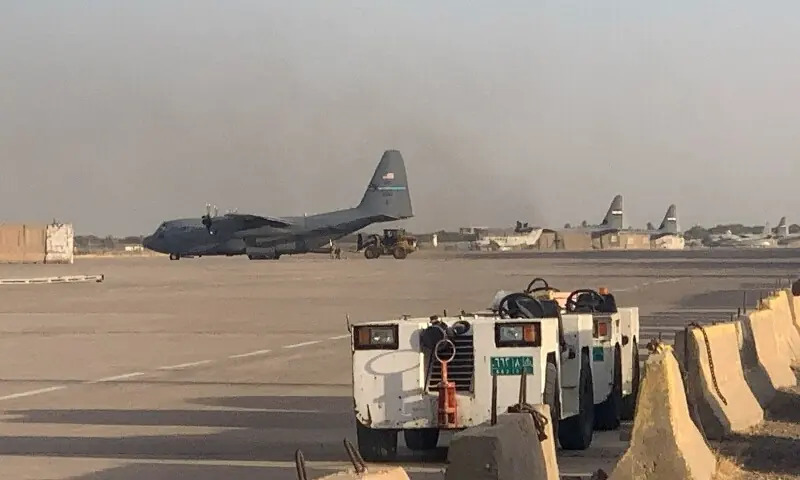
The Core Development
After more than a decade of military engagement, the US-led coalition has formally ended its mission in Iraq. Deployed initially in 2014 to counter the rapid territorial expansion of the Islamic State (IS) group—which had seized vast swathes of Iraq and Syria and committed widespread atrocities—the coalition played a decisive role in the militant group's territorial defeat in Iraq in 2017 and in Syria in 2019. Despite these victories, coalition forces maintained an enduring presence to suppress insurgent remnants.
In 2024, the governments in Baghdad and Washington reached a formal agreement to wind down the coalition's mandate. Over subsequent months, troops systematically withdrew from military installations across the country, consolidating their footprint within the autonomous northern Kurdistan region. The final withdrawal phase is scheduled for completion on Wednesday, marking the close of a defining chapter in modern Middle Eastern security architecture. The Iraqi government has expressed confidence that the departure removes a primary pretext utilized by powerful domestic armed factions to justify maintaining independent arsenals outside state control.
Commercial & Economic Implications
For trading economies across South Asia, including Pakistan, shifts in Middle Eastern security carry distinct macroeconomic resonance. While the drawdown does not immediately disrupt bilateral trade volumes between Pakistan and Iraq, the broader geopolitical realignment directly influences global energy markets. Stability in the Gulf and Mesopotamian regions remains a cornerstone for predictable crude oil pricing, which dictates Pakistan's import bill, foreign exchange reserves, and domestic inflationary pressures.
Furthermore, the transition of security responsibilities to Iraqi state forces holds implications for regional reconstruction and infrastructure investments. As Baghdad seeks to normalize domestic governance and integrate armed factions into the formal economy, opportunities for international trade expansion, engineering exports, and commercial cooperation may emerge. Conversely, any security vacuums resulting from the coalition's departure could introduce volatility into maritime and overland transit corridors, directly impacting wholesale distribution costs and consumer price stability in import-dependent markets.
Related Intelligence: Catastrophic Floods in Nepal Trigger Supply Chain and Infrastructure Alarms
Stakeholder Perspectives & Market Reactions
Regional stakeholders, including domestic business councils and trade associations, are monitoring the transition closely. Commercial chambers emphasize that sustained peace and institutional strengthening in Iraq are vital for fostering long-term bilateral trade partnerships. Financial analysts note that international markets have largely priced in the military drawdown, viewing it as a managed transition rather than an abrupt destabilizing shock.
Official statements from Washington and Baghdad underscore a mutual commitment to bilateral security cooperation through non-coalition frameworks, focusing on intelligence sharing and defense capability building. Legal and policy experts suggest that the success of the post-coalition era hinges on the Iraqi state's ability to monopolize military power and enforce regulatory stability across all provinces.
Forward Outlook & Key Watchpoints
As the coalition completes its final withdrawal from the Kurdistan region, international observers will focus on Iraq's internal security apparatus and its capacity to deter insurgent resurgence independently. Key watchpoints include the integration of paramilitary groups, the security of critical energy infrastructure, and the trajectory of foreign direct investment in non-oil sectors.
For businesses operating across the broader Middle East and South Asia corridor, maintaining strategic agility remains paramount. Policymakers and commercial enterprises must evaluate evolving geopolitical risks, supply chain vulnerabilities, and currency fluctuations as Iraq navigates its post-coalition political and economic landscape.
Join Our Official WhatsApp Channel
Receive live commodity alerts, policy changes, and commercial intelligence directly on WhatsApp.