
US Justice Department Defends Media Ban Ahead of High-Stakes Court Hearing
The US Justice Department defended its media restrictions in court filings, citing national security concerns and contested reporting, ahead of a pivotal legal showdown with major news organizations.
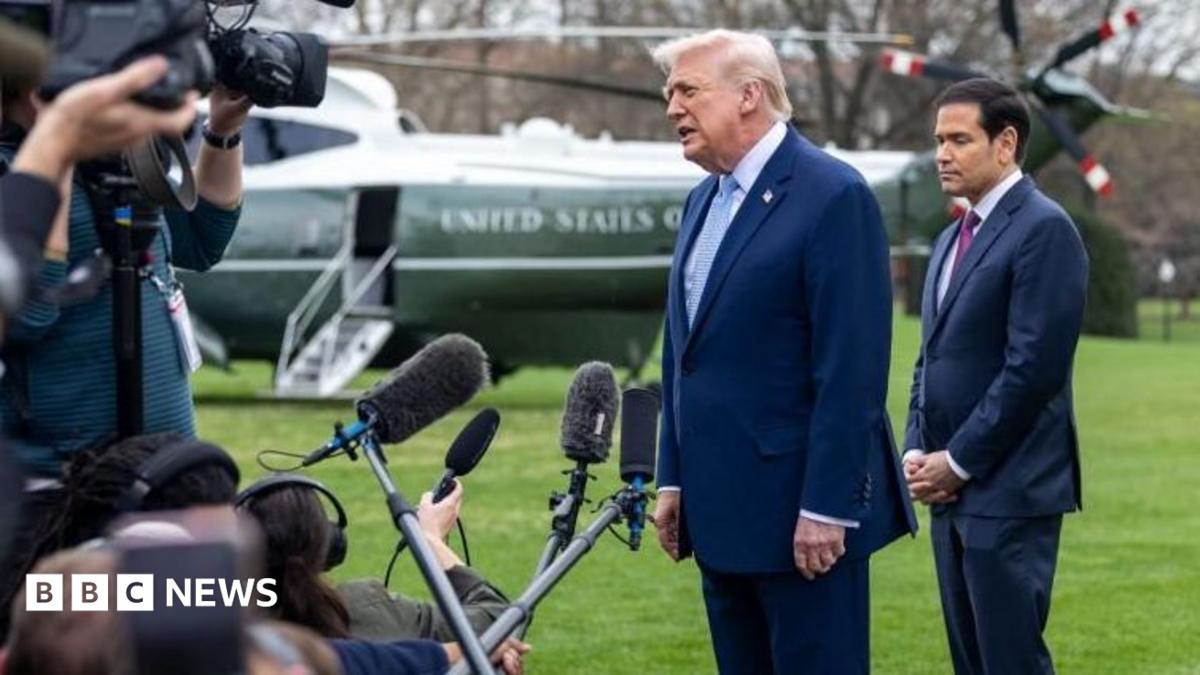
Geopolitical & Core Developments
The United States Justice Department has formally submitted its legal defense regarding the controversial restriction of specific media outlets from official press briefings, setting the stage for a high-stakes constitutional confrontation. In court filings responding to a joint lawsuit filed by prominent news organizations including CNN, Politico, and MS NOW, government attorneys argued that the administration's actions are anchored in imperative national security considerations and the mitigation of what officials characterized as repeated systemic falsehoods. This legal battle represents a critical inflection point in the ongoing tension between executive authority, national security protocols, and constitutional press freedoms in Washington.
The timeline of the dispute traces back to successive administrative directives that barred designated correspondents from accessing routine government briefings and restricted internal agency communications with reporters from the plaintiff organizations. The Justice Department's memorandum emphasizes that executive branch entities possess discretionary authority to manage information flows when vital state interests are implicated. Conversely, the media coalition contends that the bans constitute viewpoint discrimination and a direct violation of the First Amendment, threatening the foundational accountability mechanisms of democratic governance. Legal analysts note that the forthcoming judicial hearings will test the boundaries of executive privilege versus freedom of the press in an era of heightened geopolitical polarization.
Global Trade & Economic Ripples
While ostensibly a domestic legal and constitutional controversy, the escalation of regulatory friction between the US government and major international news conglomerates carries subtle yet significant implications for global trade, information economies, and multinational corporate strategy. Information is a critical high-value commodity in contemporary global markets; volatility in the regulatory treatment of primary information providers directly impacts risk assessment models for institutional investors, commodity traders, and multinational corporations operating across borders.
Furthermore, the policy divergence between Washington and traditional allied capitals regarding media access and digital governance introduces regulatory compliance complexities for transnational media and technology platforms. As international markets increasingly rely on real-time, unhindered intelligence regarding US trade policy, tariff negotiations, and regulatory enforcement actions, any disruption to the primary reporting apparatus risks generating information asymmetry. Global supply chain managers, energy market participants, and currency traders depend on transparent, authoritative reporting from Washington; prolonged legal uncertainty surrounding institutional media accreditation could influence foreign direct investment sentiments and cross-border media monetization models.
Related Intelligence: Islamabad High Court Decries 102-Hour Work Week for Doctors as Inhuman
International Reactions & Diplomatic Stances
The Department of Justice filings have drawn immediate scrutiny from international bodies, foreign ministries, and global press freedom watchdogs. Representatives from organizations such as Reporters Without Borders and the International Press Institute have expressed profound concern, warning that administrative restrictions on accredited journalists establish a perilous precedent that authoritarian regimes worldwide might exploit to justify their own crackdowns on independent reporting. Multilateral bodies have reiterated that robust, unhindered journalism remains a cornerstone of transparent market governance and democratic institutional stability.
Diplomatic circles in European capitals and allied nations are monitoring the proceedings closely, acutely aware of how domestic American legal shifts reverberate through international norms. Foreign trade partners and international legal scholars emphasize that the credibility of the United States as a global champion of the rule of law is intrinsically linked to its domestic adherence to constitutional protections. Market analysts suggest that while immediate economic shocks are unlikely, sustained friction between the executive branch and the Fourth Estate could gradually erode foreign confidence in the predictability of US regulatory and governance frameworks.
Strategic Outlook & Future Scenarios
As the federal district court prepares to hear oral arguments, the trajectory of this litigation will likely establish a landmark precedent for executive branch authority over press access during periods of acute national security sensitivity. A ruling in favor of the administration could embolden future executives to exercise broader discretion in managing press interactions, permanently altering the media landscape in Washington. Conversely, an injunction favoring the media coalition would reinforce traditional constitutional boundaries, compelling the executive branch to restore open accreditation channels.
Looking ahead, regardless of the initial judicial outcome, the dispute is widely expected to navigate its way through appellate courts, ultimately reaching the Supreme Court. For international observers, global commodity traders, and geopolitical strategists, the case serves as a vital barometer of institutional resilience within the United States. The resolution of this conflict will profoundly shape the operational environment for international journalism and corporate intelligence gathering for years to come.
Join Our Official WhatsApp Channel
Receive live commodity alerts, policy changes, and commercial intelligence directly on WhatsApp.