
US and China Clash Over AI Supremacy at High-Stakes Summit
Presidents Trump and Xi met to address the accelerating artificial intelligence arms race, balancing national security ambitions with the imperative for human control over advanced autonomous systems.
Geopolitical & Core Developments
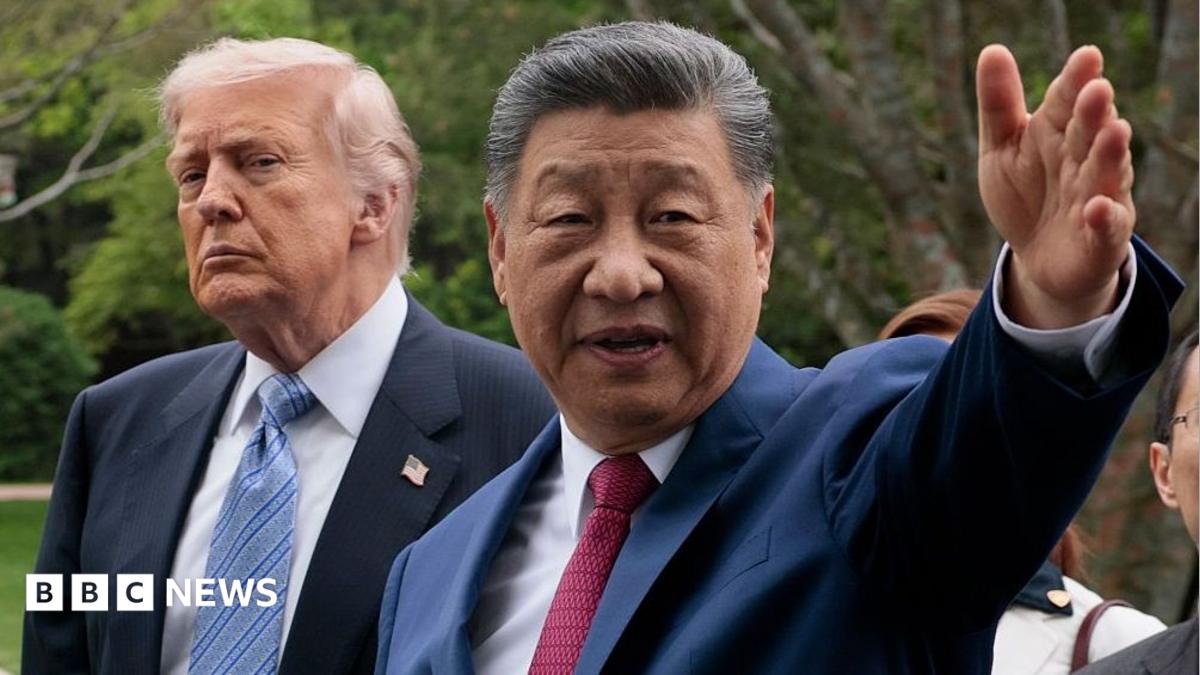
The technological bifurcation of the global economy reached a critical juncture as United States President Donald Trump and Chinese President Xi Jinping convened for high-stakes bilateral talks centered squarely on artificial intelligence supremacy. The meeting underscored a fundamental geopolitical reality: the twenty-first-century balance of power will not be determined solely by conventional military might or traditional economic output, but by dominance in advanced computational systems and artificial intelligence.
For months, both superpowers have accelerated national strategies to capture the pinnacle of AI research, talent, and computational hardware. During the summit, diplomatic delegations grappled with the dual imperative of outcompeting rival economic blocs while simultaneously establishing bilateral guardrails to prevent algorithmic escalation. Central to the discussions was the imperative of maintaining robust human-in-the-loop control over critical infrastructure and autonomous defense systems, mitigating the catastrophic risk of machine-driven escalation during geopolitical crises.
Global Trade & Economic Ripples
The race for artificial intelligence dominance is fundamentally reshaping global trade, with profound implications for semiconductor supply chains, energy consumption, and high-tech manufacturing. Export controls and technological decoupling initiated in Washington have forced global chipmakers, lithography equipment providers, and raw material refiners to navigate a fragmented commercial landscape. Rare earth elements, gallium, germanium, and ultra-pure silicon—critical inputs for advanced accelerators and tensor processing units—have become strategic levers in statecraft.
Furthermore, the insatiable energy demands of hyper-scale data centers are sending shockwaves through global energy markets. Technology conglomerates are increasingly securing direct power purchase agreements with nuclear and renewable energy providers, straining regional power grids and influencing long-term commodity pricing for energy transition metals. Shipping lanes and logistics networks associated with hardware manufacturing hubs in East Asia remain vulnerable to regulatory tightening and potential trade restrictions.
Related Intelligence: UK Confirms Orbital Jamming Operations Amid Escalating Space Arms Race
International Reactions & Diplomatic Stances
The bilateral engagement has triggered intense diplomatic maneuvering across global capitals and multilateral institutions. United Nations officials reiterated urgent calls for a universal governance framework to oversee the proliferation of dual-use artificial intelligence technologies, warning that an unregulated technological arms race could destabilize international security.
European Union regulators, meanwhile, have sought to position Brussels as a normative superpower, leveraging the newly enacted EU AI Act to influence global compliance standards. Market analysts note that multinational corporations are increasingly forced to choose between divergent regulatory ecosystems, driving up compliance costs and altering foreign direct investment patterns across emerging markets.
Strategic Outlook & Future Scenarios
Looking ahead, the trajectory of US-China relations will depend heavily on the implementation of verification mechanisms for advanced AI development. Upcoming multilateral summits, including the G20 and specialized technology dialogues, are expected to serve as testing grounds for whether collaborative safety standards can coexist with fierce commercial rivalry.
Escalation points remain prominent, particularly regarding semiconductor access restrictions, intellectual property theft allegations, and talent acquisition competition. Without a durable diplomatic framework, the global economy risks enduring chronic technological fragmentation, ultimately reshaping international commerce for decades to come.
Join Our Official WhatsApp Channel
Receive live commodity alerts, policy changes, and commercial intelligence directly on WhatsApp.