
Ukrainian Drone Strikes Hit Moscow Oil Refinery and Disrupt Aviation Corridors
A massive Ukrainian drone barrage struck the Moscow region, damaging an oil refinery and killing two individuals. The assault signals an escalating campaign against Russian energy infrastructure and logistics hubs.
Geopolitical & Core Developments
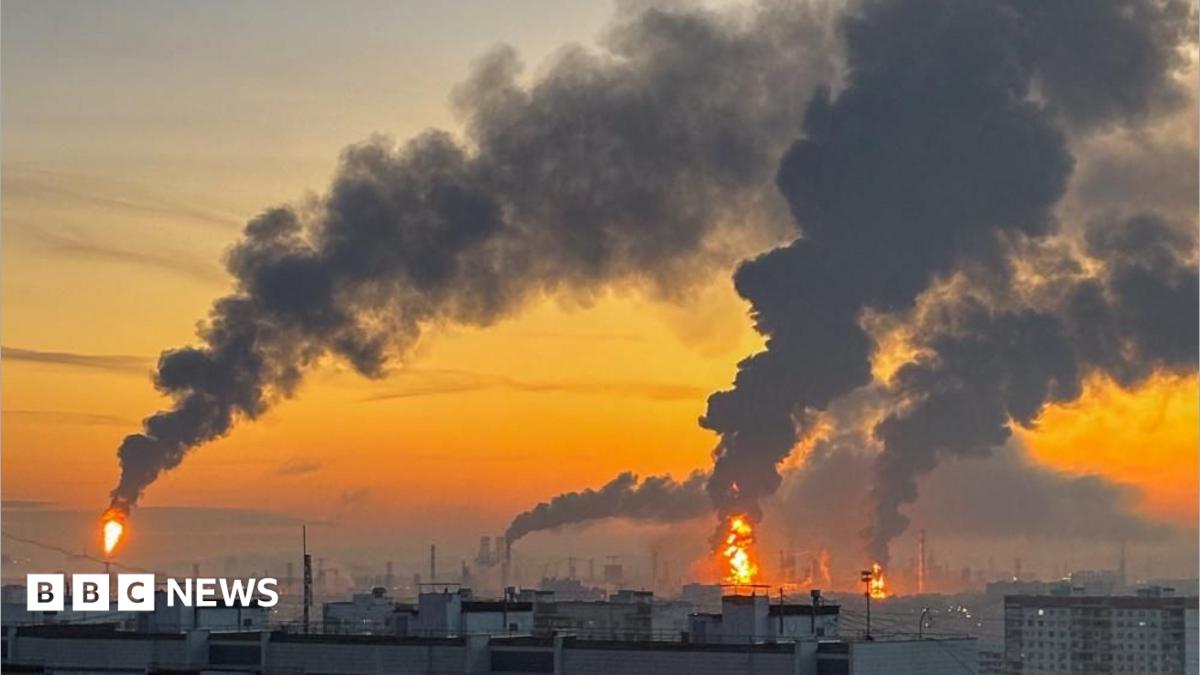
A coordinated, large-scale Ukrainian unmanned aerial vehicle (UAV) offensive penetrated deep into Russian territory, targeting the Moscow metropolitan area and adjacent administrative districts. Russian regional authorities confirmed at least two fatalities resulting from debris and direct impacts, while emergency services contained a fire at the Moscow Oil Refinery in the southeastern district of Kapotnya. The assault forced civil aviation authorities to suspend flight operations across key regional hubs, including Domodedovo and Zhukovsky, diverting international and domestic traffic.
The operation represents one of Kyiv's most expansive coordinated drone incursions into the Russian capital's airspace to date. Ukrainian strategic planners have methodically expanded asymmetric, long-range strike capabilities designed to bypass integrated anti-aircraft batteries. By projecting force directly into the political and administrative core of the Russian Federation, Ukraine seeks to degrade critical military-industrial logistics, challenge domestic stability narratives, and force Moscow to redeploy sophisticated air defense systems away from the active front lines in eastern Ukraine.
Global Trade & Economic Ripples
The direct strike on the Kapotnya facility—a primary downstream installation supplying a significant portion of the capital's diesel and gasoline consumption—amplifies operational vulnerabilities across Russia's domestic energy sector. While initial structural damage assessments remain guarded, the psychological and commercial repercussions registered across global energy desks. Global crude benchmarks experienced heightened intra-day volatility as traders weighed the cumulative impact of recurring strikes on Russian downstream capacity.
Western sanctions have systematically constrained Russia's access to high-technology Western components, critical catalysts, and automated processing units required for modern catalytic cracking and hydrotreating. Sustained damage to domestic refineries creates compounding maintenance bottlenecks, forcing facility operators to delay turnaround schedules. Should internal refinery runs decline further, Moscow may face tight regional fuel supplies, potentially limiting secondary refined product exports to non-Western markets and disrupting trade flows across Central Asia and maritime corridors.
Related Intelligence: Gaza Tech Infrastructure Collapse Threatens Digital Economy and Regional Workforce
International Reactions & Diplomatic Stances
The Russian Ministry of Defense characterized the operation as a terrorist assault against civilian and industrial installations, asserting that electronic warfare countermeasures and mobile air defense batteries neutralized the vast majority of incoming targets. The Kremlin reiterated that such actions eliminate any immediate viability for diplomatic settlement, warning of proportionate retaliatory strikes against Ukrainian dual-use and power generation networks.
In Kyiv, military and intelligence officials maintained their official posture that all targeted sites constitute legitimate military-industrial assets sustaining Moscow's war effort. Western diplomatic missions and multilateral observers monitored the situation closely, with Washington and European capitals reiterating their strategic guidance regarding the operational distinction between sovereign Ukrainian drone actions and the deployment of Western-supplied standoff munitions. International energy analysts warned that structural damage to refining nodes poses sustained risks to global market equilibrium, particularly for middle distillates.
Strategic Outlook & Future Scenarios
The operational reach demonstrated in the Moscow metropolitan area signals an intensifying war of attrition centered on critical national infrastructure. In the coming months, Ukrainian forces are expected to accelerate deep-strike saturation campaigns targeting secondary processing facilities, petrochemical terminals, and cross-country logistics nodes. This asymmetric posture aims to offset conventional territorial pressures through economic exhaustion.
Conversely, Moscow is likely to respond with expanded retaliatory salvos against Ukraine's remaining power grid, port hubs along the Danube and Black Sea corridors, and municipal utility networks. As geopolitical risks mount, global commodity markets remain acutely sensitive to any supply contraction. Shipping lines, insurance underwriters, and regional commodities traders will continue to demand heightened risk premiums for transit throughout the Black Sea basin and western Russian territorial zones.
Join Our Official WhatsApp Channel
Receive live commodity alerts, policy changes, and commercial intelligence directly on WhatsApp.