
State Funeral for Tung Chee-hwa Highlights Hong Kong Geopolitical Evolution
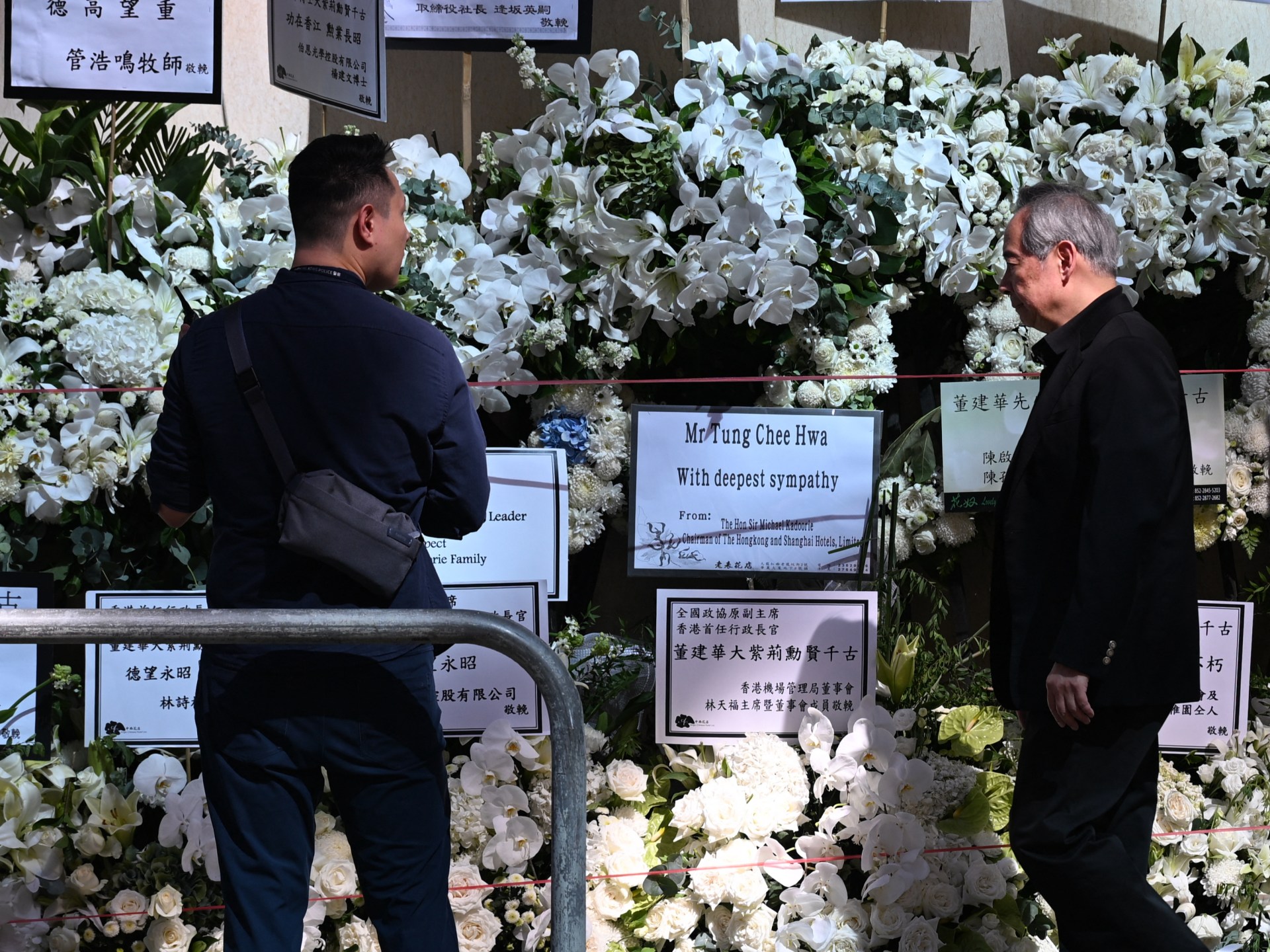
Beijing and Hong Kong leadership gathered for the state funeral of Tung Chee-hwa, honoring the shipping magnate who anchored the territory during the 1997 handover and regional financial volatility.
Geopolitical & Core Developments
Dignitaries, senior Chinese Communist Party officials, and regional business elites convened in Hong Kong to pay state-level tributes to Tung Chee-hwa, the first Chief Executive of the Hong Kong Special Administrative Region (HKSAR). Selected in 1996 by Beijing's preparatory committee ahead of the historic July 1, 1997 handover from British colonial administration, Tung served during one of the most volatile transition periods in modern Asian history. His administration was immediately tested by the onset of the 1997 Asian Financial Crisis, during which Hong Kong executed unprecedented market interventions to successfully defend its currency peg against aggressive speculative short-selling. His tenure was further challenged by the 2003 SARS epidemic and widespread political pushback against early iterations of Article 23 national security legislation, culminating in his resignation in 2005. Tung subsequently served as a long-standing Vice Chairman of the Chinese People's Political Consultative Conference (CPPCC). The state honors accorded to him signal Beijing's formal affirmation of his foundational role in establishing sovereign control and framing patriotic governance under the constitutional architecture of 'One Country, Two Systems'.
Global Trade & Economic Ripples
Beyond his administrative office, Tung was a key figure in modern maritime history as the head of Orient Overseas Container Line (OOCL), positioning his career at the nexus of global commercial shipping lanes and international supply chains. During his time in government, Hong Kong solidified its status as an indispensable logistical and financial clearinghouse, facilitating China's entry into the World Trade Organization in 2001 and linking Chinese manufacturing output with Western consumer markets. In the contemporary context, Hong Kong's trade architecture is undergoing structural transformation. While the territory remains the world's leading center for offshore Renminbi (RMB) settlement, accounting for more than 70 percent of global volume, its traditional transshipment port dominance faces rising competition from mainland hubs such as Shenzhen, Ningbo-Zhoushan, and Shanghai. Heightened geopolitical friction between Washington and Beijing, coupled with tariff restructuring and selective export controls, has accelerated shifts in regional supply chains toward Southeast Asia, challenging Hong Kong's legacy role as an unrestricted conduit for bilateral trade flows.
Related Intelligence: Tour Fallout Highlights Cultural Sector Exposure to Middle East Geopolitical Rifts
International Reactions & Diplomatic Stances
Central authorities in Beijing praised Tung as an exemplary pioneer of national unity who demonstrated resilience in defending the territory's fiscal integrity during severe macroeconomic shocks. Chinese state media underscored his institutional contributions to mainland-Hong Kong integration and cross-strait dialogue. International observers and Western diplomatic missions in Hong Kong acknowledged Tung's pivotal historical position during the delicate initial years of the post-colonial transition. However, market analysts and geopolitical commentators emphasized the profound divergence between the geopolitical environment of Tung's early administration—an era marked by Western engagement, multilateral economic liberalization, and reciprocal trade integration—and the current climate dominated by national security priorities, institutional realignment, and mutual decoupling strategies between the United States and China.
Strategic Outlook & Future Scenarios
Looking forward, Hong Kong's political and economic leadership is accelerating efforts to insulate the territory against external geopolitical volatility by pivoting toward non-Western capital markets. Institutional initiatives are heavily focused on the Greater Bay Area (GBA) master plan, linking Hong Kong's professional services and common-law legal system with the technological and manufacturing capabilities of Guangdong province. Concurrently, regional authorities are courting sovereign wealth funds and commercial enterprises across the Middle East and ASEAN economies to diversify capital inflows away from traditional Anglo-American channels. While Hong Kong retains substantial competitive advantages in cross-border capital management, green finance, and dispute resolution, the overarching trajectory established during Tung's formative tenure will continue to evolve under stricter regulatory oversight and persistent strategic polarization between major global powers.
Join Our Official WhatsApp Channel
Receive live commodity alerts, policy changes, and commercial intelligence directly on WhatsApp.