
Trump Hosts Xi in Washington Amid Landmark AI and Trade Accords
US President Donald Trump hosted Chinese leader Xi Jinping at the White House for high-level talks, highlighted by a rare tarmac greeting and crucial agreements on artificial intelligence governance and international trade.
The Core Development
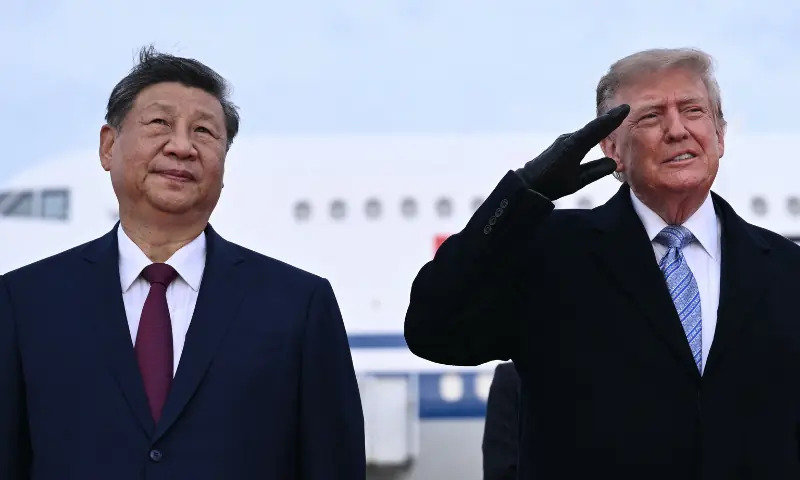
In an extraordinary display of diplomatic pageantry, US President Donald Trump personally greeted Chinese leader Xi Jinping upon his arrival at Joint Base Andrews near Washington. This high-profile reception marked the first time in more than six decades that a sitting United States president has chosen to welcome a foreign political leader directly on the tarmac, signaling a deliberate effort by the White House to set a tone of high-level engagement. The visit centers on a comprehensive agenda addressing bilateral trade, geopolitical stability, and technological cooperation. Most notably, ahead of formal deliberations, President Trump indicated that both superpowers had reached a preliminary understanding regarding fast-evolving artificial intelligence technology, agreeing that no new regulatory controls or restrictive barriers are necessary at this juncture. This concurrence on artificial intelligence policy sets a collaborative baseline for the summit, diverting potential friction points away from tech innovation and focusing instead on commercial and structural economic realignment.
Commercial & Economic Implications
For international markets, wholesale distributors, and emerging economies such as Pakistan, the summit between the world's two largest economic powerhouses carries significant weight. Global supply chains, commodity pricing structures, and foreign exchange stability are inextricably linked to the trajectory of US-China trade relations. A de-escalation of technological and trade tensions between Washington and Beijing tends to stabilize global shipping rates and raw material costs, which directly influences import parity pricing for Pakistani industrial inputs, electronics, and machinery. Furthermore, avoided regulatory friction in artificial intelligence and advanced computing ensures that global technology transfer pathways remain open, preventing secondary disruptions in software development, digital infrastructure investments, and tech-driven logistics networks across South Asia. Local retail and wholesale sectors closely monitor these geopolitical developments, as shifts in US-China trade policies rapidly manifest in global commodity fluctuations and inflationary pressures.
Related Intelligence: Hurricane Polo Threatens Mexican Infrastructure and Key Supply Chains
Stakeholder Perspectives & Market Reactions
International trade analysts, industry bodies, and business associations have responded with cautious optimism to the summit's early announcements. Financial markets reacted favorably to the avoidance of new technological restrictions, viewing the cooperative posture on artificial intelligence as a stabilizing factor for global equities and tech-sector valuations. Business councils in emerging markets note that predictability in US-China relations reduces speculative volatility in currency markets. Legal and policy experts emphasize that while the verbal consensus on artificial intelligence avoids immediate compliance hurdles, formal bilateral frameworks must follow to ensure long-term regulatory transparency. Pakistani trade bodies have highlighted the necessity of maintaining diversified sourcing strategies, noting that any stabilization in great power commerce ultimately benefits developing economies by fostering a predictable international trading environment.
Forward Outlook & Key Watchpoints
As the Washington summit concludes, policymakers, market participants, and trade organizations are turning their attention to the implementation phase of the agreements. Key watchpoints include the formal drafting of any bilateral memoranda of understanding concerning artificial intelligence oversight, subsequent adjustments to export control enforcement, and potential follow-up negotiations on broader tariff structures. For Pakistan's business community and economic planners, tracking these developments remains vital for managing import costs, managing currency exposure, and positioning local industries to leverage shifting global supply chain dynamics over the coming fiscal quarters.
Join Our Official WhatsApp Channel
Receive live commodity alerts, policy changes, and commercial intelligence directly on WhatsApp.