
Trump Halts Federally Funded Advertising Amid Bipartisan Scrutiny
US President Donald Trump has agreed to halt taxpayer-funded advertising campaigns following intense bipartisan pushback over potential legal violations regarding political self-promotion.
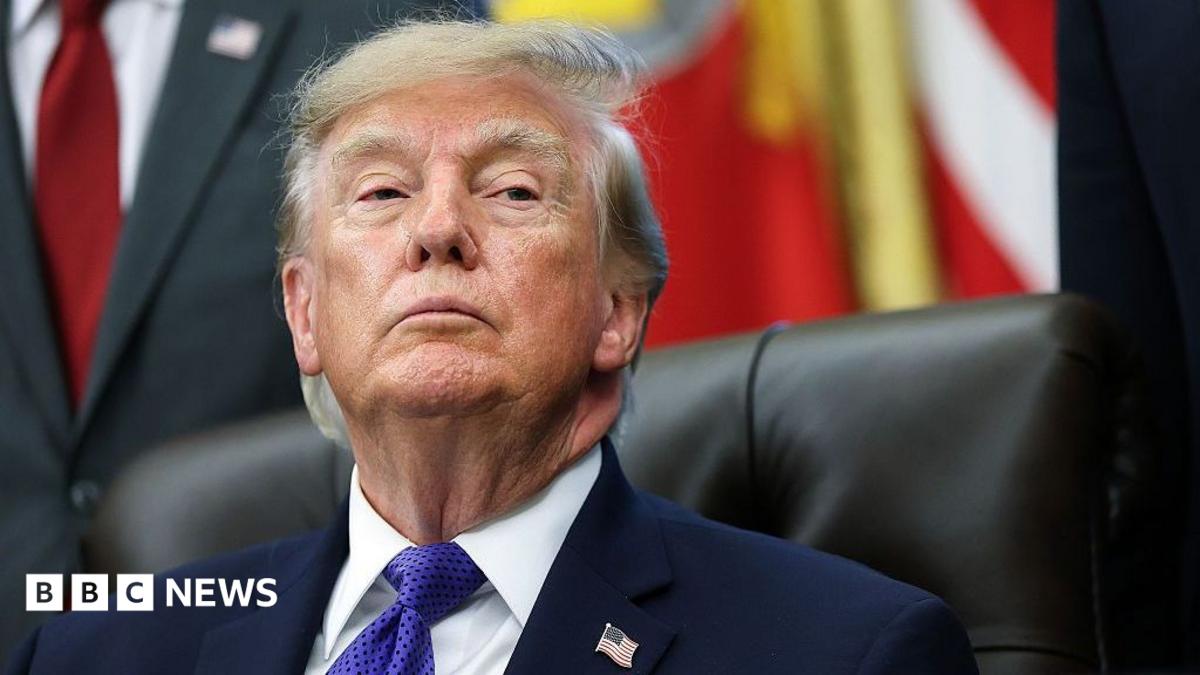
Geopolitical & Core Developments
In a significant domestic policy pivot that reverberates across Washington's political landscape, US President Donald Trump has announced that his administration will cease utilizing public taxpayer funds for promotional advertising campaigns. The advertisements in question, designed to highlight the president and his signature policy initiatives, had triggered profound legal and ethical concerns among lawmakers from both major parties. Critics argued that the campaigns skirted, or outright violated, long-standing United States federal statutes explicitly barring the appropriation of public government funds for partisan political advertising and personal branding.
The controversy escalated rapidly over preceding weeks, transforming from a minor budgetary dispute into a high-stakes constitutional confrontation regarding executive overreach. Watchdog groups, legal scholars, and congressional committees began probing the precise mechanisms used to finance the media blitz. The administration's sudden capitulation marks a tactical de-escalation in an ongoing struggle between the executive branch and legislative overseers regarding the boundaries of state-backed messaging. While the immediate domestic crisis has been averted through this policy reversal, the episode underscores deep structural vulnerabilities in how executive communications are funded and monitored under modern American governance.
Global Trade & Economic Ripples
Although ostensibly a domestic political and legal dispute, the cessation of federally funded advertising carries subtle economic implications for global media markets, digital advertising conglomerates, and international investors monitoring US political stability. Large-scale government advertising campaigns represent lucrative revenue streams for major media networks, digital platforms, and public relations agencies. The abrupt termination of these contracts alters short-term media buying patterns within the world's largest economy.
More broadly, international financial markets and commodity traders closely monitor US administrative shifts for signals regarding regulatory predictability and fiscal discipline. Global supply chain actors, energy executives, and multinational corporations view the integrity of US public institutions as a foundational pillar of international trade stability. Any perceived erosion of adherence to statutory spending limits introduces legal uncertainty that can ripple through sovereign debt markets and influence foreign direct investment strategies. By demonstrating compliance with domestic statutory frameworks, the administration provides reassuring signals to international partners who prioritize institutional stability and rule-of-law governance in Washington.
Related Intelligence: Quebec Separatist Victory Threatens Canadian Unity and Commodity Trade
International Reactions & Diplomatic Stances
Foreign governments, international bodies, and global market analysts have observed the domestic US controversy with keen interest, viewing it as a litmus test for the resilience of American checks and balances. While international organizations such as the United Nations typically refrain from commenting directly on internal US advertising expenditures, diplomatic missions in Washington have closely tracked the bipartisan pushback as an indicator of congressional leverage ahead of major trade and foreign policy votes.
Global financial institutions and credit rating agencies issued guarded assessments, noting that while the decision averts a deeper constitutional crisis over fiscal appropriations, broader questions regarding executive spending authority remain pertinent. Trade partners in Europe and Asia noted that institutional friction within the United States continues to shape the predictability of American foreign policy and economic commitments, emphasizing that transparent governance remains critical for maintaining international confidence in dollar-denominated assets and bilateral trade pacts.
Strategic Outlook & Future Scenarios
Looking ahead, the resolution of the advertising controversy sets a vital precedent for future executive administrations regarding the deployment of public resources for communications. Congressional oversight committees are expected to leverage this outcome to draft more stringent legislative safeguards, closing potential loopholes that allowed executive agencies to blur the line between public informational campaigns and partisan messaging.
For international observers, the incident serves as a reminder of the volatile domestic currents influencing US policymaking. As global commodity markets and diplomatic channels prepare for upcoming international summits, foreign counterparts will continue to evaluate how internal American political dynamics affect broader strategic priorities, including trade negotiations, sanctions enforcement, and international treaty commitments.
Join Our Official WhatsApp Channel
Receive live commodity alerts, policy changes, and commercial intelligence directly on WhatsApp.