
Supreme Court Warns Sindh Police with Contempt Over Delayed FIRs
The Supreme Court of Pakistan has cautioned Sindh police officials that chronic delays in registering FIRs will lead to direct contempt of court proceedings.
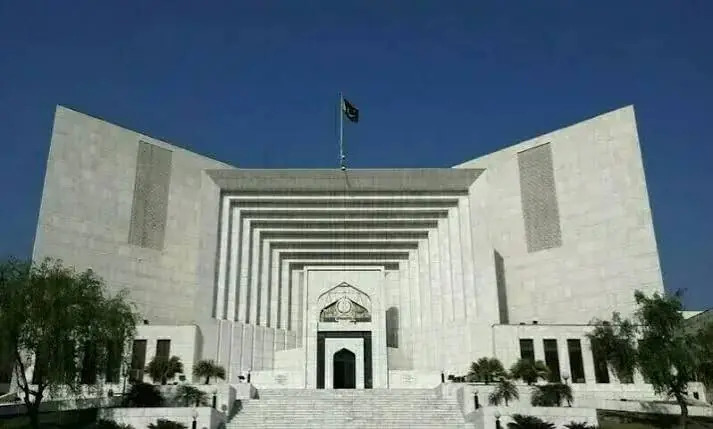
The Core Development The Supreme [Court](/news/islamabad-lawyers-boycott-courts-re-arrest-imaan-mazari-hadi-ali) of Pakistan has issued a stern admonition to the Sindh Police leadership and field officers over persistent, systemic delays in registering First Information Reports (FIRs). Hearing a jail petition, a two-judge bench comprising Justice Muhammad Hashim Khan Kakar and Justice Salahuddin Panhwar explicitly warned that police officials found deliberately withholding or delaying the registration of criminal complaints would face formal contempt of court proceedings.
The ruling was handed down in a detailed seven-page judgment authored by Justice Panhwar while upholding the life imprisonment of Ali Raza Siyal. The convict had appealed an August 24, 2023 verdict delivered by the Sindh High Court’s Circuit Bench at Larkana, which affirmed his conviction for a 2012 murder in Dadu district. The bench observed with profound dismay that statutory obligations under Section 154 of the Code of Criminal Procedure (CrPC)—mandating the immediate registration of cognizable offenses—remain consistently ignored across Sindh. Crucially, the court highlighted that this operational inertia has persisted unabated despite earlier judicial directives and previous in-person appearances by the Sindh Inspector General of Police before the apex bench.
Commercial & Economic Implications While rooted in a criminal appeal, the [Supreme Court](/news/imaan-mazari-husband-rearrested-adiala-jail-supreme-court-bail)'s censure touches upon institutional dysfunctions that directly burden Pakistan's commercial landscape. In Sindh, which hosts the country's principal maritime trade gateways and central cargo distribution arteries, prompt FIR registration is the bedrock of commercial security. Delayed police reporting directly undermines wholesale distribution networks and agricultural supply chains that transport essential commodities from agricultural belts into urban wholesale markets.
For enterprise operators, distributors, and logistics firms, delayed FIR filings critically distort insurance and risk management protocols. Insurance underwriters require immediate police documentation to process claims related to transit theft, commercial burglary, extortion, or hijacked freight. When police stations delay or deny formal registration, insurance claims enter protracted disputes or fail entirely, locking up vital working capital for wholesale distributors and small-to-medium retail traders. Consequently, businesses are forced to incur escalating outlays on private transit security and higher risk premiums, raising overall distribution costs across the province.
Related Intelligence: Islamabad Lawyers Boycott Courts Over Human Rights Advocates Rearrest
Stakeholder Perspectives & Market Reactions The apex court's warning has been welcomed across trade associations, retail syndicates, and the legal community. Commercial bodies in Karachi, Hyderabad, and Sukkur have long cited administrative inertia and rent-seeking at the police station level as a significant impediment to regional trade. Traders report frequent friction where field officers stall registration until informal negotiations occur or external political clearance is granted.
Legal practitioners emphasized that invoking contempt of court serves as a necessary mechanism to enforce compliance with Section 154 of the CrPC. Senior advocates noted that delayed FIRs compromise evidentiary integrity and allow perpetrators to tamper with crime scenes. Conversely, police administration representatives privately argue that chronic resource deficits, inadequate investigation allocations, and excessive administrative burdens hinder procedural speed, although legal experts stress that initial FIR registration requires no prior evidentiary investigation under the law.
Forward Outlook & Key Watchpoints Following the Supreme Court's definitive ruling, the operational focus shifts to the Central Police Office in Karachi to determine how administrative oversight will be tightened. Key developments to monitor will include structural reforms in operationalizing the digital Police Station Record Management System (PSRMS) to minimize manual gatekeeping by Station House Officers.
Legal and market observers will also watch whether the apex court follows through with exemplary contempt notices against supervisory officers, including Senior Superintendents of Police (SSPs) and District Police Officers (DPOs), in cases where deliberate delays are substantiated. A measurable reduction in FIR filing turnaround times will be an essential benchmark for evaluating whether provincial governance can establish an environment conducive to commercial rule of law and supply chain stability.
Join Our Official WhatsApp Channel
Receive live commodity alerts, policy changes, and commercial intelligence directly on WhatsApp.