
Supreme Court Rules Dower is Mandatory Legal Right, Not Bride Price
The Supreme Court ruled that dower is a mandatory legal right and exclusive property of the wife, directing courts to enforce payments decisively.
The Core Development
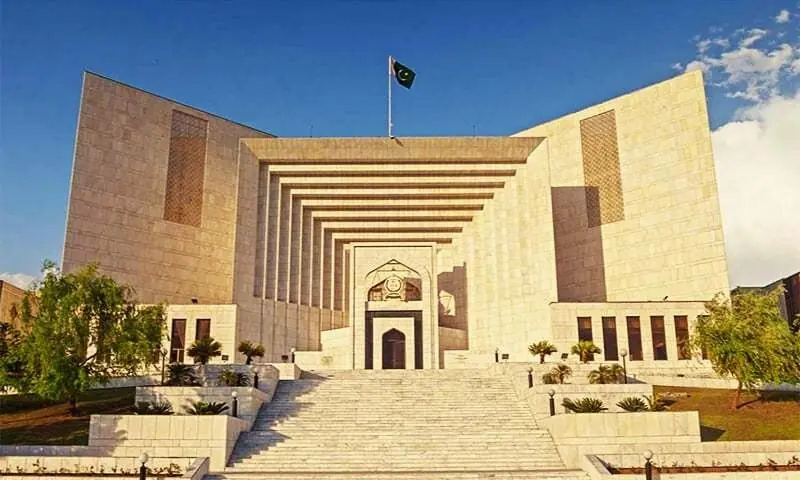
In a landmark ruling that reshapes the legal landscape surrounding matrimonial rights in Pakistan, the Supreme Court has unequivocally declared that dower (Haq Mahr) is a mandatory legal incident of marriage imposed by Islamic law. Delivered by a five-judge bench headed by Justice Shahid Waheed and comprising Justice Irfan Saadat Khan, Justice Aqeel Ahmed Abbasi, and Justice Shahid Bilal Hassan, the unanimous verdict establishes that dower must be rendered by the husband in good faith, at the agreed time, and devoid of any conditions that demean the wife.
The bench addressed a batch of interconnected civil and criminal petitions centered on the legal enforceability of stipulations recorded within the traditional marriage contract, or nikahnama. The court firmly rejected archaic interpretations that reduce dower to a transactional commodity, stating explicitly that it is neither the price of the wife nor consideration in the technical common-law sense. Instead, the judgment underscored that dower constitutes an exclusive proprietary right belonging solely to the woman, granting her absolute financial autonomy over the asset from the inception of the marital union.
Commercial & Economic Implications
While ostensibly a matter of family law, the Supreme Court ruling carries profound socioeconomic and financial ramifications across Pakistan. In a developing economy where women's financial inclusion remains a critical macroeconomic hurdle, the legal reinforcement of dower serves as an immediate mechanism for asset accumulation and wealth security for women. Historically, disputes over delayed or withheld dower—frequently comprising gold, real estate, or substantial cash sums—have tied up household liquidity and driven protracted litigation in civil courts.
By mandating strict judicial enforcement, the ruling injects greater legal certainty into domestic financial planning and asset distribution upon marital breakdown. In the broader context of retail markets, particularly the gold and real estate sectors where dower payments are traditionally denominated, clearer judicial enforcement could influence market demand patterns. When courts mandate the prompt settlement of dower obligations without judicial hesitation, it impacts household balance sheets and elevates the enforcement of women's property rights across urban and rural economies alike.
Related Intelligence: Sri Lanka Court Set to Deliver Verdict on 2019 Easter Bombings
Stakeholder Perspectives & Market Reactions
Legal experts, human rights advocates, and women's empowerment organizations have overwhelmingly lauded the Supreme Court verdict, viewing it as a definitive step toward dismantling patriarchal practices that undermine women's financial entitlements. Prominent jurists noted that lower courts have historically shown hesitancy or adopted overly conciliatory approaches when compelling husbands to fulfill deferred or prompt dower obligations. By directing the judiciary to step in with the 'full authority of the law,' the apex court has dismantled institutional bottlenecks that previously allowed obligors to evade financial accountabilities.
Conversely, family law practitioners anticipate a temporary surge in litigation as pending disputes involving disputed nikahnama entries are revisited in light of the new precedent. Bar associations have emphasized that lower judiciary training sessions will be essential to ensure uniform application of the principles laid down by the five-judge bench, ensuring that execution proceedings for dower decrees are expedited efficiently.
Forward Outlook & Key Watchpoints
As this ruling permeates the judicial hierarchy, attention shifts to the implementation phase across trial courts and family benches nationwide. Key watchpoints include the speed at which pending execution petitions regarding Haq Mahr are resolved and whether provincial high courts issue supplementary guidelines to streamline related litigation. Furthermore, economists will monitor how enhanced enforcement of women's legal property rights influences broader trends in female financial security, household asset ownership, and credit access across Pakistan's formal financial sectors.
Join Our Official WhatsApp Channel
Receive live commodity alerts, policy changes, and commercial intelligence directly on WhatsApp.