
Senate Clears Blue Passport Eligibility for Incomplete Term Lawmakers
Pakistan's Senate has approved legislation granting lifelong official blue passport privileges to former parliamentarians who did not complete full legislative terms, raising broader governance and fiscal governance concerns.
The Core Development
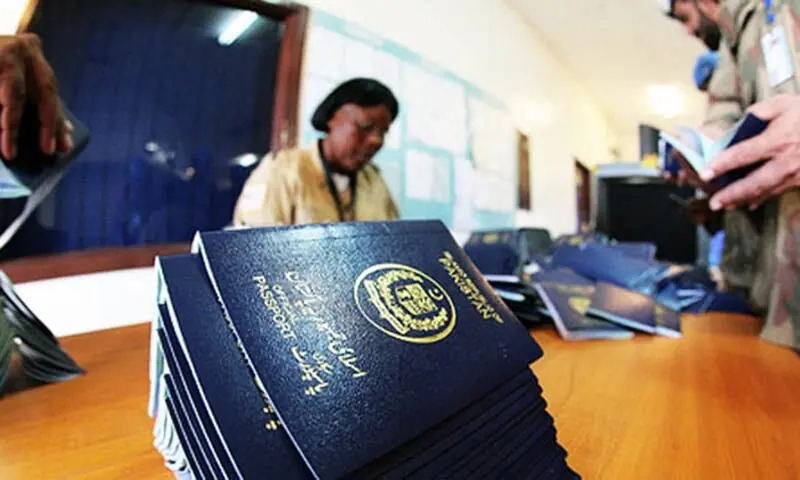
In a legislative move carrying notable diplomatic and governance implications, the Senate of Pakistan on Monday passed a statutory amendment allowing former lawmakers to retain official blue passports, irrespective of whether they completed a full constitutional term in the National Assembly or the Senate. The legislative measure, introduced by Senator Abdul Qadir, formally inserts a new Section 3-A into the Passports Act of 1974. Under this provision, any retired parliamentarian who has taken the constitutional oath of office becomes legally eligible to hold an official blue passport.
Simultaneously, the upper house witnessed the withdrawal of an adjacent, more expansive legislative proposal. The dropped clause had sought to extend official blue passport entitlements to dependent children under the age of 28 of former parliamentarians. Official blue passports in Pakistan are high-level travel instruments strictly reserved for key constitutional figures, senior judiciary members, high-ranking civil bureaucrats, and eligible dependents. Crucially, these travel documents facilitate simplified cross-border clearance and visa-free access to approximately 55 jurisdictions worldwide, including 22 European nations.
Commercial & Economic Implications
While ostensibly an administrative and protocol measure, the expansion of official diplomatic travel instruments directly intersects with macroeconomic stability, state expenditure oversight, and national mobility benchmarks. Pakistan's commercial landscape, particularly formal trade delegations and retail importers, frequently operates under severe outbound visa frictions, sluggish consular throughput, and stringent sovereign risk profiling. The sovereign issuance of official blue passports has often attracted scrutinised reviews from multilateral partners and international civil aviation authorities monitoring immigration control frameworks.
For commercial enterprises, wholesale supply chain aggregators, and corporate trade bodies, travel privileges extended to political actors underscore a persistent structural disparity. Domestic businesses navigating currency controls and import curbs face intense bureaucratic delays when establishing international commercial networks. Widening state-sponsored mobility shields for short-tenured political figures, while mainstream exporters face onerous travel compliance, risks compounding institutional distortions without yielding measurable economic dividend.
Related Intelligence: Southern European Inflation Triggers Mass Protests and Economic Fragility
Stakeholder Perspectives & Market Reactions
Legal practitioners, governance watchdogs, and civil society observers have expressed divergent views on the Senate's decision. Legal analysts emphasize that parliamentary tenures are frequently curtailed by political volatility, dissolution of assemblies, or premature constitutional transitions, thereby penalising legislators who served conscientiously but could not complete their mandated tenure. From this vantage point, Section 3-A standardises institutional treatment across different legislative cohorts.
Conversely, trade associations, chamber executives, and economic reform advocates have voiced reservations regarding the optics and priorities of the federal legislature. Critics argue that state institutions must prioritise regulatory measures that streamline national trade logistics, improve the strength of Pakistan's standard green passport, and remove supply-side bottlenecks. Expanding sovereign travel perquisites for political office holders during an era of stringent fiscal austerity and high domestic taxation risks exacerbating public cynicism regarding elite capture.
Forward Outlook & Key Watchpoints
Following its passage in the Senate, the legislative amendment must secure formal passage through the National Assembly and obtain presidential assent before being enacted into law. Stakeholders across governance circles will be monitoring whether the bill encounters resistance in the lower house or prompts interventions from the Ministry of Foreign Affairs and Ministry of Interior concerning bilateral visa-waiver reciprocity.
Key watchpoints over the coming quarters include whether external transit agreements and visa-free travel pacts are affected by broader issuances of official travel documents. Businesses and institutional observers will also track whether federal authorities introduce compensatory reforms to ease commercial travel protocols, cross-border business delegation clearances, and trade-related mobility for Pakistan's industrial and retail export sectors.
Join Our Official WhatsApp Channel
Receive live commodity alerts, policy changes, and commercial intelligence directly on WhatsApp.