
PTI Convoy Departs DI Khan Amid Heightened Political Tensions
Pakistan Tehreek-e-Insaf launched a long march from Dera Ismail Khan led by Ali Amin Gandapur, demanding the release of the imprisoned former prime minister amid strict calls for peaceful demonstrations.
The Core Development
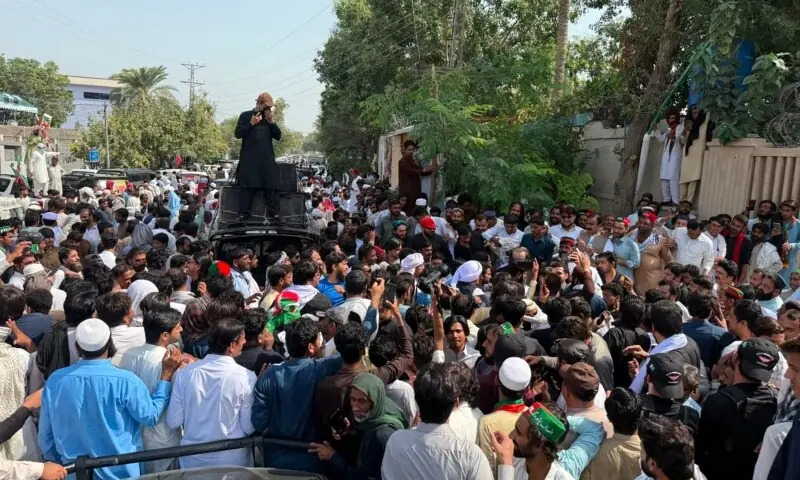
In a significant escalation of political mobilization across Khyber Pakhtunkhwa, Pakistan Tehreek-e-Insaf (PTI) workers and supporters officially set out from Dera Ismail Khan on Sunday. The high-stakes long march, orchestrated to press for the immediate release of the jailed party founder and former prime minister, is spearheaded by former Khyber Pakhtunkhwa Chief Minister Ali Amin Gandapur. The departure marks a pivotal moment in the ongoing confrontation between the opposition party and the federal administration. Meanwhile, a parallel caravan scheduled to be led by incumbent KP Chief Minister Sohail Afridi has faced logistical delays, remaining stationed in Lakki Marwat as organizers recalibrate their regional deployment strategy.
Before leading the convoy out of Dera Ismail Khan, Ali Amin Gandapur addressed the gathered participants, placing heavy emphasis on maintaining non-violent resistance. He explicitly instructed party members and supporters to uphold strict discipline and avoid direct confrontation with law enforcement personnel. Articulating a policy of coexistence under the maxim of live and let live, Gandapur warned against property damage and unauthorized road closures. He maintained that individuals engaging in vandalism or aggressive standoffs with state authorities do not represent official party directives, signaling an effort to preemptively neutralize potential flashpoints with security forces deployed along the route.
Commercial & Economic Implications
Extended political agitations and major transport disruptions carry profound economic ramifications for regional commerce, wholesale distribution networks, and consumer markets in Pakistan. Persistent highway blockades and heightened security crackdowns severely disrupt inter-provincial supply chains, impeding the seamless flow of agricultural produce and manufactured goods from Khyber Pakhtunkhwa to major commercial hubs in Punjab and Sindh. Freight operators face substantial delays, leading to inflated transportation costs and immediate upward pressure on perishable food prices in local retail markets.
For commercial enterprises, repeated political instability translates into diminished consumer confidence, constrained retail footfall, and dampened commercial activity across urban centers. Wholesale markets in Peshawar and Dera Ismail Khan often experience inventory bottlenecks as traders adopt defensive postures, hoarding essential commodities or curtailing daily business operations to mitigate potential losses from civil unrest. Over the medium term, prolonged uncertainty deters private capital investment, exacerbates inflationary pressures, and complicates macroeconomic stabilization efforts led by fiscal authorities.
Related Intelligence: Khyber Pakhtunkhwa Government Accused of Breaking Counterterrorism Pacts
Stakeholder Perspectives & Market Reactions
Business councils, trade associations, and industrial bodies have expressed deep apprehension regarding the recurrence of large-scale street protests. Representatives from prominent chamber of commerce entities in Khyber Pakhtunkhwa noted that continuous disruptions to trade corridors inflict heavy financial losses on small and medium enterprises. Industrialists argue that political volatility directly undermines regional competitiveness, forcing factories to operate below capacity due to insecure logistics and unpredictable worker attendance.
Legal experts and civil society organizations have closely scrutinized the administration's security response, balancing the constitutional right to peaceful assembly against the state's obligation to maintain public order and protect economic infrastructure. Official statements from law enforcement agencies indicate heightened vigilance along major transit arteries, with authorities prepared to enforce strict administrative measures should the demonstrations breach designated legal boundaries or transition into violent confrontations.
Forward Outlook & Key Watchpoints
As the PTI convoy progresses toward its intended destinations, market analysts and political observers are closely monitoring several critical operational indicators. Key watchpoints include the coordination and eventual departure of the Lakki Marwat caravan, the response of federal and provincial security apparatuses along the route, and the potential escalation of traffic blockades on major national highways.
Furthermore, financial stakeholders will assess whether the political leadership can maintain disciplined, non-violent adherence throughout the campaign or if escalating rhetoric triggers broader market volatility. The duration of the march and the government's subsequent policy enforcement strategies will dictate the extent of economic collateral damage, shaping commercial sentiment across Pakistan in the weeks ahead.
Join Our Official WhatsApp Channel
Receive live commodity alerts, policy changes, and commercial intelligence directly on WhatsApp.