
PMDC Schedules MDCAT 2026 for September 20 Across Pakistan and Riyadh
The Pakistan Medical and Dental Council has scheduled the MDCAT 2026 for September 20 across domestic and international venues, triggering nationwide academic prep cycles and broad economic mobilization across ancillary education markets.
The Core Development
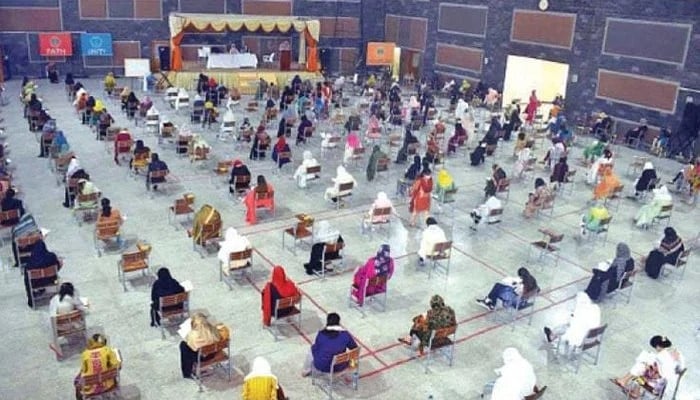
The Pakistan Medical and Dental Council (PMDC) has formally established September 20, 2026, as the examination date for the Medical and Dental College Admission Test (MDCAT). Designed to standardize undergraduate admissions across all public and private medical and dental institutions, the single-day standardized examination will be administered simultaneously across major domestic urban centers—including Islamabad, Lahore, Karachi, Peshawar, Quetta, and Gilgit—alongside an established international testing hub in Riyadh, Saudi Arabia.
The strategic operational decision to host an overseas examination venue in Riyadh directly resolves longstanding logistical frictions for thousands of Pakistani expatriates based across the Gulf Cooperation Council (GCC) region. In previous years, overseas applicants faced significant financial and logistical hurdles, requiring costly seasonal flights and temporary accommodation within Pakistan to participate in the mandatory assessment. PMDC officials confirmed that designated provincial public medical universities will manage the logistical execution within their respective territorial jurisdictions under standardized national protocols, enforcing strict biometric verification and security procedures.
Commercial & Economic Implications
Beyond its fundamental role as an academic assessment, the MDCAT announcement triggers an expansive seasonal economy, deploying significant capital flows across private test-preparation academies, commercial publishers, paper distributors, and transportation sectors. Pakistan's informal and formal test-preparation industry accounts for billions of rupees in annual revenue. Private tuition academies situated across major tier-one and tier-two cities assess tuition packages ranging between PKR 40,000 and PKR 120,000 per student for intensive three-month preparatory cycles, fueling short-term commercial retail leases and instructor payrolls.
Concurrently, wholesale paper markets and publishing hubs—such as Lahore's Urdu Bazaar and Karachi's Urdu Bazar—experience sharp spikes in demand for PMDC syllabus guides, practice examination papers, and supplementary study materials. Local retail stationers and digital assessment platforms also benefit as students procure resources in bulk. On the day of testing, geographic mobility peaks sharply. With more than 200,000 candidates moving toward dedicated regional test centers alongside parent chaperones, localized consumer spending surges across intercity coach transit, urban ride-hailing services, roadside fueling points, and short-stay hospitality establishments, injecting liquidity into peripheral municipal retail markets.
Related Intelligence: US Court Blocks Federal Framework Deporting Migrants to Third Nations
Stakeholder Perspectives & Market Reactions
Academic bodies and student organizations have cautiously welcomed the early declaration of the examination timeline, observing that structured advance notice enables candidates to harmonize their intermediate board examinations with competitive entrance test schedules. Expatriate community associations in Saudi Arabia praised the consolidation of the Riyadh examination center, highlighting the substantive reduction in foreign exchange outlays previously borne by non-resident households forced to travel home under tight academic schedules.
Nevertheless, legal observers and educational watchdogs emphasize that operational execution must remain uncompromised. Recent historical test cycles were marked by public protests, allegations of paper leaks, systemic testing discrepancies, and protracted high court litigation that unsettled admission calendars. Educational policy advocates stress that provincial admitting authorities must enforce ironclad chain-of-custody protocols regarding physical question papers, restrict telecommunication access at sensitive venues, and employ independent oversight teams to prevent administrative malpractices from undermining the meritocratic ranking process.
Forward Outlook & Key Watchpoints
As the registration portal opens in the months ahead, market participants and academic institutions will closely track the formal publication of PMDC syllabi guidelines and structural test breakdowns. Provincial governments must coordinate with district administrations, health departments, and law enforcement agencies to designate secure examination venues capable of accommodating thousands of students concurrently while maintaining public order.
The regulatory consistency demonstrated between the federal council and provincial admitting universities will serve as the primary benchmark for administrative success. Observers will also evaluate whether the operational model deployed in Riyadh proceeds smoothly, which could provide institutional momentum for expanding future overseas test administration into additional high-density diaspora hubs such as Dubai and London.
Join Our Official WhatsApp Channel
Receive live commodity alerts, policy changes, and commercial intelligence directly on WhatsApp.