
PM Shehbaz Defends AJK Legal Action Following Months of Unrest
Prime Minister Shehbaz Sharif addressed recent unrest in Azad Jammu and Kashmir during a council oath-taking ceremony in Islamabad, asserting that the administration upheld the rule of law.
The Core Development
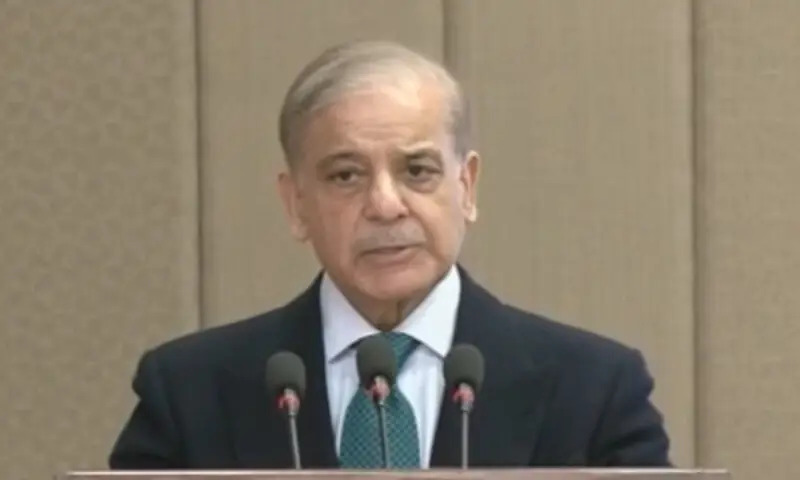
Prime Minister Shehbaz Sharif addressed the recent turmoil in Azad Jammu and Kashmir (AJK) during an official ceremony in Islamabad, where he administered the oath to four newly nominated members of the AJK Council. Acting in his capacity as the chairman of the council, the premier reflected on the turbulence that has characterized the region over recent months. While expressing deep dismay over the civil disruptions, Prime Minister Sharif maintained that state institutions had no alternative but to let the law take its course.
Although the prime minister refrained from explicitly naming specific organizations or individuals, his remarks clearly alluded to the intense demonstrations orchestrated by the Joint Awami Action Committee (JAAC), an alliance that has since been proscribed by authorities. The confrontation between the state machinery and local agitators escalated significantly over structural grievances, prominently featuring demands to abolish the 12 reserved refugee seats and restructure local administrative privileges.
Commercial & Economic Implications
Prolonged political instability and civil unrest in Azad Jammu and Kashmir carry profound economic ramifications for both the local territory and the broader national economy of Pakistan. AJK serves as a critical conduit for supply chains linking northern trade routes, energy generation facilities, and regional wholesale distribution networks. Disruptions in transportation, recurring shutter-downs, and localized strikes severely hamper retail trade and inflate logistics costs for businesses operating across the line of control and neighboring Punjab districts.
Furthermore, investor confidence in regional infrastructure projects and hydroelectric initiatives faces downward pressure when administrative friction intensifies. For ordinary consumers, supply chain blockades directly translate into inflationary spikes for essential commodities, perishable goods, and construction materials. Sustained economic normalization requires predictable governance and uninterrupted commercial corridors, making regulatory stability an urgent priority for wholesale traders and market participants.
Related Intelligence: France Protests Enter Critical Phase as Nationwide Strikes Threaten Supply Chains
Stakeholder Perspectives & Market Reactions
Trader associations, industrial bodies, and legal commentators have offered mixed reactions to the government's handling of the AJK crisis. Business councils in major urban centers have repeatedly underscored the heavy financial toll exacted by prolonged protests, urging federal and regional authorities to prioritize negotiated settlements over punitive administrative measures. Conversely, federal policymakers and security officials maintain that decisive state intervention was legally mandated to preserve public order and prevent broader economic paralysis.
Legal experts remain divided on the constitutional implications of proscribing bodies like the JAAC while core legislative reforms remain stalled. Representatives of civil society argue that long-term fiscal and political integration issues, such as the debate over refugee representation and utility pricing subsidies, require inclusive parliamentary dialogue rather than hardline enforcement.
Forward Outlook & Key Watchpoints
As the newly constituted AJK Council assumes its legislative duties under the chairmanship of Prime Minister Sharif, market observers and political analysts are closely monitoring several critical indicators. The primary watchpoint is the resumption of structured talks between regional authorities and aggrieved local factions to address lingering socioeconomic demands without triggering fresh cycles of street agitation.
Additionally, federal budgetary allocations and development packages earmarked for AJK will serve as a barometer of Islamabad's commitment to mitigating local economic grievances. Stakeholders will watch for policy clarity on administrative reforms, energy subsidies, and tax structures to determine whether long-term stability can be restored to the region's commercial landscape.
Join Our Official WhatsApp Channel
Receive live commodity alerts, policy changes, and commercial intelligence directly on WhatsApp.