
Pakistan Prime Minister Conditions PTI Talks on March Cessation
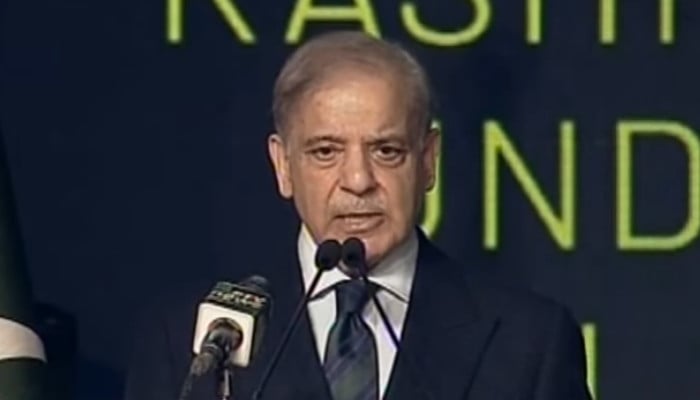
Prime Minister Shehbaz Sharif has declared that fresh political negotiations with the opposition PTI will only commence after the cessation of their disruptive Islamabad long march.
The Core Development
Prime Minister Shehbaz Sharif has formally stated that his administration will not engage in renewed political dialogue with the Pakistan Tehreek-e-Insaf (PTI) until the opposition party completely halts its ongoing long march toward Islamabad. The declaration marks a hardening stance from the federal government as civil unrest and political polarization intensify across the country. The confrontation centers on opposition demands for electoral reforms and early elections, which the ruling coalition maintains are non-negotiable outside of constitutional parliamentary procedures. Security forces have been placed on high alert across the federal capital, with container blockades and stringent perimeter controls established around critical government installations, diplomatic enclaves, and commercial centers to prevent civil disruption.
Commercial & Economic Implications
Extended political agitation and blockades in the national capital carry profound economic repercussions for Pakistan's fragile recovery trajectory. Wholesale distribution networks, inter-city transport logistics, and retail trade corridors face immediate bottlenecks as arterial highways experience severe congestion or temporary closures. For the business community, uncertainty surrounding political stability directly translates into suppressed investor confidence, delayed capital expenditure, and increased volatility in domestic currency and equity markets. Supply chain friction threatens to elevate operational costs for manufacturing and retail sectors, ultimately filtering down to consumer price indices and exacerbating inflationary pressures on essential commodities at a time when households are already grappling with high utility tariffs and fiscal austerity measures.
Stakeholder Perspectives & Market Reactions
Chambers of commerce, industrial associations, and representative bodies of retail traders have voiced mounting alarm over the escalating political friction. Business leaders emphasize that sustained political turmoil severely undermines ongoing stabilization efforts tied to International Monetary Fund (IMF) structural benchmarks. Legal analysts note that while constitutional avenues for dialogue exist within parliamentary frameworks, the current optics of confrontation diminish the likelihood of bipartisan consensus. Official statements from government spokespersons reiterate that economic policy implementation and sovereign debt management must take precedence over political expediency, urging opposition leadership to redirect their grievances toward constitutional forums rather than street agitation.
Forward Outlook & Key Watchpoints
Market participants and policy analysts are closely monitoring several critical indicators in the coming days. Key watchpoints include the duration and scale of the PTI demonstrations, potential judicial interventions or mediation efforts, and the government's enforcement of public order regulations. Failure to reach a political settlement could prolong administrative paralysis, delay crucial legislative reforms, and complicate sovereign financing negotiations. Conversely, a de-escalation of street protests could open avenues for backchannel diplomacy, restoring baseline predictability for domestic markets and international investors alike.
Join Our Official WhatsApp Channel
Receive live commodity alerts, policy changes, and commercial intelligence directly on WhatsApp.