
PM Shehbaz Courts Global Financial Giants in London to Boost Investment
Prime Minister Shehbaz Sharif met top executives from leading global financial institutions in London, urging them to expand investments and capitalize on Pakistan's stabilizing economic reforms.
The Core Development
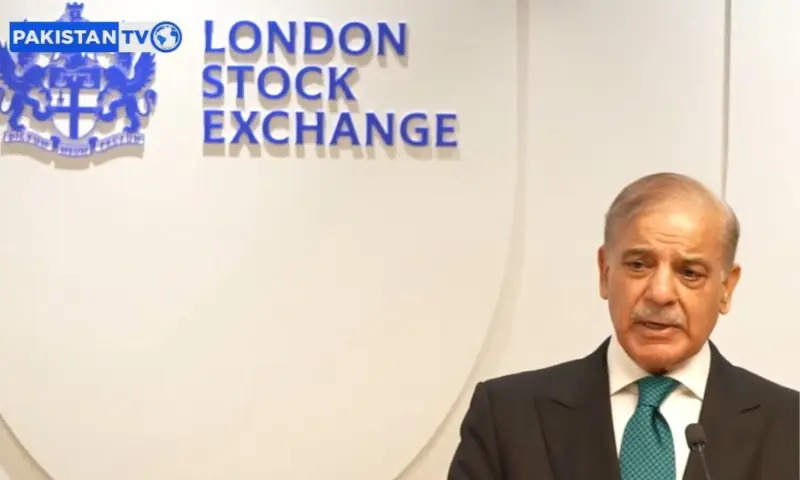
Prime Minister Shehbaz Sharif engaged in a high-stakes series of meetings with senior executives from world-leading financial institutions during his visit to London. In a landmark diplomatic and economic move, the prime minister became the first head of government from Pakistan to officially open trading at the prestigious London Stock Exchange (LSE). Accompanied by key economic aides, the premier leveraged the platform to project a resurgent image of Pakistan's financial markets, emphasizing structural reforms undertaken to stabilize the macroeconomic landscape.
Throughout a demanding itinerary in the British capital, PM Shehbaz held dedicated consultations with top leadership from major international banking and asset management firms, including Barclays, J.P. Morgan, Citi, BlackRock, and Rothschild & Co. During his interaction with a high-level J.P. Morgan delegation led by Matthieu Wiltz, Co-CEO for Europe, Middle East, and Africa, the prime minister formally invited the institution to widen its footprint in Pakistan. Similar overtures were extended to representatives of Citi and Barclays, highlighting lucrative opportunities in sovereign debt management, energy infrastructure financing, and capital market participation. The Prime Minister's Office (PMO) noted that these engagements underscored a palpable resurgence of international financial confidence in Pakistan's ongoing stabilization trajectory and improving investment climate.
Commercial & Economic Implications
For Pakistan's domestic economy, the high-level outreach in London carries profound implications across multiple tiers of trade, wholesale distribution, and retail markets. Securing the confidence of global financial behemoths like BlackRock and Rothschild & Co is critical for easing foreign exchange constraints and stabilizing the Pakistani Rupee against major currencies. A stable currency directly tempers imported inflation, lowering wholesale prices for essential commodities, raw materials, and petroleum products.
Furthermore, expanded engagement with global institutional investors lays the groundwork for foreign direct investment (FDI) inflows into vital sectors such as energy, logistics, and manufacturing. Increased FDI helps modernize supply chains, reduce systemic operational costs for wholesale distributors, and eventually alleviate pricing pressures on everyday consumers. By enticing tier-one global financial players to underwrite or participate in Pakistan's upcoming privatization and capital market offerings, the government aims to rebuild foreign reserves and foster a more resilient, competitive macroeconomic environment.
Related Intelligence: Italy's Burqa Ban Proposal Stirs Domestic Tensions and Economic Uncertainty
Stakeholder Perspectives & Market Reactions
Business councils, corporate leaders, and domestic trade associations have responded to the London engagements with cautious optimism. While welcoming the proactive diplomacy aimed at integrating Pakistan deeper into global financial networks, industry bodies emphasize that sustained foreign capital inflow hinges on consistent domestic policy implementation, structural tax reforms, and a predictable regulatory framework. Representatives from the private sector noted that international investor roadshows must be backed by tangible improvements in ease of doing business on the ground, particularly regarding energy tariffs and bureaucratic hurdles.
Meanwhile, economic analysts have lauded the symbolic and practical value of opening trading at the London Stock Exchange, viewing it as an effective public relations tool to counteract long-standing sovereign risk perceptions. Legal and financial experts point out that while global banks like J.P. Morgan and Citi already maintain varying degrees of engagement with Pakistan, deepening their institutional commitments will require rigorous adherence to International Monetary Fund (IMF) fiscal benchmarks and institutional transparency.
Forward Outlook & Key Watchpoints
As the government shifts from diplomatic outreach to execution, several critical watchpoints will determine the long-term success of these London meetings. Key indicators to monitor over the coming quarters include the finalization of advisory mandates with firms like Rothschild & Co regarding state-owned enterprise (SOE) privatizations, and tangible progress on J.P. Morgan's or Citi's expansion plans within Pakistan's domestic banking sector.
Additionally, market watchers will closely track upcoming Treasury bill and Eurobond issuances to gauge institutional investor appetite following the prime minister's pitch. Sustained momentum will ultimately depend on the administration's ability to maintain fiscal discipline, expand the tax base without stifling industrial growth, and ensure uninterrupted policy continuity through upcoming legislative and economic milestones.
Join Our Official WhatsApp Channel
Receive live commodity alerts, policy changes, and commercial intelligence directly on WhatsApp.