
Pakistan Weighs Regional Security Commitments Under Makkah Defence Alliance
Pakistan confirmed substantial military deployments in Riyadh under the tripartite Makkah Defence Alliance, leaving strategic threat assessments and tactical responses to the coalition amid escalating Yemen-Houthi border conflicts.
The Core Development
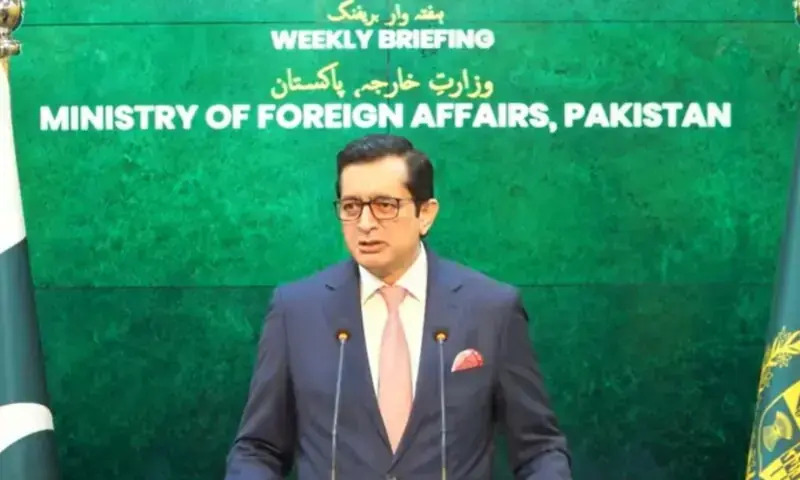
Foreign Office spokesperson Sajjad Haider Khan announced on Friday that Pakistan maintains a substantial deployment of military forces and resources in Riyadh. The disclosure comes amid an intensifying regional conflict between Saudi Arabia and Yemen-based Houthi movements, placing Pakistan's security apparatus directly into the diplomatic and strategic matrix of the Gulf. Speaking during his weekly media briefing, the spokesperson clarified that it now falls upon the Makkah Defence Alliance to evaluate the prevailing threat landscape within the kingdom and formulate appropriate operational decisions.
The Makkah Defence Alliance represents a formal tripartite security framework established on August 7, uniting Pakistan, Saudi Arabia, and Turkiye. Designed to solidify collective deterrence across participating nations, the pact operates on a mutual defense clause stipulating that any military aggression directed against a single member state constitutes an attack against the entire coalition. This architecture significantly elevates Islamabad's traditional bilateral defense ties with Riyadh into a formalized multilateral security commitment alongside Ankara.
Commercial & Economic Implications
While ostensibly a defense and geopolitical pact, the deepening security entanglement carries profound economic ramifications for Pakistan. Stability in the Gulf directly influences remittance inflows, which serve as a critical pillar for Pakistan's foreign exchange reserves and current account balance. Over millions of Pakistani expatriates reside and work across Saudi Arabia and the wider Gulf Cooperation Council region, making regional security paramount to safeguarding steady financial lifelines for domestic households.
Furthermore, energy security remains intricately linked to the stability of the Arabian Peninsula. Fluctuations in crude oil prices driven by supply chain disruptions or direct threats to Saudi energy infrastructure can instantaneously impact Pakistan's import bill, exacerbating domestic inflation and widening trade deficits. Wholesale distributors, industrial manufacturers, and retail consumers alike remain vulnerable to international energy shocks, underscoring how defense pacts translate directly into macroeconomic stability and market pricing within Pakistan.
Related Intelligence: OpenAI Safety Firings Trigger Global Governance and Market Scrutiny
Stakeholder Perspectives & Market Reactions
Business councils, financial analysts, and trade associations in Pakistan are closely monitoring the operationalization of the Makkah Defence Alliance. Industrial leaders note that foreign policy alignment with Gulf economies often unlocks strategic trade preferences, foreign direct investment, and deferred oil payment facilities that ease immediate balance-of-payment pressures. However, corporate stakeholders also express cautious vigilance regarding potential military entanglements that could alter risk premiums for domestic businesses operating or investing in trade corridors with the Middle East.
Legal and strategic defense experts point out that the tripartite arrangement formalizes a collective security umbrella that departs from historical ad-hoc military cooperation agreements. Public response remains mixed, balancing national pride in Pakistan's pivotal regional security role against concerns over potential operational overreach in protracted Middle Eastern conflicts.
Forward Outlook & Key Watchpoints
As the Makkah Defence Alliance transitions from a foundational treaty into an active operational framework, key watchpoints will center on how the coalition interprets threat thresholds along the Saudi-Yemen border. Analysts will monitor upcoming joint military exercises, institutional command structures, and intelligence-sharing mechanisms among Pakistan, Saudi Arabia, and Turkiye.
For policymakers in Islamabad, balancing strategic obligations in the Gulf with domestic economic stabilization remains a delicate imperative. Financial markets and currency dealers will track bilateral financial support packages, central bank reserves, and oil facility renewals as primary indicators of how robust security partnerships translate into tangible commercial dividends for Pakistan's economy.
Join Our Official WhatsApp Channel
Receive live commodity alerts, policy changes, and commercial intelligence directly on WhatsApp.