
Pakistan Urges UNSC Guardrails to Prevent AI Arms Race
Pakistan urged the UN Security Council to establish strict international guardrails for artificial intelligence to prevent weaponization and military miscalculations during a high-level briefing attended by major tech executives.
The Core Development
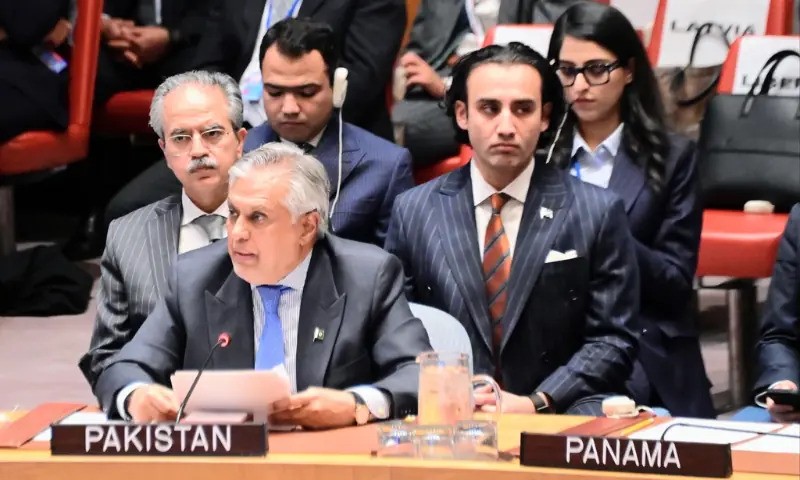
Pakistan has formally called upon the international community to institute rigorous regulatory frameworks to prevent artificial intelligence from escalating global military competition. Addressing a high-level United Nations Security Council (UNSC) briefing on artificial intelligence and international security, Deputy Prime Minister and Foreign Minister Ishaq Dar delivered Islamabad's official stance. The session, chaired by France, brought together global diplomats alongside chief executives of leading technology firms to deliberate on the security implications of rapid advancements in machine learning and autonomous systems.
DPM Dar emphasized that the international community must take concerted preventative action. He stated that artificial intelligence must not be allowed to transform into another dimension of the ongoing global arms race. The briefing highlighted mounting international anxieties over the integration of advanced algorithms into critical infrastructure and defense mechanisms, prompting technology leaders to concede that the sector demands unprecedented vigilance and oversight.
Commercial & Economic Implications
While the immediate discourse centered on geopolitical stability and international security, the commercial ramifications of unregulated military AI development carry profound consequences for emerging economies like Pakistan. Global defense spending diverted toward autonomous weapons systems directly influences critical supply chains, technology transfer restrictions, and the global allocation of semiconductor resources. Import controls on dual-use technologies invariably ripple through domestic telecommunications, industrial automation, and enterprise software sectors.
Furthermore, heightened geopolitical tensions surrounding artificial intelligence can drive inflationary pressures by disrupting global supply chains for high-end microprocessors and specialized computing hardware. For Pakistani businesses, wholesale distributors, and retail enterprises striving to modernize through digital transformation, restricted access to cutting-edge technology or inflated global hardware costs could widen the technological deficit with developed markets. Establishing international governance standards is therefore vital to ensure equitable technological access and prevent protectionist trade barriers disguised as security protocols.
Related Intelligence: Superpower Silicon: The US-China Artificial Intelligence Hegemony Race
Stakeholder Perspectives & Market Reactions
Industry bodies, technology associations, and legal experts in Pakistan have echoed the urgency of framing comprehensive national and international policies regarding artificial intelligence. Domestic software houses and tech startups view global regulatory debates with cautious optimism, recognizing that while security guardrails are essential, they must not stifle innovation or restrict cross-border data flows and collaborative development.
Legal and strategic analysts have praised Islamabad's proactive diplomacy at the UN Security Council, noting that developing nations must actively participate in shaping global technology norms. Stakeholders emphasize that domestic enterprises require clear regulatory roadmaps to align with international compliance standards, particularly as global corporations face mounting pressure to vet their supply chains and technological deployments for security risks.
Forward Outlook & Key Watchpoints
As the UN Security Council continues its deliberations on emerging technologies, the international focus will shift toward drafting binding treaties and confidence-building measures. Key watchpoints include potential multilateral agreements on autonomous weapons systems, transparency protocols for military AI research, and the establishment of international oversight bodies.
For Pakistan, policy enforcement will hinge on balancing national security imperatives with the requirements of a growing digital economy. Policymakers must domesticate international standards into robust national cybersecurity and artificial intelligence acts, ensuring that local industries remain competitive while adhering to global norms of responsible technological deployment.
Join Our Official WhatsApp Channel
Receive live commodity alerts, policy changes, and commercial intelligence directly on WhatsApp.