
Pakistan Urges Global UNSC Guardrails to Prevent AI Arms Race
At the United Nations Security Council, Pakistan urged the international community to establish robust regulatory guardrails to prevent artificial intelligence from accelerating a global military arms race.
The Core Development
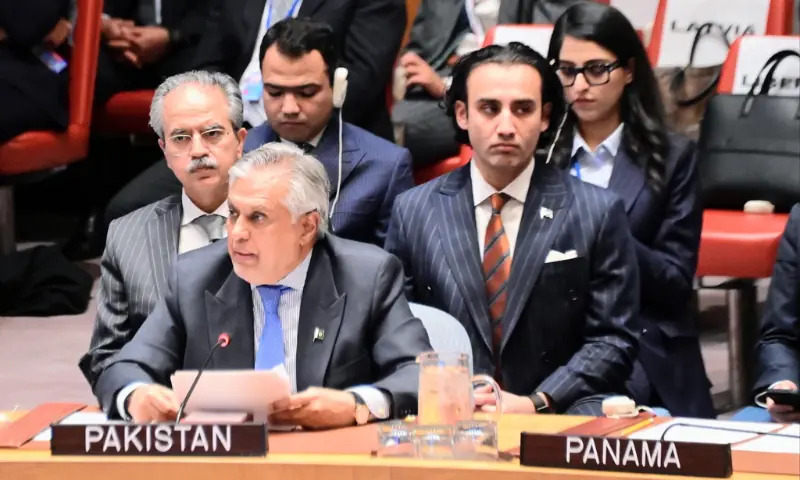
At a high-level briefing of the United Nations Security Council (UNSC) chaired by France, Pakistan formally articulated its strategic position on the intersection of emerging technology and international security. Deputy Prime Minister and Foreign Minister Ishaq Dar delivered Pakistan's comprehensive policy statement, emphasizing that artificial intelligence must not evolve into another destructive facet of ongoing global arms races. The high-stakes UN session brought together member states alongside executives from major global artificial intelligence firms who briefed the top UN body on the pressing need for heightened technological vigilance.
DPM Dar underscored that rapid advancements in automated systems, machine learning, and autonomous decision-making apparatuses pose unprecedented challenges to global peace. Highlighting the military domain specifically, he called for urgent measures of restraint and mutual confidence-building to mitigate the profound risks of catastrophic miscalculation and dangerously compressed decision-making timelines. The intervention places Pakistan firmly among nations advocating for proactive multilateral governance of dual-use technologies before autonomous weaponization outpaces international law.
Commercial & Economic Implications
While the primary deliberations at the UNSC centered on geopolitical security and strategic stability, the ripple effects of artificial intelligence militarization carry profound commercial and economic implications for developing economies like Pakistan. The global race for AI supremacy heavily influences semiconductor supply chains, critical mineral extraction, and international technology transfer restrictions. As major powers divert vast financial capital and engineering talent toward defense-oriented artificial intelligence applications, commercial enterprises in emerging markets face potential supply bottlenecks, inflated hardware costs, and restricted access to cutting-edge computing infrastructure.
For Kalyar Traders and the wider domestic business ecosystem in Pakistan, shifts in international technology regulations directly impact wholesale distribution channels, digital retail pricing, and inflation dynamics. Increased global spending on security-cleared hardware can distort market prices for essential enterprise technology, cloud computing, and telecommunications equipment. Furthermore, a failure to establish international governance frameworks risks market fragmentation, obstructing cross-border trade in advanced technological goods and escalating operational overheads for Pakistani retail and logistics enterprises striving to modernize through automation.
Related Intelligence: Pakistan Urges UNSC Guardrails to Prevent AI Arms Race
Stakeholder Perspectives & Market Reactions
International technology leaders and policy analysts have offered mixed reactions to the UN briefing, reflecting the tension between corporate innovation and state security. While AI executives acknowledged the necessity of regulatory oversight, industry bodies globally remain cautious about over-regulation stifling commercial research and development. However, diplomatic circles and defense analysts have widely welcomed Pakistan's pragmatic emphasis on military restraint and transparency mechanisms.
Domestic industry associations and legal experts in Pakistan have stressed the importance of aligning national economic strategies with emerging international compliance standards. Stakeholders argue that as global supply chains become increasingly sensitive to artificial intelligence governance, local businesses must anticipate stricter export controls, data localization mandates, and cybersecurity regulations. Public response reflects a growing awareness that technological sovereignty and economic stability are inextricably linked, necessitating a coordinated policy approach between federal trade authorities and international diplomatic missions.
Forward Outlook & Key Watchpoints
As the United Nations Security Council continues its deliberations on artificial intelligence and international security, several critical milestones and policy watchpoints will dictate the trajectory of global technology governance. Key indicators to monitor include potential draft resolutions by UNSC member states regarding autonomous weapon systems, bilateral dialogues on technology transfer, and the establishment of international oversight bodies.
For Pakistani policymakers, diplomats, and commercial leaders, the immediate priority will be monitoring how major economic powers respond to calls for military AI restraint. Future policy enforcement mechanisms, export control updates from supplier nations, and regional technological cooperation agreements will significantly influence Pakistan's domestic economic landscape. Stakeholders must remain vigilant, adapting commercial strategies to navigate an increasingly regulated and security-conscious global technology market.
Join Our Official WhatsApp Channel
Receive live commodity alerts, policy changes, and commercial intelligence directly on WhatsApp.