
Judicial Overhaul Threatens Pakistan Economic Stability and Rights
The establishment of Pakistan's Federal Constitutional Court under the 27th Amendment threatens judicial independence and hard-won rights, carrying profound implications for national commerce.
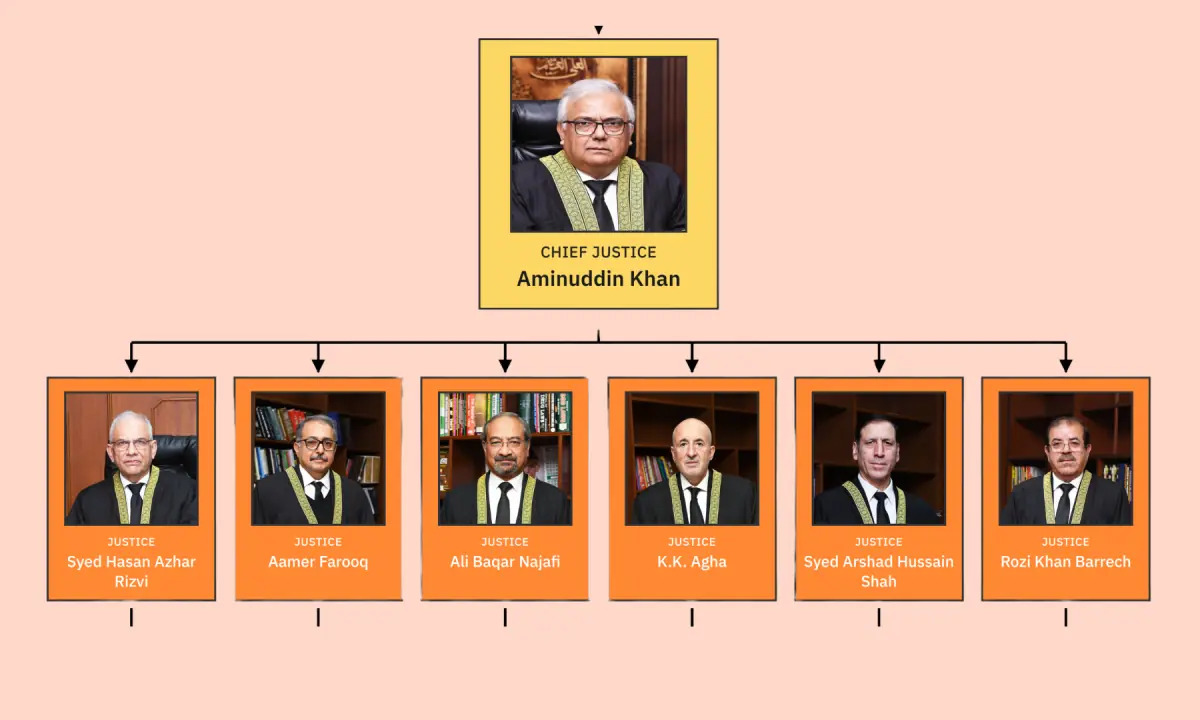
The Core Development
The landscape of Pakistan's judiciary has undergone a seismic shift following the enactment of the 27th Amendment, which established the Federal Constitutional Court (FCC). Promoted by proponents as a necessary structural reform to alleviate case backlogs and streamline constitutional interpretation, the FCC has instead ignited intense national debate regarding the separation of powers and judicial autonomy. Most glaringly, the newly constituted court commenced operations without a single woman judge, leaving the bench composed entirely of men and immediately drawing severe criticism from civil society and legal watchdogs.
At the time of its legislative passage, officials argued that the court would absorb heavy caseloads previously monopolized by the Supreme Court, curbing judicial overreach and insulating the economy from prolonged courtroom uncertainty. However, legal analysts and constitutional experts argue that the primary effect has been the systematic dismantling of judicial independence. Critics note that once the structural integrity of the judiciary is compromised, the erosion extends far beyond high-profile political disputes, threatening the foundational protections that govern civil society, individual liberties, and commercial contracts across Pakistan.
Commercial & Economic Implications
For the business, wholesale, and retail sectors represented by institutions like Kalyar Traders, a predictable and independent judiciary is the bedrock of commercial confidence. Foreign direct investment, domestic capital allocation, and supply chain stability rely heavily on the sanctity of contract law and the impartial enforcement of regulatory frameworks. When the constitutional architecture undergoes sudden, politically charged alterations, investor sentiment inevitably wavers.
Furthermore, regressive legal trends risk undermining decades of legislative progress aimed at inclusive economic participation. Legal protections for women, labor rights, and minority safeguards are increasingly viewed by economists as vital components of sustainable macroeconomic growth. Any rollback of these standards not only impacts social equity but also signals potential instability in regulatory enforcement. Inflationary pressures and currency volatility are exacerbated when capital flight occurs due to diminished institutional certainty, directly impacting wholesale distribution networks, consumer pricing, and retail purchasing power across major commercial hubs in Karachi, Lahore, and Islamabad.
Related Intelligence: Geopolitical Pressures and Academic Tensions Reverberate Across Global Markets
Stakeholder Perspectives & Market Reactions
Trade associations, industrial bodies, and prominent legal fraternities have voiced mounting apprehension over the long-term trajectory of the nation's jurisprudence. Representatives from leading chambers of commerce have emphasized that economic stakeholders require absolute clarity regarding property rights, taxation disputes, and commercial arbitration. The absence of diverse representation on the FCC bench has likewise drawn sharp reprimands from bar associations and human rights organizations, who argue that the court fails to reflect the demographic realities of modern Pakistan.
Legal practitioners maintain that justifications regarding docket reduction ring hollow when weighed against the dilution of judicial independence. Public response has coalesced around the warning that executive encroachment upon the judiciary ultimately weakens market confidence, leaving businesses vulnerable to arbitrary policy shifts and prolonged legal ambiguities in commercial dispute resolution.
Forward Outlook & Key Watchpoints
As the Federal Constitutional Court settles into its mandate, market participants, international financial institutions, and legal scholars will closely monitor its initial rulings for indicators of judicial independence. Key watchpoints include how the court handles pending commercial appeals, taxation disputes, and challenges to regulatory bodies.
For Kalyar Traders and the broader business community, the immediate priority remains risk mitigation amid legislative uncertainty. Policymakers must demonstrate a commitment to transparent jurisprudence and institutional stability to restore investor trust. Without verifiable guarantees of judicial impartiality, Pakistan's commercial sectors face prolonged headwinds that could constrain growth and deter vital foreign capital inflows in the fiscal quarters ahead.
Join Our Official WhatsApp Channel
Receive live commodity alerts, policy changes, and commercial intelligence directly on WhatsApp.