
Pakistan, Saudi Arabia, and Turkiye Operationalise Makkah Defence Pact
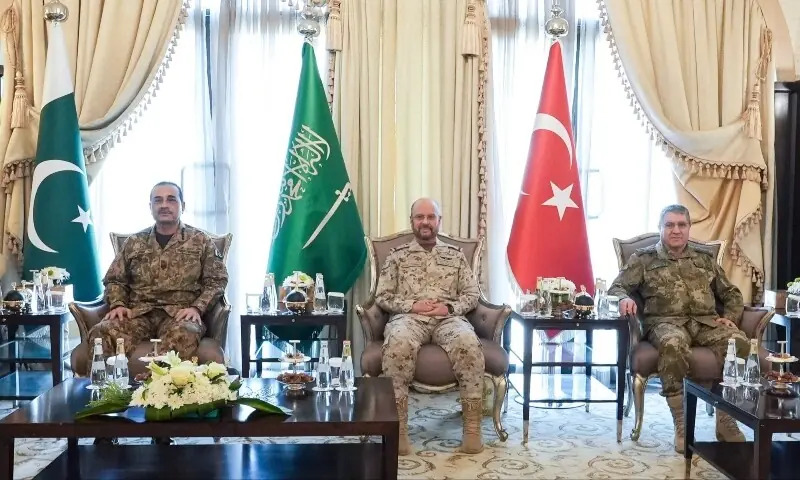
Military leadership from Pakistan, Saudi Arabia, and Turkiye convened in Riyadh to accelerate the operationalisation of the Makkah Joint Defence Agreement, shifting from political assurances to active military integration.
The Core Development
The hurried high-level meeting of the military chiefs of Pakistan, Saudi Arabia, and Turkiye in Riyadh on Friday marks a decisive shift in regional security architecture. This trilateral engagement, immediately followed by a separate strategic consultation between Pakistan's Chief of Army Staff and Saudi Defence Minister Prince Khalid bin Salman, underscores the accelerated pace at which the Makkah Joint Defence Agreement—signed on August 7—is transitioning from a foundational framework into an operational reality.
While official communiques released by military media wings omit any suggestion of imminent joint strikes or offensive ground operations against Yemen's Ansar Allah (Houthis), the subtext of the diplomatic and military choreography reveals a concerted push toward institutionalised defence integration. The focus has decisively shifted from broad political assurances to establishing robust command structures, intelligence-sharing mechanisms, and logistics protocols designed to safeguard regional stability across the Arabian Peninsula and South Asia.
Commercial & Economic Implications
For Kalyar Traders and the wider business community in Pakistan, heightened geopolitical alignment with the Kingdom of Saudi Arabia and the Republic of Turkiye carries profound economic weight. Capital flows, foreign direct investment (FDI), and bilateral trade frameworks are inextricably linked to regional security guarantees. As security cooperation deepens, the predictability of supply chains traversing the Red Sea and Gulf corridors improves significantly, insulating wholesale distribution networks and retail markets from external shocks.
Furthermore, stability in the energy corridors of the Middle East directly influences Pakistan's import bill, foreign exchange reserves, and domestic inflationary pressures. A secure trade ecosystem reduces petroleum product volatility, stabilizing transport costs for retail goods and shielding domestic consumers from runaway inflation. Strategic defence pacts of this magnitude invariably unlock preferential trade terms, deferred payment facilities for energy imports, and joint ventures in industrial manufacturing, bolstering Pakistan's external account stability.
Related Intelligence: Naqeebullah Murder Acquittals Spark Fresh Judicial and Economic Debate
Stakeholder Perspectives & Market Reactions
Industry bodies, financial analysts, and trade associations across Pakistan have responded with cautious optimism to the Riyadh developments. Business leaders note that enhanced strategic ties with two of the Muslim world's largest economies provide a crucial psychological and economic buffer for investor confidence. Legal and policy experts emphasise that translating military pacts into institutional frameworks requires meticulous alignment with domestic legal parameters and international obligations, ensuring that economic benefits are legally secure and sustainable.
Official statements from Islamabad, Riyadh, and Ankara stress mutual sovereignty and economic prosperity as twin pillars of the alliance. Market analysts point out that while the immediate market reaction has been steady, sustained implementation of the Makkah agreement could trigger a re-rating of Pakistani sovereign risk, lowering borrowing costs for local enterprises engaged in international trade.
Forward Outlook & Key Watchpoints
As this trilateral framework evolves, key watchpoints for policymakers and business stakeholders include the establishment of permanent joint coordination committees and the timeline for upcoming joint military exercises. Observers will closely monitor upcoming bilateral trade delegations and economic ministerial meetings designed to leverage this new security umbrella for commercial gains. The ultimate success of the Makkah pact will be measured by its ability to foster enduring regional peace while simultaneously delivering tangible economic dividends to the participating nations.
Join Our Official WhatsApp Channel
Receive live commodity alerts, policy changes, and commercial intelligence directly on WhatsApp.