
Pakistan, Saudi Arabia and Turkey convene high-level defence pact meeting in Riyadh
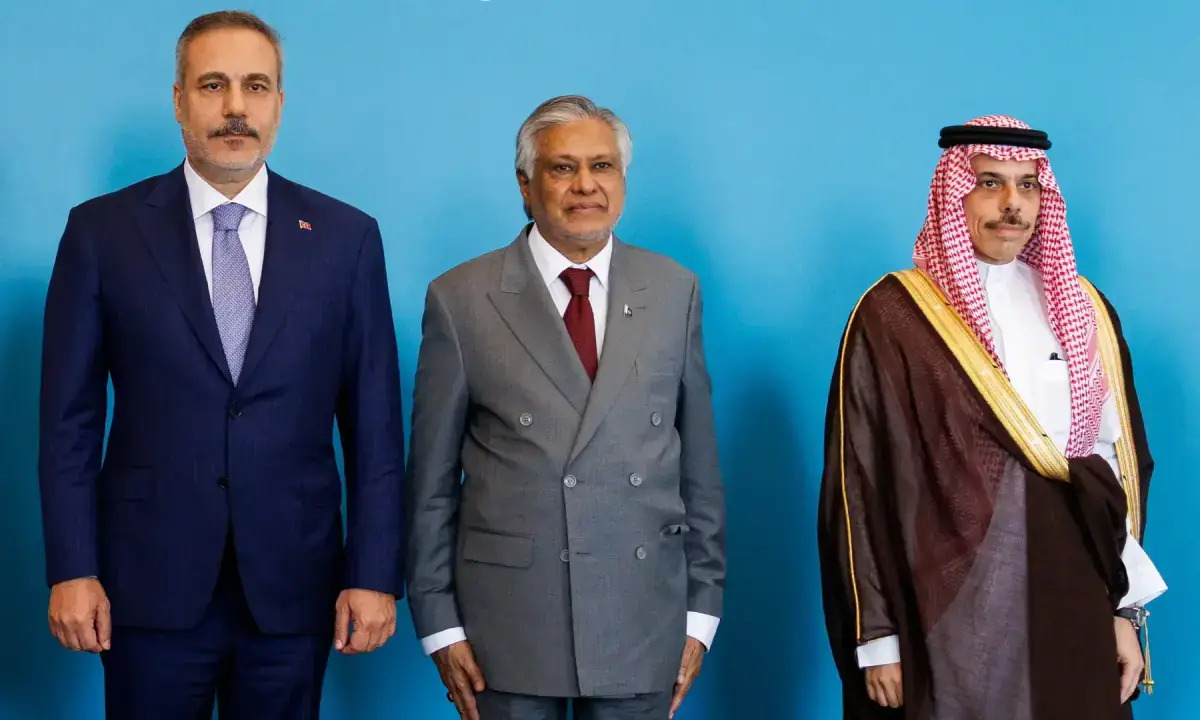
Pakistan's top civil-military leadership arrived in Riyadh for the Strategic Political and Defence Committee meeting under the Makkah Joint Defence Agreement to deliberate on regional security and bilateral cooperation.
The Core Development
A high-level Pakistani delegation, comprising key civilian and military leadership, has arrived in Riyadh to participate in a crucial meeting of the Strategic Political and Defence Committee (SPDC) under the Makkah Joint Defence Agreement. The Foreign Office (FO) confirmed that the discussions will center on shifting regional dynamics, security frameworks, and deepening institutional collaboration among member states. Pakistan is represented by a formidable delegation including Deputy Prime Minister and Foreign Minister Senator Ishaq Dar, Chief of Defence Forces and Chief of Army Staff Field Marshal Asim Munir, and Defence Minister Khawaja Asif. The talks also bring together high-ranking foreign ministers, defence ministers, and chiefs of general staff from the Kingdom of Saudi Arabia and the Republic of Turkey. The multilateral engagement underscores the growing strategic alignment between Islamabad, Riyadh, and Ankara as regional security challenges multiply across the Middle East and South Asia.
Commercial & Economic Implications
While ostensibly framed around strategic defence cooperation, security architectures of this magnitude invariably exert profound ripple effects on commercial trade routes, energy corridors, and macroeconomic stability in Pakistan. For Kalyar Traders and the wider business ecosystem, geopolitical stability in the Gulf region directly correlates with petroleum import costs, expatriate remittance inflows, and foreign direct investment (FDI) trajectories. Secure trade lanes and robust diplomatic ties with Saudi Arabia and Turkey safeguard vital supply chains for energy and manufactured goods, mitigating imported inflation pressures that directly impact retail and wholesale markets. Stability in the Middle East ensures predictable shipping insurance premiums and freight rates, shielding Pakistan's foreign exchange reserves from sudden external shocks and stabilizing the local currency against major trading currencies.
Related Intelligence: Middle East Escalation Threatens Global Supply Chains and Energy Markets
Stakeholder Perspectives & Market Reactions
Business councils, corporate leaders, and trade associations in Pakistan have monitored the Riyadh summit closely, viewing enhanced tripartite military and strategic cooperation as a foundational prerequisite for sustained economic engagement. Industry bodies emphasize that deeper defence ties often pave the way for preferential trade agreements, joint ventures in defense production, and increased capital commitments from Gulf sovereign wealth funds. Economic analysts note that international investor sentiment improves significantly when Pakistan demonstrates active diplomatic integration with regional economic powerhouses like Saudi Arabia and Turkey. Public and market reactions remain cautiously optimistic, with financial circles anticipating that strategic accords will translate into tangible economic packages, bilateral credit facilities, and expanded export opportunities for Pakistani agricultural and industrial goods.
Forward Outlook & Key Watchpoints
As the SPDC deliberations conclude in Riyadh, market participants and policymakers will closely monitor the joint communiques and subsequent implementation roadmaps emerging from the summit. Key watchpoints include potential bilateral trade pacts, joint manufacturing ventures in the defence and technology sectors, and the finalization of long-term energy financing arrangements. Furthermore, analysts will assess how the outcomes of this pact influence regional security cooperation and whether these diplomatic milestones generate measurable improvements in foreign investment inflows into Pakistan's industrial corridors over the upcoming fiscal quarters.
Join Our Official WhatsApp Channel
Receive live commodity alerts, policy changes, and commercial intelligence directly on WhatsApp.