
Pakistan Registers Nearly Six Million Citizens Under PM Fuel Relief Scheme
Federal authorities report near six million registrations under the Prime Minister's Fuel Relief Scheme, highlighting broad uptake and critical adjustments to programmatic caps.
The Core Development
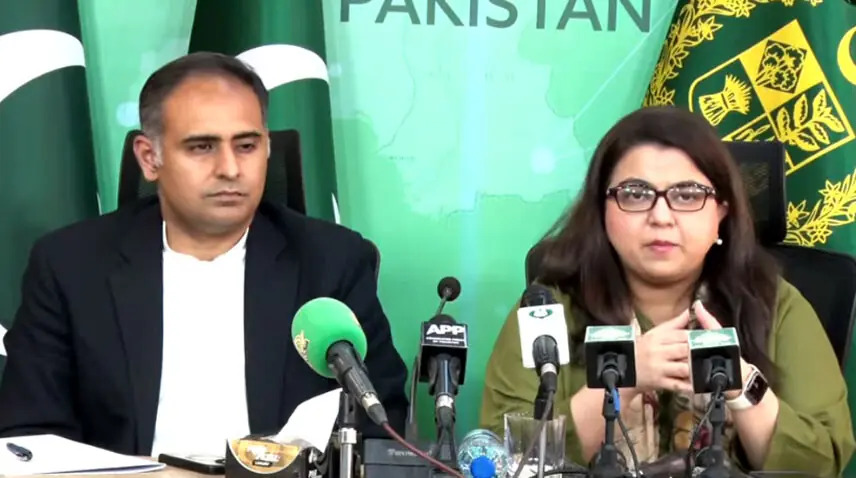
In a major update on federal welfare outreach, Federal Information Technology and Telecommunication Minister Shaza Fatima Khawaja announced on Friday that approximately 5.91 million citizens have successfully registered under the Prime Minister's Fuel Relief Scheme. Speaking alongside Minister of State for Finance and Railways Bilal Azhar Kayani during a high-profile press conference in Islamabad, the minister provided comprehensive operational metrics detailing the rollout of the targeted subsidy framework.
According to official data presented to the media, over 6.18 million individual fuel relief tokens have been generated since the initiative's formal inception. Out of these generated tokens, 4.79 million have been successfully redeemed at authorized distribution points across the country. To ensure operational integrity, transparency, and seamless execution, the administration has established a dedicated 24/7 control room in the capital. This monitoring cell oversees real-time implementation bottlenecks, ensuring prompt grievance redresses and maintaining strict oversight of supply chains.
Responding directly to grassroots feedback and operational challenges encountered during the initial weeks, the federal government enacted significant policy calibrations. Officials confirmed the complete removal of the contentious five-litre consumption limit previously imposed on motorcycles, rickshaws, and Qingqi loaders. Furthermore, the stringent vehicle ownership verification prerequisite has been rescinded specifically for motorcycle and rickshaw operators utilizing rented or leased commercial transport.
Commercial & Economic Implications
This large-scale fiscal intervention carries profound ramifications for Pakistan's domestic retail trade, informal transport networks, and urban supply chains. By directly subsidizing petroleum expenditures for two-stroke and commuter transport operators, the intervention aims to cushion vulnerable urban populations against lingering macroeconomic inflation and elevated fuel tariffs.
For wholesale distribution networks and local fuel retailers, the rapid redemption rate of 4.79 million tokens signals robust liquidity injection directly targeted at transport-dependent laborers, delivery workers, and daily wage earners. High fuel costs have historically triggered cascading inflationary shocks across essential food and retail commodities. By alleviating commuter overheads, the relief framework mitigates upward pricing pressure on urban transit fares, indirectly stabilizing retail market margins and protecting consumer purchasing power in densely populated metropolitan centers.
Related Intelligence: Pakistan Adjusts Fuel Prices with Petrol Up and Diesel Down
Stakeholder Perspectives & Market Reactions
The policy pivot to remove vehicle ownership hurdles and volumetric caps has drawn cautious optimism from transport associations, commuter unions, and independent economic analysts. Earlier, representatives from various auto-rickshaw and motorcycle unions had raised concerns that rigid documentation rules and restrictive litre quotas excluded legitimate daily wage earners who operate rented or borrowed vehicles.
During the briefing, Minister Bilal Azhar Kayani emphasized that the administration remains responsive to ground realities, framing the adjustments as a testament to adaptive economic governance. Public response across major urban centers has mirrored this sentiment, with commuters noting that streamlined digital token generation has reduced logistical friction at retail petrol pumps. However, consumer advocacy groups continue to urge vigilant oversight to prevent administrative leakages and ensure that targeted benefits reach authentic end-users without commercial exploitation.
Forward Outlook & Key Watchpoints
As the fuel relief initiative enters its next operational phase, federal authorities face the critical task of scaling digital verification infrastructure while maintaining absolute fiscal transparency. Market observers and economic policy analysts will closely monitor the 24/7 control room's performance metrics, particularly regarding fraud prevention and the speed of token settlements for retail petrol stations.
Key watchpoints for the coming quarters include the sustainability of fiscal allocations dedicated to the subsidy program amid ongoing negotiations with international financial institutions. Furthermore, policymakers will evaluate whether these targeted relief measures can be seamlessly integrated into broader national social protection databases to optimize administrative costs and enhance overall welfare delivery efficiency across Pakistan.
Join Our Official WhatsApp Channel
Receive live commodity alerts, policy changes, and commercial intelligence directly on WhatsApp.