
Pakistan Reaffirms Strategic Defense Pact with Saudi Arabia Amid Regional Tensions
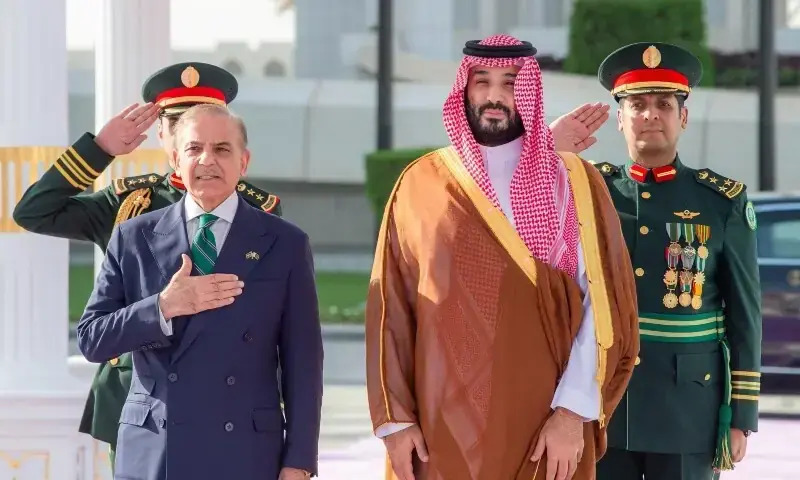
Prime Minister Shehbaz Sharif reaffirmed Pakistan's ironclad commitment to Saudi Arabia's security on its National Day, strongly condemning regional drone attacks and reinforcing bilateral strategic ties.
The Core Development
Prime Minister Shehbaz Sharif on Wednesday reiterated Pakistan's absolute and unreserved commitment to safeguarding the sovereignty and territorial security of the Kingdom of Saudi Arabia. Conveying his official felicitations on the occasion of Saudi National Day—which commemorates the unification of the kingdom under King Abdulaziz in 1932—the premier utilized digital diplomacy via X to emphasize the enduring strategic depth shared between Islamabad and Riyadh.
Beyond traditional diplomatic pleasantries, the Prime Minister's message carried profound strategic weight, directly addressing the escalating security dynamics across the Arabian Peninsula. Prime Minister Shehbaz forcefully condemned the persistent cross-border attacks orchestrated by Houthi forces, casting particular opprobrium on the attempted drone strike targeting the holy city of Makkah. He underscored that any kinetic threat directed toward the Haramain Sharifain transcends mere geopolitical friction, directly wounding the religious sentiments of over two billion Muslims worldwide. Pakistan, he affirmed, stands shoulder to shoulder with the Saudi leadership and populace in neutralizing regional security threats.
Commercial & Economic Implications
While ostensibly a diplomatic and security pronouncement, the reaffirmation of the Islamabad-Riyadh axis holds immediate significance for Pakistan's macroeconomic stability and commercial landscape. Saudi Arabia remains a vital anchor for Pakistan's external account, serving as a primary provider of deferred oil facility arrangements, crucial financial deposits, and robust bilateral trade flows. For Kalyar Traders and the wider domestic business community, sustained political alignment with the Gulf powerhouse ensures predictability in energy imports, mitigating supply chain shocks that could otherwise fuel domestic inflation.
Furthermore, steady bilateral relations directly underpin the inflow of worker remittances from the millions of Pakistani expatriates gainfully employed within the Kingdom. These remittances form the bedrock of Pakistan's retail consumption and foreign exchange reserves. Any reinforcement of security cooperation dampens regional volatility, directly translating into stable currency valuations, predictable shipping and trade insurance premiums, and bolstered confidence among international investors evaluating the broader South Asian and Middle Eastern trade corridors.
Related Intelligence: South African Mass Shooting Sparks Security Crisis and Economic Concerns
Stakeholder Perspectives & Market Reactions
Key industrial bodies, trade associations, and policy analysts across Pakistan have welcomed the Prime Minister's unequivocal stance, viewing it as a prerequisite for maintaining steady economic corridors. Export-oriented sectors, particularly manufacturing and agricultural conglomerates eyeing expanded footprints in the Gulf Cooperation Council (GCC) markets, interpret the high-level diplomatic warmth as a positive signal for future bilateral trade agreements and preferential market access initiatives.
Financial market analysts note that macroeconomic stability in Pakistan is inextricably linked to continuous financial backing from friendly Gulf states. Business chambers in Karachi and Lahore have consistently emphasized that a secure Saudi Arabia ensures uninterrupted petroleum supplies, shielding domestic wholesale distribution networks from erratic price fluctuations. Legal and policy experts further point out that institutionalized defense and economic pacts provide a secure legal framework for joint ventures, foreign direct investment, and labor export pipelines that sustain millions of domestic households.
Forward Outlook & Key Watchpoints
As geopolitical realignments accelerate across the Middle East and South Asia, policymakers in Islamabad are expected to operationalize these diplomatic commitments through high-level ministerial visits and joint economic committee sessions in the coming quarters. Key watchpoints for domestic businesses include the finalization of prospective bilateral investment treaties, updates on deferred oil payment terms, and the expansion of joint defense manufacturing initiatives.
For Kalyar Traders and macroeconomic observers, monitoring the security matrix around Red Sea trade lanes and energy installations remains paramount. Sustained bilateral coordination between Pakistan and Saudi Arabia will serve as a definitive barometer for regional stability, dictating capital flows, energy security, and inflationary trends across the domestic economy through the remainder of the fiscal year.
Join Our Official WhatsApp Channel
Receive live commodity alerts, policy changes, and commercial intelligence directly on WhatsApp.