
Government Trims Petrol Price by Rs2.93 While Diesel Edges Higher
Pakistan has adjusted retail petroleum rates, trimming petrol to Rs395.37 per litre while increasing high-speed diesel to Rs396.85 per litre amid substantial fixed fiscal levies.
The Core Development
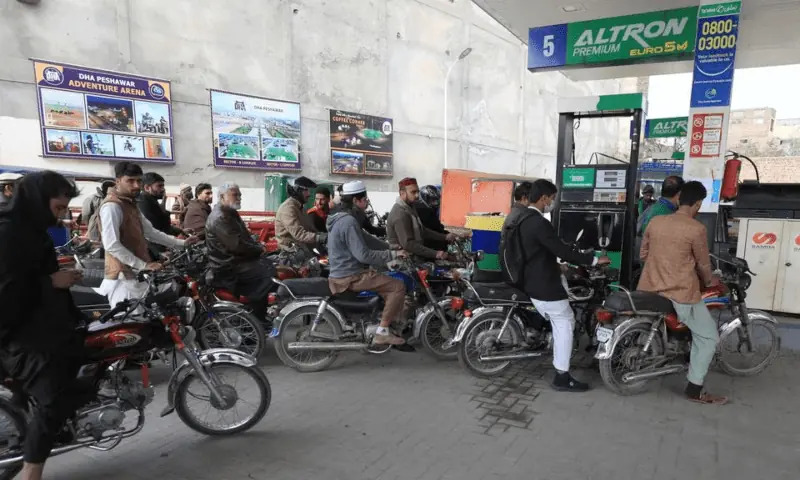
The federal government on Monday announced an asymmetric revision in ex-depot petroleum prices, trimming the retail cost of motor fuel while introducing a marginal increase for industrial transport fuel. According to an official notification issued by the Petroleum Division, the price of petrol has been reduced by Rs2.93 per litre, bringing its consumer price down to Rs395.37 per litre. Conversely, the price of high-speed diesel (HSD) experienced an upward adjustment of Re0.61 per litre, fixing the new pump price at Rs396.85 per litre.
The revised pricing framework took effect on Tuesday, October 13. Crucially, the latest review leaves heavy state revenue mechanisms intact, with the government maintaining approximately Rs114 per litre in taxes, petroleum development levies, and customs duties on motor gasoline, alongside Rs100 per litre applied to high-speed diesel. While domestic pump prices remain structurally elevated compared to previous fiscal years, both primary fuels have retreated considerably from record highs reached earlier in the year. High-speed diesel peaked at Rs520.35 per litre on April 3, following unprecedented international market dislocations triggered by geopolitical hostilities in late February, when baseline prices hovered around Rs281 per litre. Petrol reached an apex of Rs458.41 per litre over the same cycle.
Commercial & Economic Implications
The divergent movement between motor gasoline and high-speed diesel carries distinct consequences across Pakistan's wholesale distribution networks, cargo logistics, and end-consumer markets. For urban retail consumers and two-wheeler commuters, the Rs2.93 per litre cut provides marginal fiscal breathing room, slightly dampening non-food headline pressures in urban consumer price index baskets.
However, the commercial impact of the Re0.61 increase in diesel creates compounding operational pressures across domestic supply chains. High-speed diesel serves as the operational backbone of national freight carriage, intercity logistics, and mechanized agricultural operations, including tractor usage and irrigation tube wells. Given that wholesale distribution margins remain tightly squeezed, even minor upward revisions in diesel eliminate incentives for freight operators to lower transport tariffs. Consequently, wholesale produce markets and heavy haulage providers will absorb or pass down stubborn logistical overheads, preventing immediate relief in urban food commodity pricing.
Stakeholder Perspectives & Market Reactions
Market participants across major industrial hubs, including Karachi, Lahore, and Gujranwala, expressed mixed assessments of the pricing adjustment. Logistics associations highlighted that the continued levying of Rs100 per litre on diesel limits structural economic recovery, asserting that minor bi-weekly adjustments fail to address the core issue of excessive taxation on commercial freight.
Agricultural bodies and industrial manufacturing federations noted that persistent high base costs for diesel compound input expenses at a sensitive juncture in the seasonal cropping calendar. Business leadership has repeatedly petitioned the Ministry of Finance to rationalize the Petroleum Development Levy (PDL) to stimulate industrial output. Meanwhile, energy market analysts noted that the government's decision to maintain fixed fiscal charges underscores fiscal dependency on petroleum revenues to meet International Monetary Fund budgetary benchmarks, leaving consumer rates highly exposed to global price floors.
Forward Outlook & Key Watchpoints
The short-to-medium-term path of domestic fuel pricing hinges largely on two dynamics: crude price volatility in global oil benchmarks and the government's fiscal headroom. Market participants must monitor geopolitical risk premiums across international supply corridors, as any secondary escalation could swiftly reverse the marginal relief observed in retail petrol prices.
Domestically, key watchpoints include whether the federal authorities will maintain the current taxation ceiling under future bi-weekly reviews or introduce further changes to offset non-tax revenue deficits. As transport unions assess their cost matrices, market observers anticipate stable cargo tariffs over the current fortnightly cycle, though any sustained appreciation in diesel rates during subsequent reviews will inevitably renew pressure on nationwide wholesale freight rates.
Join Our Official WhatsApp Channel
Receive live commodity alerts, policy changes, and commercial intelligence directly on WhatsApp.