
Pakistan Navy Seizes Narcotics Worth 96 Million Dollars in Arabian Sea
The Pakistan Navy intercepted two dhows in the Arabian Sea, seizing narcotics valued at 96 million dollars during extensive counter-narcotics operations.
The Core Development
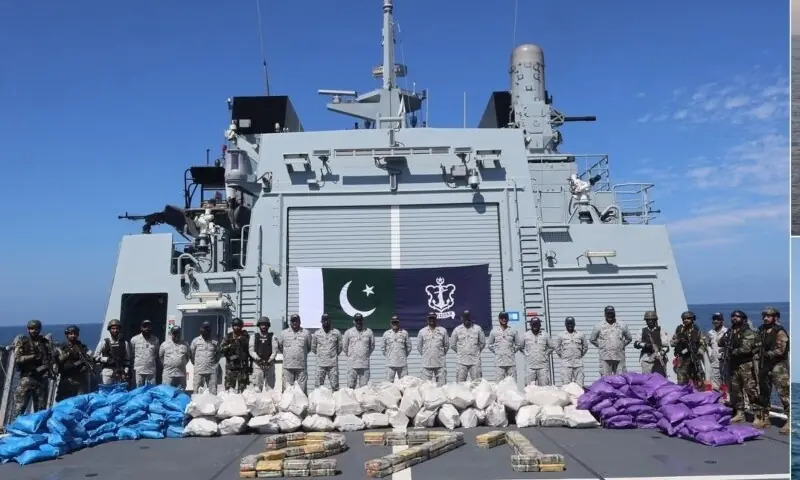
In a major blow to regional narcotics trafficking networks, the Pakistan Navy successfully executed two high-seas counter-narcotics operations in the Arabian Sea, resulting in the seizure of a massive cache of illegal drugs valued at approximately 96 million dollars. According to an official press release issued by the military’s media wing, the Inter-Services Public Relations (ISPR), the operations were spearheaded by the Pakistan Navy Ship (PNS) Yarmook operating at extended ranges from the Pakistani coastline.
The strategic maneuver involved the interception of two suspicious dhows navigating regional trade and transit routes. Upon boarding and executing a meticulous search of the vessels, naval personnel discovered sophisticated concealed compartments. Hidden within these secret caches were approximately 850 kilogrammes of high-grade methamphetamine, commonly known as ice, alongside 2,000 kilogrammes of hashish and cannabis. The dual interception underscores the growing sophistication of maritime smuggling syndicates utilizing the Arabian Sea as a transit corridor, as well as the operational readiness and reach of Pakistan's naval forces.
Commercial & Economic Implications
While primarily a national security and law enforcement milestone, large-scale narcotics seizures of this magnitude carry profound commercial and economic ramifications for Pakistan. The illicit drug trade generates vast sums of black money that frequently infiltrate and destabilize legitimate financial channels, fueling underground economies, corruption, and money laundering networks.
By intercepting 96 million dollars worth of illicit substances, the Pakistan Navy has disrupted significant capital flows that would otherwise have been funneled back into organized crime, potentially financing broader criminal enterprises that undermine formal wholesale and retail markets. Furthermore, heightened maritime vigilance and stringent surveillance along commercial shipping lanes protect legitimate maritime commerce. Ensuring secure sea lanes is vital for safeguarding Pakistan's import and export supply chains, stabilizing regional trade corridors, and bolstering investor confidence in the country's logistical infrastructure.
Related Intelligence: Pakistan Navy Intercepts $96 Million Narcotics Shipment in Arabian Sea
Stakeholder Perspectives & Market Reactions
Official statements from military leadership emphasize the unwavering commitment of the Pakistan Navy to safeguarding national maritime frontiers and enforcing international maritime laws. Defense analysts and security experts have lauded the execution of PNS Yarmook, noting that conducting successful interdictions at extended ranges demonstrates advanced intelligence-gathering capabilities and tactical endurance.
Business and trade associations in coastal commercial hubs have also welcomed the development, highlighting the indirect economic benefits of eradicating illicit syndicates that often exploit legitimate commercial shipping vessels for cover. Industry observers stress that robust naval patrols reinforce Pakistan's standing as a responsible maritime state dedicated to curbing transnational crime and maintaining regional stability, which is essential for attracting foreign direct investment and fostering secure international trade partnerships.
Forward Outlook & Key Watchpoints
As the confiscated narcotics are processed for legal disposal and investigative agencies trace the origin and destination networks of the intercepted dhows, attention turns toward long-term enforcement strategies. Key watchpoints for policymakers and security strategists include intelligence sharing with regional and international maritime security partners to dismantle the wider syndicates operating across the Indian Ocean and Arabian Sea.
Future policy effectiveness will hinge upon sustained funding for naval reconnaissance assets, enhanced satellite surveillance of high-risk maritime zones, and tighter regulatory frameworks governing vessel registration along coastal areas. Continued proactive interdictions will remain critical to permanently degrading the operational capacity of transnational drug cartels utilizing Pakistan's maritime boundaries.
Join Our Official WhatsApp Channel
Receive live commodity alerts, policy changes, and commercial intelligence directly on WhatsApp.