
Pakistan Misses Asian Games Final Amid Mounting Commercial Stakes in Women Cricket
Sri Lanka defeated Pakistan by eight wickets in the Asian Games semi-final in Japan, ending Pakistan gold medal chase and intensifying scrutiny on sports investment, athlete commercial viability, and national cricket administration.
The Core Development
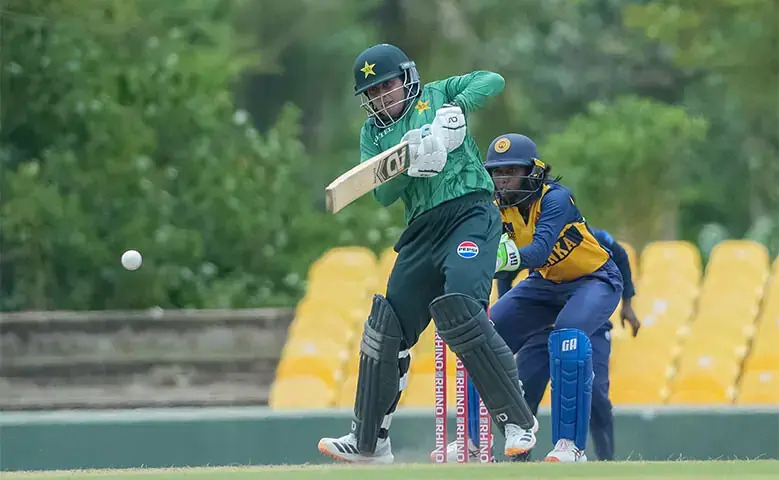
Pakistan women cricket team missed out on a berth in the Asian Games final on Sunday following a decisive eight-wicket defeat against Sri Lanka at the Korogi Sports Park in Nisshin, Japan. Despite posting a competitive total of 177 for four in their allotted 20 overs, the squad led by captain Fatima Sana proved unable to contain an aggressive counter-attack orchestrated by Sri Lanka captain Chamari Athapaththu.
Pakistan innings had initially placed the side in a commanding posture. Top-order batter Ayesha Zafar delivered an assertive 71 runs off 40 deliveries, while opening partner Shawaal Zulfiqar anchored the platform with 54 off 50 balls. However, the subsequent defensive effort faltered rapidly under sustained pressure. Sri Lanka reached the target of 178 with 13 balls to spare, concluding the chase at 178 for two in 17.5 overs. Athapaththu dominated proceedings, finishing unbeaten on 83 from 50 balls, featuring seven boundaries and six sixes, supported by Harshitha Samarawickrama unbeaten 17. The loss marked Pakistan second consecutive defeat to Sri Lanka within a ten-day span, cutting short their tournament campaign prior to the championship match.
Commercial & Economic Implications
The semi-final exit carries measurable ramifications for Pakistan nascent women sports commercial ecosystem. High-profile international podium finishes have historically served as the primary catalyst for commercial brand integration, private sector endorsements, and media rights valuation enhancements. A failure to reach the gold medal contest depresses projected short-term brand valuations for key national players, dampening potential advertising contracts across the fast-moving consumer goods (FMCG), banking, and telecommunications sectors.
Furthermore, the result directly affects the broader sports retail and merchandising supply chain. Major manufacturing hubs in Sialkot, responsible for producing high-grade apparel, cricket bats, and protective gear, rely on peak international tournament engagement to drive wholesale orders and domestic retail distribution surges. When national teams exit premier multi-sport tournaments ahead of finals, retail consumer demand historically registers a sharp tapering, limiting domestic sports inventory turnover and dampening broadcast viewership metrics that support commercial airtime pricing on national television networks.
Related Intelligence: India Education Deficit Exposes Human Capital Risks Amid Supply Chain Push
Stakeholder Perspectives & Market Reactions
Industry observers and sports marketing specialists in Pakistan have pointed to structural shortcomings in grassroots capitalization as the underlying driver of uneven international performance. While the Pakistan Cricket Board (PCB) has incrementally increased budget allocations toward women central contracts and domestic setups over recent fiscal cycles, corporate sponsors note that the return on investment remains constrained without consistent appearances in championship deciders.
Commercial partners privately express caution regarding multi-year endorsement packages, citing performance volatility against regional competitors like Sri Lanka and India. Analysts argue that commercial viability cannot rely solely on marquee male cricket circuits to subsidize domestic women athletic programs. Corporate leaders within trade and commerce sectors continue to call for structured private-public partnership frameworks, domestic franchise leagues, and targeted corporate tax credits to incentivize long-term institutional investment into athletic training, sports science, and high-performance infrastructure.
Forward Outlook & Key Watchpoints
Moving forward, the immediate operational focus turns to the tournament third-place playoff, where Pakistan must contest for the bronze medal to salvage international ranking points and state-backed athletic stipends. The PCB internal performance review committee is anticipated to assess the tactical and bowling deficiencies that allowed Sri Lanka to chase 178 with over two overs remaining.
Key watchpoints for corporate sponsors and institutional investors include the forthcoming domestic cricket schedule, updates to central contract grading, and the prospective financial blueprint for an independent, fully monetized domestic franchise tournament for women. The trajectory of future media rights bidding cycles for Pakistan bilateral women series will serve as an essential bellwether for whether commercial capital continues to expand or retrenches into conservative holding patterns.
Join Our Official WhatsApp Channel
Receive live commodity alerts, policy changes, and commercial intelligence directly on WhatsApp.