
Pakistan Men Secure Asian Games Squash Bronze After Defeating South Korea
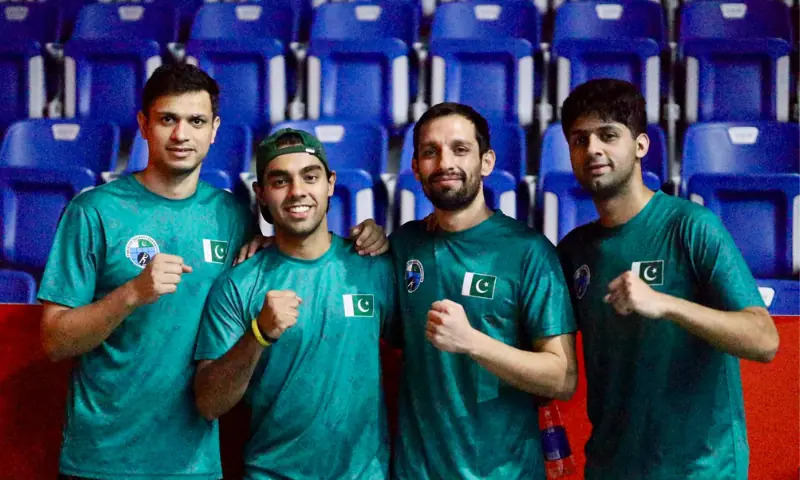
Pakistan's men's squash team secured an Asian Games bronze medal and semi-final berth following a dominant 2-0 quarter-final victory over South Korea in Nagoya.
The Core Development
Pakistan's rich heritage in international squash added another notable chapter on Wednesday as the men's national team guaranteed at least a bronze medal at the ongoing Asian Games. Competing at the Nagoya Kinjo Futo Arena, the Pakistan squad delivered a commanding performance to sweep South Korea 2-0 in the quarter-finals, bypassing the need for a deciding rubber and cementing their status among the continent's elite.
The tone for the tie was set by 22-year-old Mohammad Ashab Irfan in the opening match against 19-year-old Na Jooyoung. Although the encounter required three games, Irfan maintained tactical control throughout. After trading early points, the young Pakistani rising star surged to a 7-2 lead in the opening game, closing it out 11-5 in a brisk nine-minute spell. The second game followed a familiar trajectory; while Jooyoung attempted to claw back a couple of deficits, Irfan consistently restored his cushion to seal an 11-8 win. Meanwhile, the women's campaign concluded at the round-robin stage following a defeat against China, highlighting the contrasting trajectories of Pakistan's squash contingent at the multi-sport quadrennial event.
Commercial & Economic Implications
While athletic achievements in squash do not directly shift domestic retail inflation or wholesale commodity pricing, sporting triumphs carry significant economic externalities for Pakistan's service and manufacturing sectors. Success on the international stage directly stimulates demand for domestic sports goods manufacturing, a key export-oriented industry based largely in Sialkot. Furthermore, corporate sponsorship and institutional backing from public sector departments and commercial banks remain the financial backbone of Pakistan's squash infrastructure. Consistent podium finishes enhance the commercial viability of sports marketing, encouraging private sector investment in training academies, equipment suppliers, and talent retention programs.
At a macro level, major international victories bolster national brand equity, influencing tourism, international trade relations, and diplomatic goodwill. Financial analysts note that sports diplomacy often opens bilateral trade dialogues and cultural exchange agreements, indirectly benefiting broader commercial ties between Pakistan and regional partners across Asia.
Related Intelligence: Federal Government Weighs State of Emergency in Khyber Pakhtunkhwa Amid Security Crisis
Stakeholder Perspectives & Market Reactions
Pakistan Sports Board (PSB) officials and corporate sponsors lauded the team's resilience, emphasizing the need for sustained financial support to revive the country's former dominance in the sport. Representatives from national athletic bodies noted that modern squash requires substantial capital outlays for advanced coaching staff, physical conditioning, and international tournament exposure.
Trader associations and business community leaders in major commercial hubs also welcomed the victory, pointing out that national pride and positive news flow provide a much-needed psychological boost to the domestic market amid ongoing economic consolidation. Industry stakeholders have called upon corporate entities to expand public-private partnership models, ensuring that elite athletes receive structured stipends and state-of-the-art facilities without relying solely on constrained government grants.
Forward Outlook & Key Watchpoints
Looking ahead, the immediate focus shifts to the semi-final showdown as the Pakistan men's team prepares to battle for a place in the Asian Games gold medal match. Sports administrators and coaching staff will closely monitor recovery protocols, tactical adjustments, and opponent scouting in the lead-up to the crucial fixture.
Over the medium term, sports economists and policy planners are urging the federal government to integrate athletic infrastructure development into broader urban and regional planning frameworks. Ensuring long-term financial sustainability for national federations will remain the primary watchpoint, as policymakers evaluate whether current budgetary allocations are sufficient to translate sporadic continental successes into a continuous pipeline of world-class talent.
Join Our Official WhatsApp Channel
Receive live commodity alerts, policy changes, and commercial intelligence directly on WhatsApp.