
Pakistan Lowers Petrol by Rs2.71 as Diesel Remains Virtually Unchanged
The federal government has reduced domestic petrol prices by Rs2.71 per litre while keeping high-speed diesel virtually flat, offering marginal relief to consumers amid strict revenue collection constraints.
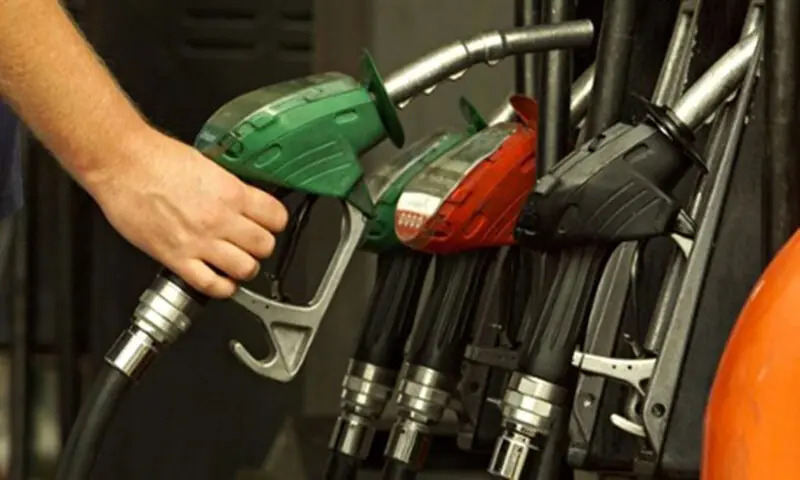
The Core Development
The federal government of Pakistan announced a revision in domestic petroleum product prices for the upcoming fortnight, paring back the ex-depot price of motor spirit (petrol) by Rs2.71 per litre. In contrast, the price of high-speed diesel (HSD)—the primary fuel driving the commercial transport and agricultural sectors—saw an inconsequential reduction of Re0.03 per litre.
The price adjustment was formalized following recommendations submitted by the Oil and Gas Regulatory Authority (OGRA) and approved by the Ministry of Finance after consultative reviews with the Petroleum Division. The recalibration reflects minor international price shifts in refined petroleum products alongside currency stability over the preceding two-week pricing cycle. Despite marginal room for broader consumer relief, the government retained the Petroleum Development Levy (PDL) at elevated levels to safeguard non-tax revenue targets outlined in macroeconomic stabilization agreements with the International Monetary Fund (IMF).
Under the revised schedule, retail pumps across primary distribution centers in Karachi, Lahore, and Islamabad implemented the new tariff effective midnight. Kerosene and light diesel oil also observed fractional changes aligned with international benchmarks, underscoring Islamabad's ongoing policy of immediate pass-through pricing without direct budgetary subsidies.
Commercial & Economic Implications
The bifurcated adjustment delivers mixed signals across Pakistan's wholesale distribution networks and retail consumer landscape. While the reduction of Rs2.71 per litre provides moderate relief to urban commuters, motorcycle operators, and retail motorists, the near-static position of high-speed diesel ensures that logistics and production costs remain fundamentally rigid.
High-speed diesel serves as the operational lifeblood of Pakistan's internal supply chains. Freight carriers, long-haul trucking networks, and mechanized agricultural operations rely heavily on HSD. Because the diesel revision stands at a negligible Re0.03 per litre, intercity transport fares and bulk freight tariffs will experience zero downward movement. Consequently, wholesale traders at agricultural produce markets (mandis) and FMCG distributors will not see lower freight costs, preventing downward price corrections in essential consumer commodities.
Furthermore, headline inflation metrics are unlikely to see material easing from this pricing cycle. While direct petroleum indexation in the Consumer Price Index (CPI) basket will register a fractional drop, the indirect secondary effects that drive food and industrial input inflation remain anchored to persistent diesel and energy tariffs.
Related Intelligence: Middle East Escalation Risks Energy Supply Chains Following Strikes on Sanaa
Stakeholder Perspectives & Market Reactions
Market participants and business bodies across major commercial centers expressed measured frustration regarding the asymmetric price adjustment. Logistics syndicates and the All Pakistan Goods Transport Owners Association noted that a Re0.03 reduction is practically meaningless, providing no operational flexibility to lower cargo rates for manufacturers and retail suppliers.
Chambers of commerce in Karachi and Lahore reiterated that industrial competitiveness remains compromised by high cumulative taxation embedded within fuel tariffs. Representatives highlighted that maintaining high statutory levies while international markets offer softening trends suppresses industrial expansion and domestic consumer purchasing power.
Conversely, macroeconomic analysts and energy sector observers acknowledged the government's constrained fiscal latitude. Given stringent revenue benchmarks dictated by multilateral lenders, the Ministry of Finance cannot afford to dilute its non-tax revenue base. Economists pointed out that preserving petroleum levy yields is essential for maintaining primary budget surplus targets, leaving policy planners with little option but to maintain retail tax collection despite mounting public pressure.
Forward Outlook & Key Watchpoints
The trajectory of domestic petroleum prices over the coming quarters will depend heavily on global crude oil fluctuations, refinery crack spreads in Middle Eastern hubs, and the stability of the Pakistani rupee against the US dollar. Any renewed geopolitical instability across major shipping corridors could rapidly reverse modest reductions seen in motor spirit.
Key watchpoints for traders and corporate planners include forthcoming parliamentary sessions regarding proposed revisions to the statutory petroleum levy limit, which could potentially expand tax collection capacity on refined fuels. Additionally, the State Bank of Pakistan's upcoming Monetary Policy Committee reviews will closely monitor domestic energy pricing trends to assess inflationary trajectory before considering further benchmark interest rate cuts. Supply chain operators should anticipate continued tight logistics margins and maintain lean inventory financing through the upcoming pricing cycles.
Join Our Official WhatsApp Channel
Receive live commodity alerts, policy changes, and commercial intelligence directly on WhatsApp.