
Pakistan Demands Kabul Abandon Militant Mindset Amid Border Tensions
Information Minister Attaullah Tarar has urged the interim Afghan government to abandon its militant mindset to resolve ongoing bilateral tensions and secure regional stability.
The Core Development
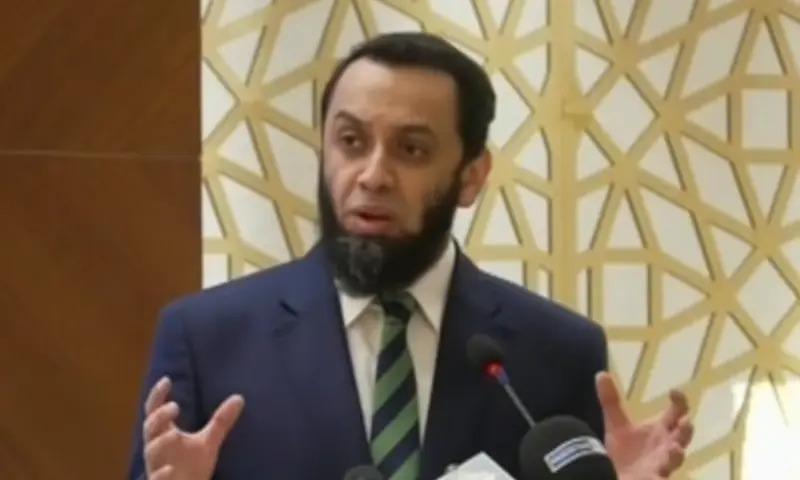
Federal Information Minister Attaullah Tarar issued a stern and unequivocal diplomatic message to the interim Afghan administration, declaring that the persistence of a militant mindset remains the fundamental driver of friction between Islamabad and Kabul. Speaking at a prominent seminar dedicated to the evolving security landscape in Afghanistan and regional peace prospects, Tarar characterized the diplomatic impasse as a deeply entrenched 'Afghan predicament'.
Relations between the two neighboring states have experienced severe strain over recent years, primarily driven by Islamabad's mounting concerns over cross-border militancy and safe havens operating from Afghan soil. The situation escalated further during a fresh bout of border skirmishes and security incidents witnessed in September. Tarar underscored that the geopolitical challenge is exceptionally complex, defying simplistic quick fixes and necessitating a sustained, multi-layered approach to secure enduring peace across the Durand Line.
Commercial & Economic Implications
For business houses, wholesale distributors, and retail networks operating across Pakistan, particularly within the border provinces of Khyber Pakhtunkhwa and Balochistan, the persistent diplomatic chill carries immediate economic consequences. Bilateral trade corridors, including the critical Torkham and Chaman crossing points, have frequently faced closures or strict regulatory decelerations due to security flare-ups.
These disruptions severely impact regional supply chains for essential commodities, fresh produce, and transit trade destined for Central Asian markets. Unpredictable border logistics generate inflationary pressures, inflate transportation and warehousing costs for domestic merchants, and introduce volatility into wholesale pricing structures. For Kalyar Traders and the wider mercantile community, a stable and predictable security framework is an indispensable prerequisite for unlocking the full commercial potential of regional transit and bilateral trade.
Stakeholder Perspectives & Market Reactions
Business councils, trade associations, and industrial federations have consistently voiced anxiety over the economic fallout of protracted security standoffs with Kabul. Commercial bodies argue that regional economic integration cannot progress while cross-border trade routes remain hostage to security deadlocks. Industry representatives are increasingly calling for institutionalized economic corridors insulated from immediate political friction.
On the official front, Islamabad maintains that geography dictates cooperation, noting that historical linkages and international borders cannot be altered. However, the official stance has hardened, signaling that future economic engagement and facilitation of transit trade will be strictly contingent upon tangible security cooperation and verifiable action against anti-Pakistan militant factions operating inside Afghanistan.
Forward Outlook & Key Watchpoints
As policymakers in Islamabad recalibrate their strategic approach toward Kabul, key watchpoints for the business and financial community will include the operational stability of major border terminals, bilateral trade volume statistics over the coming quarters, and any formal diplomatic breakthroughs.
While Pakistan continues to advocate for a sustainable resolution to the regional crisis, the immediate trajectory points toward stringent border management and conditional economic engagement. Analysts emphasize that until the core security paradigm shifts, commercial stakeholders must factor cross-border regulatory risks and potential supply chain bottlenecks into their long-term operational forecasts.
Join Our Official WhatsApp Channel
Receive live commodity alerts, policy changes, and commercial intelligence directly on WhatsApp.