
Leaked Imagery Reveals Severe Damage at US Gulf Bases Following Iranian Strikes
Newly leaked photographic evidence reveals substantial structural and radar asset damage at US Gulf bases following precision Iranian strikes, raising urgent questions over air-defense efficacy and regional energy market stability.
Geopolitical & Core Developments
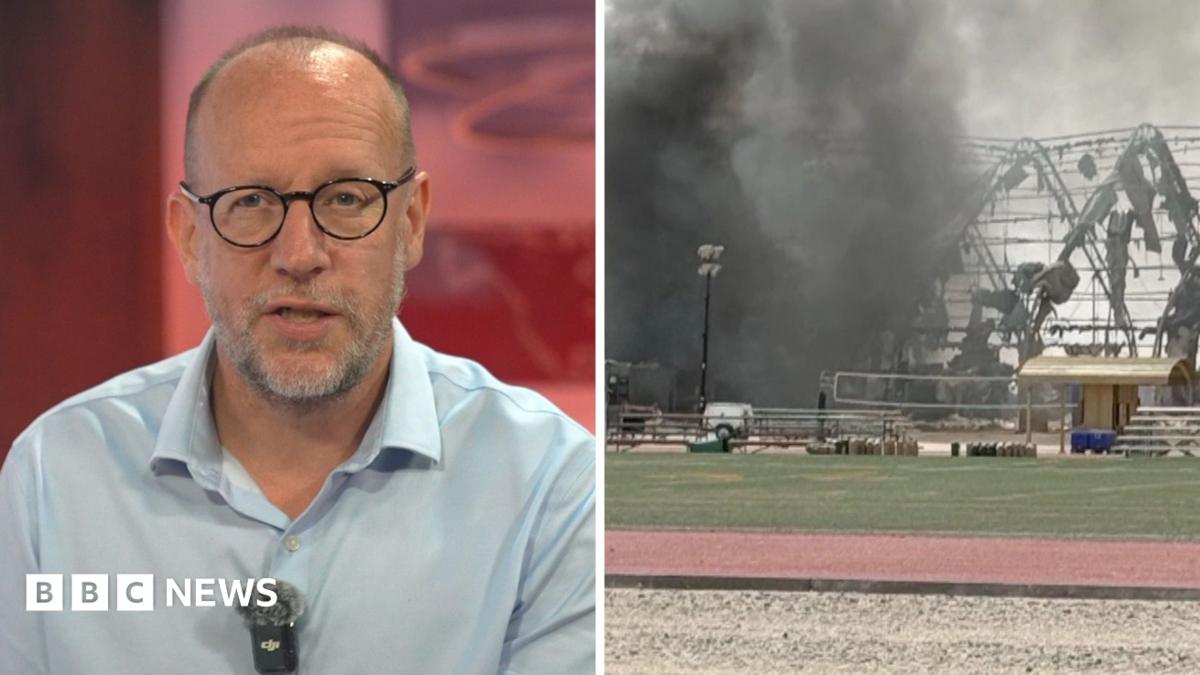
Leaked photographic documentation authenticated by active-duty military sources has laid bare extensive structural and tactical destruction at United States defense installations across the Persian Gulf, directly challenging earlier low-impact damage assessments. The imagery confirms the destruction of critical logistical infrastructure, flattened support compounds, and direct hits on high-value military hardware, including a radar-equipped surveillance aircraft rendered non-operational. The kinetic strikes, carried out via synchronized volleys of precision ballistic missiles and unmanned aerial systems attributed to Iranian forces, represent a significant operational shift in regional confrontation.
The geographic distribution and pinpoint accuracy of the impacts demonstrate a calibrated saturation strategy designed to bypass layered integrated air and missile defense systems, including Patriot and THAAD batteries. Analysts note that Tehran's capability to pierce hardened installations and target tactical command assets signals a closing gap in conventional asymmetrical deterrence. The revelation of compromised base perimeters places Washington in an acute operational dilemma, forcing a rapid tactical reappraisal of forward-deployed posture across Gulf Cooperation Council (GCC) host territories.
Global Trade & Economic Ripples
The confirmation of vulnerability across US regional headquarters has immediately destabilized mercantile risk assessments throughout the Middle Eastern logistics corridor. Brent crude futures responded with swift upward volatility as commodities traders priced in a potential supply disruption along the critical maritime chokepoint of the Strait of Hormuz, through which roughly twenty percent of global petroleum transit flows. Energy analysts warn that any subsequent military exchanges could directly jeopardize offshore extraction platforms and export terminals across the Arabian Peninsula.
Concurrent with oil market turbulence, global maritime underwriters and the Lloyd’s Joint War Committee have signaled forthcoming hikes in marine insurance premiums for commercial vessels navigating the Persian Gulf and Gulf of Oman. Shipping conglomerates face mounting operating expenditures, with re-routing strategies around the Cape of Good Hope emerging as a costly contingency. International aviation channels have also begun rerouting intercontinental flight paths away from regional air corridors, compounding operational fuel expenditures and supply-chain transit times for global freight carriers.
Related Intelligence: Pakistan Abstains on UNSC Iran Sanctions Vote Balancing Energy and Diplomacy
International Reactions & Diplomatic Stances
Official reactions across the international community have underscored growing alarms over an unconstrained escalatory spiral. In Washington, the revelation has prompted severe bipartisan scrutiny within congressional defense committees, with lawmakers demanding exhaustive transparency regarding the operational status of deployed personnel and strategic counter-drone defenses. The Pentagon affirmed that defensive architectures remain operational, while reiterating commitments to regional allies.
Tehran’s state media characterized the confirmed impacts as tangible proof of a strategic deterrence paradigm capable of holding foreign military infrastructure accountable. Concurrently, regional Gulf capitals—chiefly Riyadh and Abu Dhabi—have maintained a cautious diplomatic posture, calling for rapid de-escalation to prevent commercial fallout on their domestic economic transformation programs. Multilateral bodies, led by the United Nations Security Council, urged immediate restraint, while European and Asian trade partners voiced deep concern over the stability of fundamental energy sea lanes.
Strategic Outlook & Future Scenarios
The strategic calculus moving forward centers on Washington’s threshold for overt kinetic deterrence versus diplomatic containment. The tactical compromise of early-warning radar systems and command facilities demands immediate reinforcement of theatre air-defense architectures, potentially accelerating bilateral negotiations regarding shared Gulf-wide missile shields. However, overt military retaliation risks provoking wider proxy and direct clashes, potentially drawing commercial energy nodes into the line of fire.
Over the medium term, Gulf host states are likely to accelerate multi-vector diplomatic balances, seeking to insulate their sovereign economies from potential cross-border retaliatory strikes. In parallel, market participants should prepare for elevated baseline commodity risk premiums and persistent logistical friction until institutional deterrence credibility is visibly re-established across the region.
Join Our Official WhatsApp Channel
Receive live commodity alerts, policy changes, and commercial intelligence directly on WhatsApp.