
Khyber Pakhtunkhwa Chief Minister Leads PTI March Toward Islamabad Amid High Security
KP Chief Minister Sohail Afridi arrived in Lakki Marwat via helicopter on Sunday to lead PTI's long march demanding Imran Khan's release, prompting strict security deployments.
The Core Development
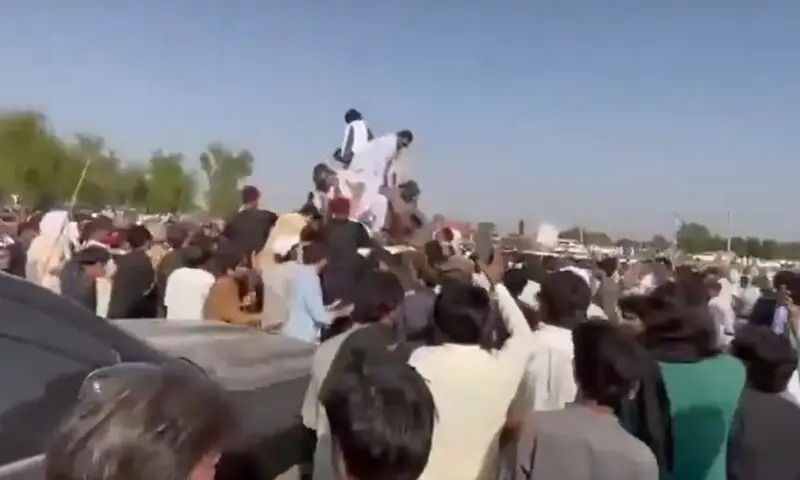
Khyber Pakhtunkhwa Chief Minister Sohail Afridi arrived in Lakki Marwat via helicopter on Sunday to spearhead the Pakistan Tehreek-e-Insaf (PTI) long march toward Islamabad. The demonstration, organized to demand the release of jailed party founder and former prime minister Imran Khan, commenced from Gandi Chowk along the strategic Peshawar-Karachi Indus Highway. PTI workers began assembling at the designated rallying point on Sunday afternoon, met by heavy security arrangements including large police contingents, armored personnel carriers, and specialized bomb disposal squads stationed across critical intersections. A dedicated helipad established near Maidadkhel accommodated the Chief Minister's arrival, with circulating footage showing dense crowds of party loyalists greeting the provincial executive upon touchdown. The convergence at Gandi Chowk marks a pivotal escalation in the ongoing political standoff between the provincial administration in Khyber Pakhtunkhwa and federal authorities in Islamabad, setting the stage for potential friction along major national transit corridors.
Commercial & Economic Implications
For Kalyar Traders and the wider business community across Pakistan, large-scale political marches and highway blockades translate into immediate commercial disruption. The Peshawar-Karachi Indus Highway serves as a vital economic artery, facilitating the seamless transportation of raw materials, manufactured goods, and agricultural commodities between northern production hubs and southern ports. Disruptions along this primary logistics corridor severely impede wholesale distribution networks, delay freight forwarding, and inflate operational overheads for transport fleets through extended idle times and mandatory route detours. Retail markets in Khyber Pakhtunkhwa and adjacent regions face localized supply shocks as perishable goods experience transit delays, exerting upward pressure on wholesale prices and aggravating broader retail inflation. Furthermore, heightened political uncertainty dampens business sentiment, interrupts daily commercial transactions, and detours foreign and domestic investment at a juncture when Pakistan's economy requires unhindered market activity and stable supply chains to sustain fragile recovery metrics.
Related Intelligence: Asian Games Closure Highlights Regional Shifts and Supply Chain Pressures
Stakeholder Perspectives & Market Reactions
Commercial bodies, trade associations, and industrial federations have expressed mounting apprehension regarding the economic fallout of prolonged street agitation and highway closures. Representatives from major chamber of commerce entities have repeatedly emphasized that sustained political instability directly undermines industrial productivity and manufacturing output. Retail associations note that consumer footfall plummets during high-tension political events, crimping daily cash flows for small and medium enterprises already grappling with elevated utility tariffs and tight monetary policies. Legal experts point to the growing friction between federal mandates and provincial administrative actions, noting that extended blockades test the limits of constitutional governance. Meanwhile, official statements from security agencies highlight the necessity of maintaining law and order while managing massive crowd dynamics, though business leaders continue to advocate for negotiated settlements to insulate commercial supply chains from political volatility.
Forward Outlook & Key Watchpoints
As the PTI march progresses along its planned trajectory toward Islamabad, commercial stakeholders and financial analysts are closely monitoring several critical operational indicators. Key watchpoints include the duration of highway blockades, the nature of federal and provincial administrative responses, and the potential for traffic normalization along the Indus Highway corridor. Transport operators are advised to maintain flexible routing strategies and closely coordinate with logistics managers to mitigate transit delays. Should political negotiations yield an early de-escalation, supply chains could rapidly absorb the backlog, stabilizing retail prices. Conversely, protracted confrontation risks deepening inflationary pressures and inflicting sustained damage on national trade velocity, necessitating heightened vigilance from commercial enterprises across the country.
Join Our Official WhatsApp Channel
Receive live commodity alerts, policy changes, and commercial intelligence directly on WhatsApp.