
Khyber Pakhtunkhwa Convoy Advances Toward Islamabad Amid Security Gridlock
The PTI political caravan led by KP Chief Minister Afridi has reached Karak, escalating political tensions and causing severe commercial disruptions across major national transit corridors.
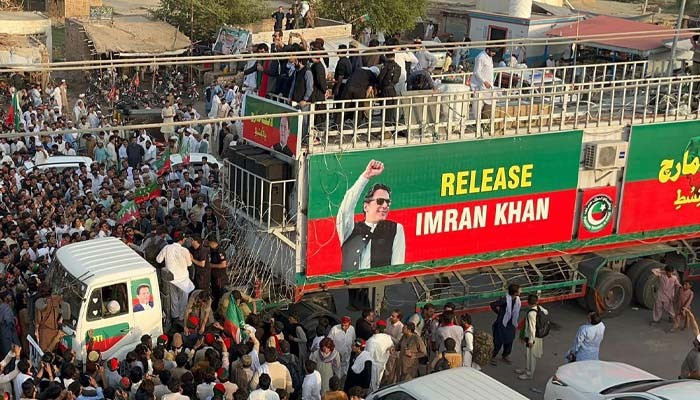
The Core Development
The political standoff between the federal government and the Pakistan Tehreek-e-Insaf (PTI) escalated sharply as a massive political caravan, spearheaded by Khyber Pakhtunkhwa Chief Minister Ali Amin Gandapur (referred to locally in reports via leadership context as CM Afridi/Afridi-led), successfully maneuvered through security cordons to reach the Karak district. The convoy, comprising thousands of party workers, loyalists, and regional leaders, departed from Peshawar early in the week with the stated objective of breaching the federal capital, Islamabad, to stage a major demonstration.
According to timelines provided by local law enforcement and intelligence agencies, the march faced intense resistance at multiple chokepoints along the M-1 motorway and key provincial arteries. Heavy contingents of the Punjab Police, Frontier Constabulary, and paramilitary Rangers were deployed with shipping containers, barbed wire, and trenching equipment to seal off entry points into Punjab and the federal capital territory. Despite the use of tear gas and preventive blockades in various districts, the persistent pressure from the KP administration-backed caravan forced authorities into rolling standoffs, culminating in the convoy consolidating its position in Karak before pushing toward the capital's outer perimeters.
Commercial & Economic Implications
For Kalyar Traders and the broader commercial ecosystem of Pakistan, the ongoing march represents a severe operational bottleneck. The total or partial closure of major highways—particularly the Grand Trunk (GT) Road and the Peshawar-Islamabad Motorway—has paralyzed the movement of perishable goods, industrial raw materials, and manufactured exports. Freight transport operators report that hundreds of cargo containers are stranded at inter-provincial borders, resulting in demurrage charges and spoilage of agricultural produce originating from Khyber Pakhtunkhwa and destined for wholesale markets in Punjab and Sindh.
Supply chain strangulation has triggered immediate spot shortages of essential commodities in major urban centers. Wholesale distribution hubs in Rawalpindi and Islamabad are experiencing acute inventory deficits, driving up retail prices for fresh vegetables, flour, and fuel. Economists warn that persistent logistical paralysis during major political agitations directly feeds into headline inflation, eroding consumer purchasing power and derailing the delicate stabilization recovery monitored by financial institutions.
Related Intelligence: Khyber Pakhtunkhwa Faces Imposition of Governor Rule Amid Security Crisis
Stakeholder Perspectives & Market Reactions
Business and trade bodies have expressed profound alarm over the compounding economic toll of unyielding political confrontations. Representatives from the Sarhad Chamber of Commerce and Industry (SCCI) and the Islamabad Chamber of Commerce and Industry (ICCI) issued joint appeals urging both the federal administration and the KP leadership to prioritize national economic stability over political brinkmanship. Industry leaders noted that daily trade losses across the northern commercial corridors now exceed billions of rupees, severely impacting small and medium enterprises (SMEs) that operate on tight liquidity margins.
Legal experts and constitutional analysts have meanwhile weighed in on the unprecedented friction between the federal government and a provincial executive leading an active protest march against the state apparatus. While opposition quarters defend the constitutional right to peaceful assembly and freedom of movement, government spokespersons maintain that the march constitutes an assault on public order and national security, justifying pre-emptive clampdowns and stringent curfew-like restrictions.
Forward Outlook & Key Watchpoints
As the convoy consolidates in Karak and prepares for the final push toward Islamabad's heavily fortified Red Zone, market observers are closely monitoring several critical indicators. Key watchpoints include potential emergency legislative interventions, further deployment of the Pakistan Army under Article 245 to secure federal installations, and the willingness of political interlocutors to establish backchannel negotiations. For the business community, the primary concern remains the immediate reopening of trade corridors to prevent irreversible damage to commercial supply chains and retail price stability.
Join Our Official WhatsApp Channel
Receive live commodity alerts, policy changes, and commercial intelligence directly on WhatsApp.