
Judicial Superintendent Abducted in South Waziristan Amid Heightened Regional Security Risks
Armed assailants have abducted the judicial superintendent of Upper South Waziristan from his home, compounding administrative instability and elevating commercial risks across southern Khyber Pakhtunkhwa trade corridors.
The Core Development
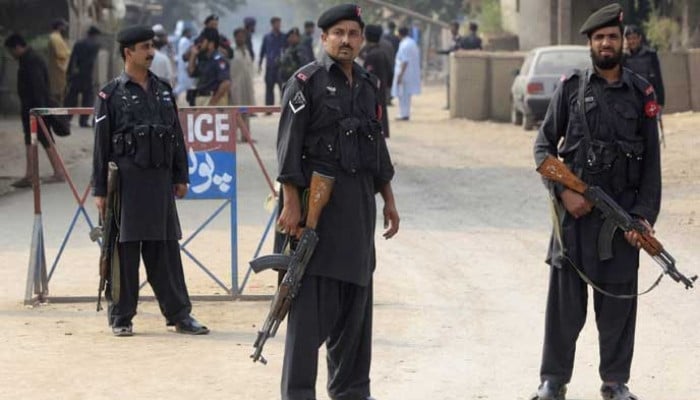
A senior judicial officer was abducted by unidentified armed assailants from his residence in Upper South Waziristan, local police authorities confirmed on Tuesday. According to initial law enforcement reports, armed men stormed the official's home under cover of darkness, forcibly detaining the judicial superintendent before fleeing to an undisclosed location. Law enforcement agencies, backed by local paramilitary units, immediately cordoned off the vicinity and initiated targeted search and cordon operations across primary ingress and egress points connecting Upper South Waziristan to adjoining rugged border terrains.
This incident represents a concerning continuity of militant intimidation directed against the civil bureaucracy and judicial apparatus in Khyber Pakhtunkhwa’s newly merged districts. The targeting of judicial personnel has intensified over recent quarters, punctuated by high-profile kidnappings of judicial officers across Dera Ismail Khan, Tank, and Waziristan. While no group has immediately claimed responsibility for the kidnapping, preliminary investigative findings suggest the involvement of localized militant networks operating in the borderlands. The provincial counter-terrorism apparatus and district administration have convened emergency operational sessions to expedite recovery efforts and assess broader operational vulnerabilities.
Commercial & Economic Implications
While fundamentally a critical security and rule-of-law breach, the targeting of judicial infrastructure carries direct ramifications for commercial sentiment, retail supply chains, and freight logistics across southern Khyber Pakhtunkhwa. Upper South Waziristan functions as an integral corridor linking provincial wholesale markets to cross-border routes, notably the Angoor Adda crossing with Afghanistan. Heightened operational volatility directly increases risk premiums for freight carriers, logistics operators, and commercial distributors operating along the Indus Highway and inter-district feeder routes.
Wholesale distribution networks supplying essential consumer goods, construction materials, and pharmaceutical products face rising operational overheads as logistics firms increasingly demand hazardous route surcharges or require dedicated security escorts. These auxiliary expenses are invariably passed downstream to local retail markets, exacerbating localized inflation across border towns. Furthermore, ongoing security operations inevitably prompt snap curfews, extended vehicle inspections, and transit choke points, impeding the flow of perishable merchandise and bilateral commercial cargo. For institutional investors and regional trading houses, sustained civil vulnerability dampens long-term commercial integration and private capital deployment in the merged tribal belt.
Stakeholder Perspectives & Market Reactions
The abduction has elicited sharp condemnation from the provincial legal fraternity, civil service associations, and regional trade bodies. Bar associations across Khyber Pakhtunkhwa announced formal protest schedules, demanding an immediate judicial inquiry and enhanced protection protocols for court officers and administrative personnel serving in volatile jurisdictions. Legal representatives cautioned that without ironclad security guarantees, judicial functioning across district courts in Upper and Lower South Waziristan will face systemic disruption, stalling case adjudication and civil dispute settlements.
Local merchant groups and chambers of commerce across Dera Ismail Khan and Bannu expressed deepening apprehension regarding the deteriorating security climate. Trade leaders warned that persistent threats to state officials erode the baseline stability required to sustain regular commercial operations and retail trading. Conversely, provincial police officials maintained that specialized units have deployed advanced surveillance and intelligence-driven assets to locate the abducted superintendent, assuring market participants that decisive kinetic measures are being instituted to safeguard critical infrastructure and transit routes.
Forward Outlook & Key Watchpoints
In the immediate term, monitoring will focus on the execution of recovery operations by law enforcement agencies and potential direct negotiations mediated by local tribal elders through traditional jirga channels. Observers will also track whether legal bodies enact full-scale court boycotts, which would compound administrative backlogs across the regional judiciary.
From a macroeconomic and commercial perspective, key indicators include the operational status of freight corridors moving toward Angoor Adda, cargo throughput levels, and adjustments in regional transport tariffs. State security apparatuses are anticipated to enforce heightened security grids throughout southern Khyber Pakhtunkhwa, a move that could stabilize baseline civil protection while simultaneously introducing short-term transit friction for commercial distribution networks. Sustained restoration of institutional confidence will remain contingent upon the swift, unconditional recovery of the judicial superintendent and tangible stabilization of the regional security architecture.
Join Our Official WhatsApp Channel
Receive live commodity alerts, policy changes, and commercial intelligence directly on WhatsApp.