
Geopolitical Pressures and Academic Tensions Reverberate Across Global Markets
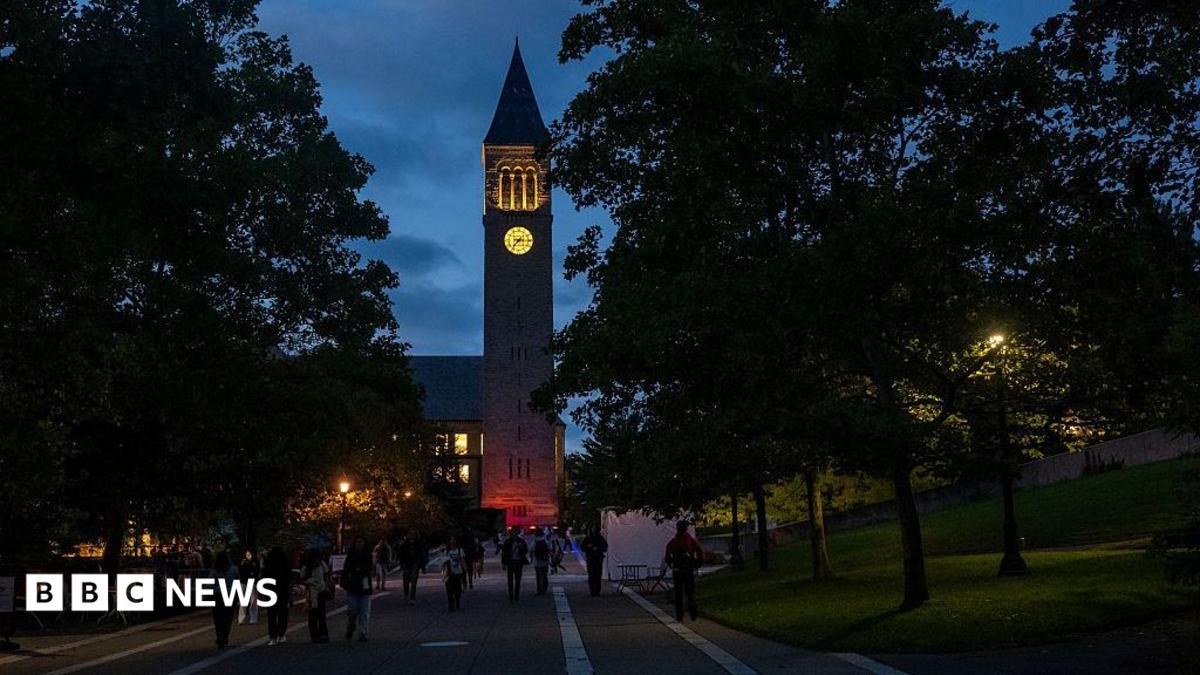
Renewed tensions at Cornell University reflect broader global polarization, prompting international analysts to evaluate the downstream economic and institutional impacts.
Geopolitical & Core Developments
The palpable tension reported across elite academic institutions, notably highlighted by recent student testimonies from Cornell University regarding resurfaced allegations, serves as a microcosm for broader international polarization. While ostensibly confined to domestic institutional politics, these localized flashpoints increasingly intersect with global diplomatic currents. State actors and international observers closely monitor how domestic unrest influences policy formulation, freedom of expression, and multilateral engagement. As universities function as critical nodes for international talent pipelines and cross-border research partnerships, persistent internal friction risks stymying collaborative frameworks that underpin global knowledge economies.
Historically, academic institutions have acted as barometers for geopolitical sentiment, foreshadowing shifts in diplomatic relations and public policy. The current climate of apprehension on campus reflects a deep-seated ideological divide that mirrors international diplomatic standoffs. Governments navigating complex foreign policy challenges find their domestic populations similarly fractured along ideological lines, complicating official statecraft and multilateral negotiations. Consequently, internal institutional stability has become a matter of strategic concern for international actors seeking predictable partnership environments.
Global Trade & Economic Ripples
Although university-level friction does not directly disrupt physical supply chains or commodity pricing, the broader socio-political instability it signifies carries measurable economic externalities. Investor sentiment in key knowledge-driven sectors—such as biotechnology, artificial intelligence, and advanced engineering—relies heavily on stable academic-industrial ecosystems. When premier institutions experience prolonged tension, corporate partners and venture capital entities reassess risk parameters surrounding research and development pipelines.
Furthermore, international student mobility, a multi-billion-dollar service export for economies like the United States and the United Kingdom, is highly sensitive to perceptions of campus safety and institutional harmony. Heightened volatility can deter prospective international enrollments, depressing localized service economies and long-term labor market inputs for specialized engineering and financial sectors. Multinational corporations, accustomed to factoring traditional geopolitical risks into their operational models, are increasingly incorporating domestic social stability metrics into their foreign direct investment evaluations.
Related Intelligence: Indonesian Volcanic Eruption Sparks Regional Supply Chain and Commodity Anxiety
International Reactions & Diplomatic Stances
Foreign policy analysts and international bodies have noted the growing permeability between domestic social unrest and international relations. Multilateral organizations, while traditionally hesitant to comment on internal academic affairs, emphasize the universal importance of protecting open dialogue and institutional integrity. Diplomatic missions stationed in major Western capitals have cabled their respective foreign ministries regarding the intensity of domestic polarization, viewing it as a potential constraint on executive branches' ability to project unified foreign policies.
Market intelligence agencies and geopolitical risk consultancies have begun integrating metrics of domestic social cohesion into their sovereign risk ratings. Investors navigating volatile international commodity markets and foreign exchange corridors are advised to monitor how domestic political strain influences legislative priorities, particularly regarding higher education funding, immigration policies governing skilled labor, and regulatory oversight of international research collaborations.
Strategic Outlook & Future Scenarios
Looking ahead, the trajectory of institutional tensions will likely depend on administrative interventions and broader macroeconomic shifts. If universities successfully navigate these ideological fault lines through robust governance and protected discourse, the risk of sustained economic or diplomatic fallout remains contained. However, protracted friction could accelerate a re-evaluation of international student migration patterns, favoring alternative academic hubs in Europe and Asia.
Upcoming international summits focusing on global talent mobility, research security, and innovation policy will likely address these intersecting domestic and international pressures. For global traders, multinational executives, and policymakers, maintaining situational awareness of institutional stability remains a critical component of comprehensive geopolitical risk management.
Join Our Official WhatsApp Channel
Receive live commodity alerts, policy changes, and commercial intelligence directly on WhatsApp.