
JI Train March Advances as Hafiz Naeem Challenges Petroleum Levy
Jamaat-i-Islami chief Hafiz Naeemur Rehman pressed forward with a national protest march toward Islamabad, demanding the elimination of the petroleum levy amid administrative transit delays.
The Core Development
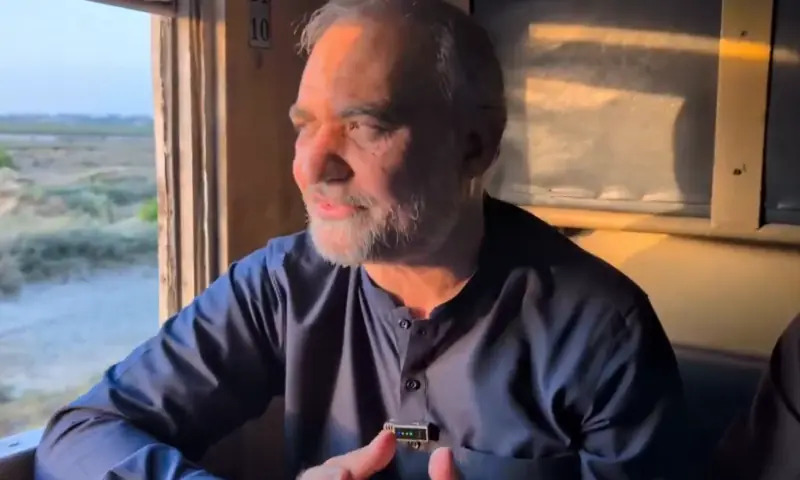
The political landscape of Pakistan intensified on Monday as Jamaat-i-Islami (JI) chief Hafiz Naeemur Rehman spearheaded the second phase of his party's high-stakes protest march toward Islamabad. The demonstration, which officially commenced on Sunday with a massive mobilization from Karachi, entered a critical operational phase as the caravan transitioned through Sindh and Punjab. However, the journey faced immediate logistical friction in Sukkur, where a four-hour delay in the scheduled arrival of the Shalimar Express disrupted the party's tight itinerary toward Multan.
Addressing a packed press conference at the Sukkur railway station, the JI emir openly challenged the authorities regarding the anomalous delay, questioning whether administrative bottlenecks were intentionally engineered to impede the opposition's momentum. The caravan initially departed Karachi via the Rehman Baba Express, reaching Sukkur late Sunday night before encountering the compounding delays on Monday morning. Despite the setbacks, the leadership regrouped and pushed onward, signaling the party's unwavering resolve to sustain pressure on the federal administration through a structured, multi-city mobilization strategy.
Commercial & Economic Implications
At the heart of the Jamaat-i-Islami agitation lies an aggressive fiscal grievance: the heavy taxation structure on petroleum products. The party's core demand focuses on the complete abolition of the petroleum levy, a critical revenue instrument for the federal government under current International Monetary Fund (IMF) fiscal frameworks. Business leaders, retail associations, and wholesale distributors across Pakistan are closely monitoring the standoff, acutely aware of its broader economic fallout.
In a fragile macroeconomic environment marked by sticky inflation and sluggish consumer demand, any disruption in national transport corridors directly threatens supply chain integrity. Fuel price volatility and logistical standstills disproportionately impact freight charges, wholesale distribution costs, and retail pricing of essential commodities. Commercial sectors warn that if political agitation escalates into prolonged highway or railway blockades, inter-provincial trade volumes will contract sharply, driving up operational costs for manufacturers and squeezing profit margins across the retail ecosystem.
Related Intelligence: Germany Faces Political Instability Under Merz as European Markets Tremor
Stakeholder Perspectives & Market Reactions
Market response to the JI march has been characterized by cautious anxiety. Representatives from major chambers of commerce and small trader associations have expressed mixed sentiments. While the business community broadly sympathizes with public grievances over crushing utility bills and heavy fuel taxation, commercial bodies strongly caution against disruption to commercial activity.
Spokespersons for various industrial and transport federations noted that persistent political instability dampens investor confidence and impedes daily market transactions. Legal experts and market analysts suggest that while peaceful protest remains a constitutional right, the economic cost of structural gridlock could outweigh short-term policy concessions. Meanwhile, government representatives have defended the petroleum levy as a non-negotiable structural benchmark necessary to meet fiscal deficit targets agreed upon with international lenders, setting the stage for a protracted standoff between the state and the political opposition.
Forward Outlook & Key Watchpoints
The trajectory of the Jamaat-i-Islami protest march toward the federal capital introduces significant political volatility for the upcoming weeks. Key watchpoints for financial analysts, corporate planners, and policy monitors include the government's fiscal maneuvering room regarding petroleum pricing, the potential hardening of JI's demands into an ultimatum for regime change, and the overall stability of national transport arteries.
As the caravan navigates through Punjab toward Islamabad, market participants will closely observe whether federal authorities engage in formal negotiations with the opposition leadership or adopt a rigid enforcement stance. Any escalation in civil unrest or transport halts will serve as an immediate trigger for reassessing retail inflation forecasts and supply chain resilience across Pakistan's commercial hubs.
Join Our Official WhatsApp Channel
Receive live commodity alerts, policy changes, and commercial intelligence directly on WhatsApp.