
JI Mobilizes Islamabad March Against Escalating Petroleum Levy and Power Tariffs
Jamaat-e-Islami has initiated a nationwide march toward Islamabad to protest elevated petroleum levies and power tariffs, threatening logistics disruptions across major distribution corridors as fiscal pressures escalate.
The Core Development
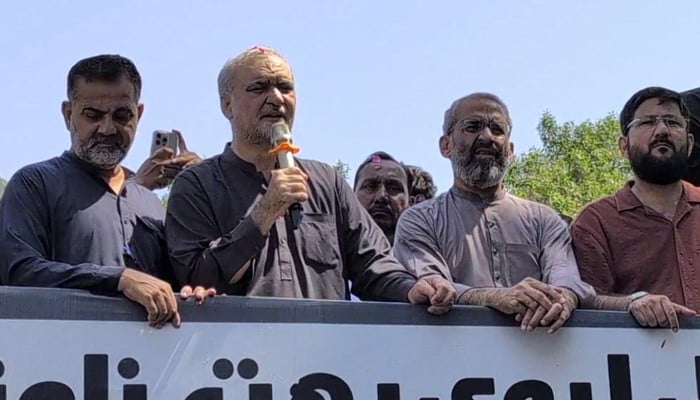
Jamaat-e-Islami (JI) leadership, under Emir Hafiz Naeem ur Rehman, has formally commenced a large-scale march toward Islamabad, marshaling thousands of political workers, traders, and civic constituents. The coordinated mobilization is designed to exert pressure on the federal administration to reverse recent fiscal measures, chief among them the sharp escalation in the Petroleum Development Levy (PDL) and historic spikes in electricity tariffs implemented under Pakistan's Extended Fund Facility (EFF) commitments with the International Monetary Fund (IMF).
Convoys departing from urban centers across Punjab, Khyber Pakhtunkhwa, and Sindh are navigating roadblocks and security checkpoints along primary arterial conduits, notably the Grand Trunk Road and regional motorway interchanges. Federal and provincial authorities have fortified access points to the capital, deploying law enforcement contingents and placing local administrations on heightened vigilance under Section 144 restrictions. JI leadership has articulated a rigid charter of demands, prioritizing an immediate rollback of petroleum levies, forensic audits of capacity charges remitted to Independent Power Producers (IPPs), and sweeping tax relief for the salaried class and micro-enterprises.
Commercial & Economic Implications
For commercial enterprises, wholesale supply operations, and retail distribution channels, the civil protest underscores deep-seated vulnerabilities in Pakistan's domestic economic architecture. Fuel prices operate as the fundamental baseline for haulage, warehousing, and downstream distribution costs. An elevated petroleum levy directly inflates freight rates, immediately transmitting cost pressures through the primary wholesale hubs of Karachi, Lahore, and Multan down to secondary and tertiary retail centers.
The immediate threat to commerce stems from physical supply chain frictions. Intermittent road closures, vehicular diversions, and transportation slowdowns threaten the timely dispatch of perishable farm produce, fast-moving consumer goods (FMCG), and industrial inputs. Prolonged transit bottlenecks in northern logistics corridors invariably foster localized commodity shortages, enabling speculative pricing in regional wholesale markets. Concurrently, small and medium enterprises (SMEs) are navigating severely compressed margins, where the combined burden of high fuel surcharges and punitive base power tariffs has degraded operational cash flows and reduced consumer purchasing power to multi-year lows.
Related Intelligence: Jamaat-e-Islami Launches Train March Over Petroleum Levy as Fiscal Tensions Mount
Stakeholder Perspectives & Market Reactions
Reactions across the national business ecosystem reflect widespread sympathy with JI's anti-inflation agenda, countered by anxiety regarding operational disruptions. Prominent trade bodies, including factions of the All Pakistan Anjuman-e-Tajiran, have endorsed the core objections against heavy utility levies, noting that retail establishments face untenable overhead costs that suppress trading volumes. Transport cartels and goods carriers have similarly expressed exasperation with consecutive fuel surcharges, though they warn that road gridlock risks stranding capital and causing compounding demurrage fees.
Conversely, the federal economic team, steered by the Ministry of Finance, has reiterated that adherence to fiscal targets remains indispensable for national economic stability. State officials emphasize that the petroleum levy serves as a cornerstone of sovereign revenue generation, without which budget deficit targets agreed with multilateral lenders would falter. Government representatives maintain that arbitrary tariff adjustments or unilateral fuel duty cuts would imperil fiscal consolidation, destabilize the foreign exchange market, and derail structural assistance programs.
Forward Outlook & Key Watchpoints
The near-term trajectory of the protest movement will depend on the government's strategic response: whether it opts for perimeter containment or initiates structured dialogue through a delegated ministerial committee. Market participants will closely monitor whether JI succeeds in staging an open-ended sit-in at strategic choke points near the federal capital or if talks produce targeted concessions on industrial power rates.
Crucial watchpoints include the National Electric Power Regulatory Authority's (NEPRA) upcoming fuel charge adjustment determinations, the Ministry of Petroleum's fortnightly pricing review, and the Federal Board of Revenue's monthly revenue run-rate. Should the political impasse widen into protracted transport disruptions, the resulting supply-side headwinds could stall the recent deceleration in consumer price inflation, forcing the central bank to adopt a more conservative posture on policy rate normalization.
Join Our Official WhatsApp Channel
Receive live commodity alerts, policy changes, and commercial intelligence directly on WhatsApp.