
Indian Authorities Detain Opposition Leaders Amid Escalating Election Commission Dispute
Indian authorities have remanded two top leaders of the Cockroach Janta Party into five-day custody following demonstrations alleging systematic electoral manipulation ahead of general polls.
The Core Development
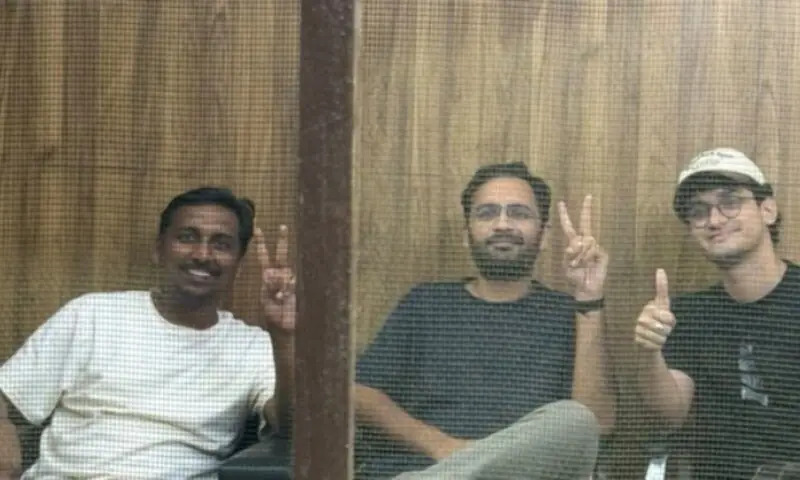
Tensions in New Delhi escalated sharply on Wednesday as a magistrate court remanded two prominent figures of India's youth-led Cockroach Janta Party (CJP) into police custody for five days. The detentions follow widespread demonstrations organized against the Election Commission of India (ECI), where demonstrators clashed with law enforcement after defying security restrictions. Law enforcement officials mobilized significant anti-riot contingents across central administrative zones, cordoning off sensitive government installations.
Opposition factions and CJP leadership have jointly agitated for the immediate resignation of India's Chief Election Commissioner. Demonstrators allege deliberate manipulation and unverified purging of electoral rolls designed to favor the ruling Bharatiya Janata Party (BJP) under Prime Minister Narendra Modi. For its part, the Election Commission has issued an unequivocal rejection of the allegations, affirming the integrity of the constitutional process and characterizing the demonstrations as politically motivated disruptions intended to destabilize the electoral architecture ahead of critical state and national ballots.
Commercial & Economic Implications
While direct bilateral trade between Pakistan and India remains restricted due to prevailing diplomatic standoffs, prolonged political instability within India carries tangible reverberations across South Asian regional commerce. For trading houses such as Kalyar Traders, domestic distribution systems and import channels for regional goods—often rerouted through third-party hubs such as Dubai or Singapore—face indirect pricing pressures whenever administrative gridlock emerges in major manufacturing centers.
Escalating security clampdowns, transport blockades, and localized curfews in India disrupt transit corridors and delay port clearances for bulk commodities and active pharmaceutical ingredients (APIs). In Pakistan, wholesale traders who rely on specialized raw materials, synthetic dyes, and textile auxiliaries must navigate fluctuating container shipping tariffs and extended delivery lead times. Sustained unrest threatens to inflate operational costs, which wholesalers and retail intermediaries inevitably pass on to downstream industrial processors and end-market consumers.
Related Intelligence: Mauritius Imposes Curfew Following Severe Civil Unrest and Fatal Police Shooting
Stakeholder Perspectives & Market Reactions
Regional market analysts and cross-border trade federations have voiced mounting concern over the potential for extended civil unrest. Legal observers in New Delhi contend that the detention of political leaders under stringent public order statutes represents an aggressive containment posture that risks polarizing public institutions further. Conversely, government spokespersons maintain that the detentions were essential to prevent public infrastructure damage and preserve urban order amid prohibited assembly conditions.
Within commercial circles in Karachi and Lahore, mercantile bodies monitor these developments for currency volatility and supply channel spillover. Representatives from regional trade associations note that heightened political friction in the subcontinent consistently drives up maritime insurance premiums and dampens investor appetite for regional infrastructure and logistical projects. Capital markets in South Asia showed cautious trading patterns, with benchmark equity indices recording localized volatility as foreign institutional investors assessed sovereign policy predictability.
Forward Outlook & Key Watchpoints
The immediate watchpoint centers on the expiration of the five-day remand period, when the detained leaders are scheduled to reappear before the magistrate. Defense counsels have indicated plans to file immediate bail applications while petitioning higher constitutional courts against administrative assembly bans. Should judicial authorities extend the detentions, opposition alliances have pledged to intensify nationwide sit-ins across major transport junctions.
For enterprise operators and wholesale distributors in Pakistan, vigilance is warranted regarding transshipment cargo timelines via Middle Eastern transit ports. If political unrest disrupts freight handling at major Indian transport hubs, local procurement managers must prepare alternative sourcing channels from Southeast Asian and Chinese suppliers to insulate inventory levels against abrupt material shortages and speculative wholesale price spikes over the coming quarter.
Join Our Official WhatsApp Channel
Receive live commodity alerts, policy changes, and commercial intelligence directly on WhatsApp.