
Imaan Mazari and Husband Re-Arrested Following Supreme Court Bail Grant
Human rights attorney Imaan Mazari and husband Abdul Hadi have been re-arrested and remanded to Adiala Jail under fresh charges immediately after securing Supreme Court bail, escalating national legal and institutional scrutiny.
The Core Development
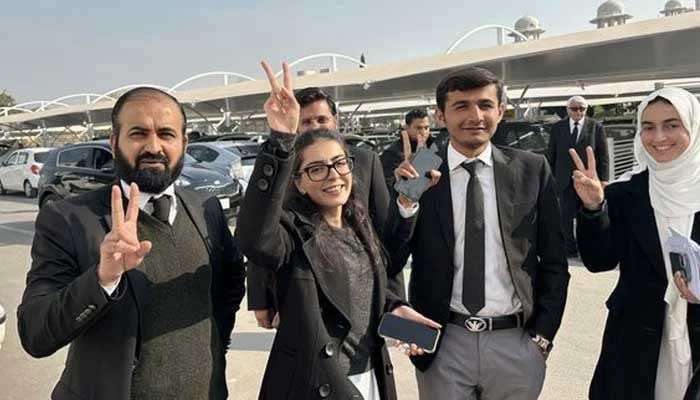
In a swift turn of legal proceedings, human rights lawyer Imaan Zainab Mazari-Hazir and her spouse, Advocate Abdul Hadi Ali Chattha, were re-arrested by federal capital authorities and remanded to Rawalpindi's Adiala Jail. The re-arrest unfolded within hours of the couple securing bail from the Supreme Court of Pakistan in an earlier public order case. Islamabad Police formally booked the duo under a fresh First Information Report (FIR) registered at the Kohsar Police Station, invoking provisions related to public incitement, creating public discord, and advancing narratives deemed prejudicial to the state.
Following their apprehension, the accused were presented before an Anti-Terrorism Court (ATC) in Islamabad. During proceedings, presiding judicial officials rejected pleas for immediate discharge, ordering both individuals to be placed on judicial remand at Central Jail Rawalpindi. The court instructed authorities to submit detailed medical examination reports for both Mazari and Chattha to ensure detention protocols comply with statutory obligations. The repetitive cycle of arrest, bail, and re-arrest underscores deepening friction between state security apparatuses and human rights litigators operating within Pakistan's capital territory.
Commercial & Economic Implications
While fundamentally a matter of criminal jurisprudence and civil liberties, recurrent high-profile detentions of legal advocates introduce measurable volatility into Pakistan's commercial environment. Modern enterprise and cross-border commercial partnerships rely heavily on legal predictability, institutional independence, and consistent enforcement of constitutional guarantees. When high-profile legal professionals face revolving-door detentions despite Supreme Court relief, it signals institutional friction that elevates national governance risk scores.
For corporate entities, retail syndicates, and wholesale trade networks, structural uncertainty translates directly into heightened operational risk premiums. International credit assessment agencies and sovereign risk analysts closely monitor judicial independence and domestic governance stability when assessing Pakistan's macroeconomic risk profile. Foreign direct investment inflows, already subdued due to broader structural fiscal adjustments, face further headwinds when foreign partners perceive jurisdictional instability. Domestically, ongoing civil tensions in key urban centers, particularly Islamabad, disrupt local logistics, dampen retail foot traffic, and strain supply distribution channels serving northern Pakistan.
Related Intelligence: Canada Deepens Strategic European Union Ties Amid Persisting US Trade Tensions
Stakeholder Perspectives & Market Reactions
The development has triggered sharp rebukes across the country's legal and human rights institutions. The Pakistan Bar Council and the Supreme Court Bar Association expressed profound apprehension regarding procedural circumvention, arguing that filing consecutive FIRs to nullify higher judicial bail orders degrades the authority of the judiciary. Human rights bodies, including the Human Rights Commission of Pakistan, issued statements condemning the arrests as systematic harassment designed to stifle constitutional litigation and civil advocacy.
Conversely, law enforcement representatives maintain that the fresh actions are grounded strictly in statutory authority, citing digital evidence and public statements that reportedly breached national security thresholds. Meanwhile, domestic business coalitions, while publicly non-committal on political cases, privately register concerns over chronic friction within state apparatuses. Traders and mercantile associations consistently note that economic revival and retail revitalization require a predictable, non-turbulent governance framework rather than continuous headlines of legal disputes.
Forward Outlook & Key Watchpoints
Over the coming weeks, attention shifts back to the Islamabad Anti-Terrorism Court and the High Court, where defense counsel will challenge the validity of the fresh FIR and seek immediate post-arrest bail. The delivery of court-mandated medical reports will also serve as a crucial procedural checkpoint regarding detention conditions within Adiala Jail.
Broader institutional watchpoints include whether apex bar associations mobilize nationwide strike calls, which historically halt lower and appellate commercial courts, freezing corporate litigation, contract enforcement, and commercial tax disputes. Additionally, multilateral stakeholders, including European Union monitors evaluating Pakistan's GSP Plus preferential trade status, are likely to scrutinize these developments for compliance with international covenants on civil and political rights. Navigating this delicate balance between state authority and constitutional rights will remain a defining variable for Pakistan's domestic stability and international economic relations.
Join Our Official WhatsApp Channel
Receive live commodity alerts, policy changes, and commercial intelligence directly on WhatsApp.