
Hubco Outlines Localisation Strategy as BYD Prepares Pakistan Plant Launch
Hub Power Company announced that BYD vehicle assembly in Pakistan will initially rely on imported components, targeting 80 percent localisation over time with commercial operations starting by mid-December.
The Core Development
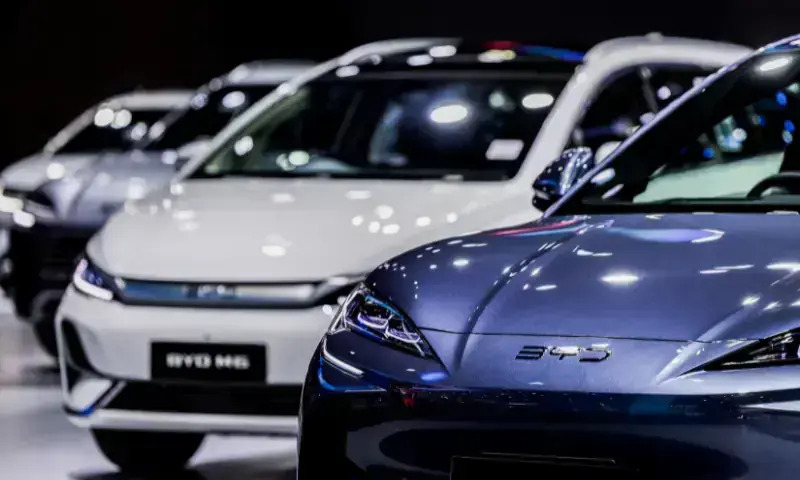
Hub Power Company Limited (Hubco) has announced that its upcoming electric vehicle assembly venture with Chinese automaker BYD will initially rely entirely on imported raw materials and completely knocked-down (CKD) kits. Management delivered this operational briefing to capital market participants and institutional investors, outlining a gradual multi-year strategy to transition toward domestic component sourcing.
According to an investment briefing note released by Topline Securities, the joint manufacturing facility is positioned to begin trial and commercial operations within four to five weeks, targeting an active rollout by mid-December. The joint venture aims to stabilize its initial production curve at a run rate of roughly 1,000 to 1,500 vehicles per month. Hubco reaffirmed its strategic target to achieve up to 80 percent vehicle localisation over the long term. This milestone is designed to scale down structural exposure to foreign exchange movements and capture operating efficiencies under Pakistan's existing automotive policy frameworks.
Commercial & Economic Implications
The planned reliance on imported inputs highlights the immediate pressure that new automotive ventures exert on Pakistan's foreign exchange landscape. Because initial output depends on imported components, short-term import bills within the automotive segment will increase before import-substitution benefits materialize. For supply chain operators, distribution networks, and industrial vendor industries, the transitional period limits immediate backward integration opportunities.
However, a sustained transition toward 80 percent localization could dramatically adjust the economics of electric mobility in Pakistan. By gradually integrating domestic auto-part vendors—including metal casting, wiring harnesses, plastic trim, and domestic glass manufacturers—the project can compress the retail cost structure for new energy vehicles. If achieved, local component manufacturing will mitigate balance-of-payments vulnerabilities, shelter consumer pricing from international freight fluctuations, and stimulate medium-sized manufacturing clusters linked to automotive supply chains.
Related Intelligence: Government Raises Petrol and Diesel Prices in Fortnightly Fuel Revision
Stakeholder Perspectives & Market Reactions
Equities analysts and brokerage houses have welcomed the clear commissioning timeline, viewing the targeted production rate of 1,000 to 1,500 units per month as an ambitious yet achievable entry into Pakistan's premium and mid-tier passenger car categories. Financial analysts note that the mid-December commissioning date signals substantial progress on industrial physical infrastructure, validating Hubco's capital allocation beyond conventional power generation.
Auto-parts manufacturers and vendor associations, while supportive of the venture, have emphasized the necessity of concrete localization schedules. Local component producers argue that meaningful technology transfer agreements must accompany the project to develop genuine tier-one auto engineering capacity within Pakistan. Meanwhile, institutional auto buyers and corporate fleet operators have signaled strong interest in BYD’s commercial rollout, anticipating that reliable new energy vehicle options will lower long-term fuel costs amidst elevated domestic petroleum prices.
Forward Outlook & Key Watchpoints
The immediate milestone centers on operational commencement by mid-December, marking the official introduction of locally assembled BYD models. As production scales toward the monthly target of 1,500 vehicles, market watchers will evaluate inventory clearance, dealer network readiness, and charging infrastructure deployment across primary urban centers.
Subsequent phases will monitor the specific model portfolio introduced by BYD, focusing on market segments with enough unit volume to justify heavy tooling investments by local part manufacturers. Investors and regulatory bodies will track the timeline required to advance from complete import dependence to initial localization thresholds, a transition critical to stabilizing showroom pricing, safeguarding profit margins, and fulfilling the broader policy objectives of Pakistan's Electric Vehicle Policy.
Join Our Official WhatsApp Channel
Receive live commodity alerts, policy changes, and commercial intelligence directly on WhatsApp.