
Government and Opposition Talks Reach Deadlock Over PTI March
High-stakes negotiations between the Pakistani government and opposition concluded in a deadlock early Sunday morning, heightening political instability and raising concerns over upcoming public demonstrations.
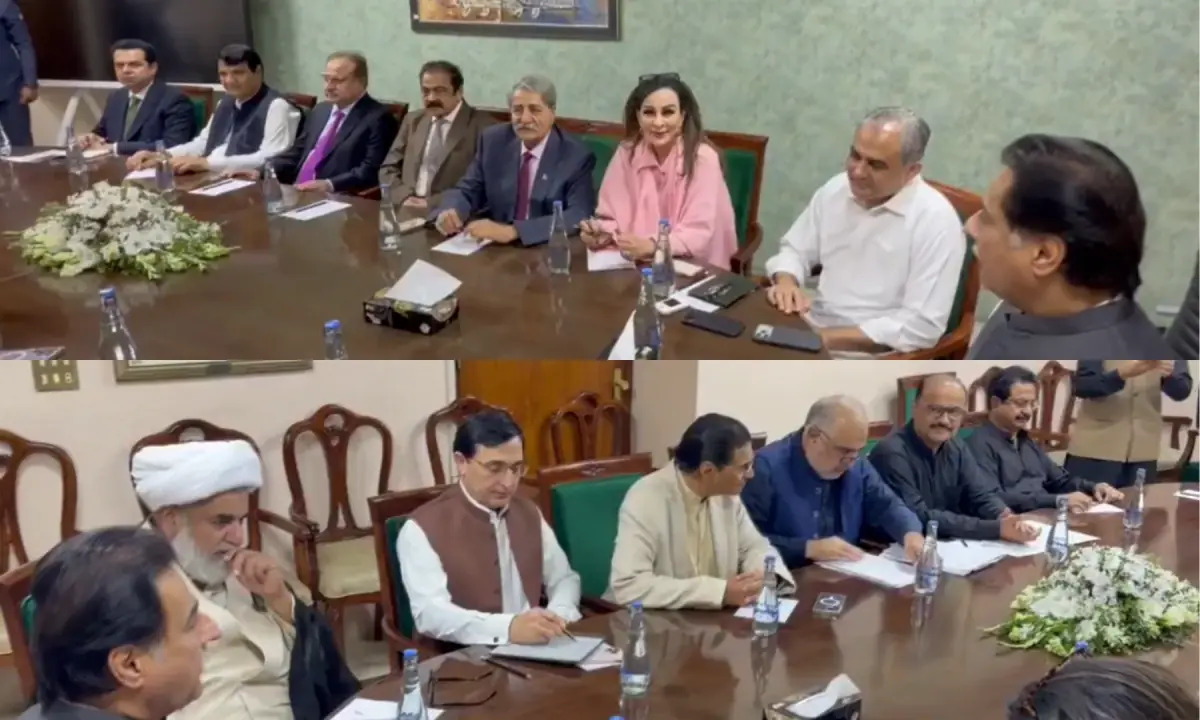
The Core Development
Hours-long negotiations between the federal government and the parliamentary opposition concluded in a definitive deadlock early Sunday morning following a protracted session at Parliament House in Islamabad. The high-stakes dialogue, which commenced shortly before 5:00 PM on Saturday, was primarily convened to address the Pakistan Tehreek-e-Insaf (PTI) party's fiercely contested plans for a major political march toward the federal capital scheduled for October 4.
Throughout the evening, a strict media blackout was observed by both negotiating delegations, signaling the delicate nature of the closed-door diplomacy. However, the veneer of cautious optimism shattered shortly before 3:00 AM when Senate Opposition Leader Allama Raja Nasir Abbas emerged to address waiting journalists. Speaking to the press outside Parliament House, Abbas confirmed that the marathon sessions had failed to produce any meaningful breakthrough, tersely summarizing the outcome as a complete deadlock.
When pressed by reporters regarding the specific friction points that derailed the consensus, Abbas noted that negotiations stumbled over several critical hurdles, chief among them being restrictions surrounding official and legal access to incarcerated PTI founder Imran Khan. Despite protracted deliberations on procedural concessions, administrative authorities refused to yield on critical visitation terms, rendering subsequent compromise impossible.
Commercial & Economic Implications
For Kalyar Traders and the broader business community across Pakistan, prolonged political gridlock translates directly into severe commercial volatility. The looming threat of capital-wide demonstrations, road closures, and heightened security lockdowns typically paralyzes wholesale and retail distribution networks, stalling commercial throughput in vital economic corridors such as Lahore, Faisalabad, and Rawalpindi.
Supply chains remain acutely vulnerable to sudden disruptions during political unrest, with freight forwarders reporting immediate spikes in transport turnaround times and escalating fuel surcharges. Retail markets, already grappling with depressed consumer purchasing power and persistent inflationary pressures, face acute inventory bottlenecks as merchants adopt a defensive posture. Prolonged uncertainty diminishes investor confidence, dampens capital expenditure, and risks derailing fragile macroeconomic stabilization efforts currently monitored by international financial institutions.
Related Intelligence: Government and Opposition Hold Late-Night Talks Over PTI March
Stakeholder Perspectives & Market Reactions
Chambers of commerce and major industrial bodies have expressed profound apprehension over the breakdown in political dialogue, warning that escalating street agitation will inflict collateral damage on an economy striving for structural recovery. Retail associations in urban centers have called upon political leadership to prioritize national economic stability over partisan posturing, emphasizing that recurring shutdowns and containerized city blockades inflict devastating losses on daily wage earners and small-scale traders.
Legal experts and constitutional analysts observing the standoff note that the failure of parliamentary mechanisms to resolve political grievances forces stakeholders back onto adversarial paths. Official statements from government representatives continue to emphasize the primacy of the rule of law and public order, while opposition leaders maintain that peaceful mobilization remains a fundamental democratic prerogative.
Forward Outlook & Key Watchpoints
Rhetoric from both sides indicates that confrontation is increasingly likely as the October 4 march date approaches. Financial analysts and corporate risk consultants are closely monitoring several key indicators over the coming days, including federal deployment levels in Islamabad, potential preemptive arrests of political cadres, and the operational status of major commercial arterial routes.
Key watchpoints for the business community include the potential implementation of emergency containment measures, telecommunications restrictions in major urban centers, and any emergency judicial interventions that might alter the trajectory of the protest movement. Unless a last-minute backchannel initiative succeeds in bridging the divide, commercial markets must brace for heightened operational disruption and prolonged regulatory uncertainty.
Join Our Official WhatsApp Channel
Receive live commodity alerts, policy changes, and commercial intelligence directly on WhatsApp.