
Government and Opposition Hold Late-Night Talks Over PTI March
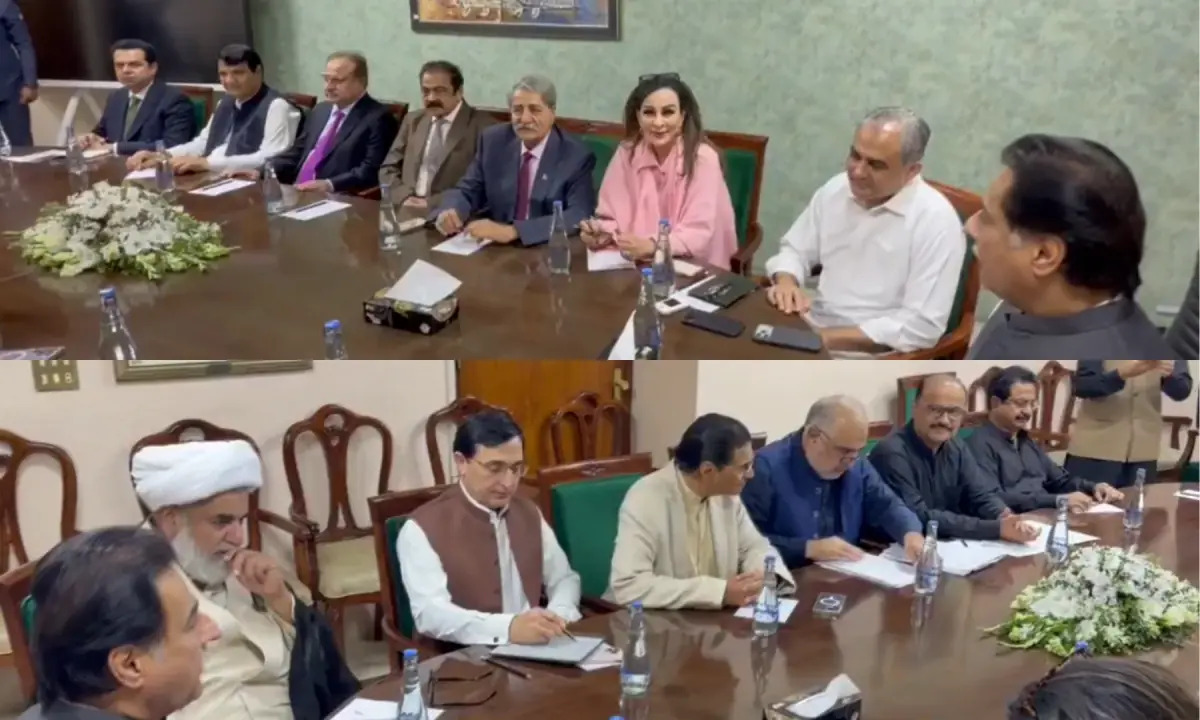
Government and opposition delegations held intensive late-night negotiations at Parliament House in Islamabad to address political tensions surrounding the upcoming PTI march.
The Core Development
A flurry of intense political activity descended upon Parliament House on Saturday night as a second round of high-stakes negotiations between the government and opposition extended well past midnight. The closed-door discussions, which commenced shortly before 5:00 PM, centered primarily on the Pakistan Tehreek-e-Insaf (PTI) and its contentious plans for an upcoming march toward the federal capital scheduled for October 4. Both delegations maintained a strict media blackout throughout the proceedings, agreeing not to brief reporters until all contentious matters reached a definitive conclusion.
Visuals broadcast by major news networks after 9:30 PM captured Interior Minister Mohsin Naqvi, a key member of the government delegation, departing Parliament House clutching an official document. Media reports indicated that the document contained preliminary framework proposals aimed at averting a major confrontation in Islamabad. Security apparatuses across the federal capital remain on high alert, with law enforcement agencies reviewing contingency plans to secure critical infrastructure while political interlocutors attempt to forge a compromise behind closed doors.
Commercial & Economic Implications
For Kalyar Traders and the broader business community across Pakistan, prolonged political instability and looming street agitation carry severe commercial costs. Major commercial hubs, wholesale markets in Raja Bazaar, and retail centers in Islamabad and Rawalpindi face immediate risks of disruption. Containerized roadblocks and security lockouts severely hamper urban mobility, directly impacting wholesale distribution networks and daily retail turnover. Supply chains moving goods from Karachi ports to northern markets encounter costly delays, pushing up transportation expenses and aggravating inflationary pressures on essential commodities.
Furthermore, investor sentiment remains acutely sensitive to political friction. Unresolved political standoffs undermine ongoing fiscal stabilization efforts supported by international financial institutions. Retailers and small business owners report dampened consumer confidence, as cautious shoppers curtail discretionary spending amidst fears of civil unrest and sudden market closures. Sustained disruptions threaten profit margins across the manufacturing, wholesale, and retail sectors, complicating trade recovery trajectories.
Related Intelligence: Government and Opposition Hold High Stakes Talks Ahead of October March
Stakeholder Perspectives & Market Reactions
Business councils, trader associations, and industrial bodies have voiced deep apprehension regarding the escalating political rhetoric. Representatives from various chambers of commerce have issued joint appeals urging both political factions to prioritize national economic stability over partisan confrontation. Business leaders argue that repeated rounds of political agitation inflict irreversible damage on commercial activities, particularly when inflation has already squeezed purchasing power.
Legal experts and constitutional analysts monitoring the developments note that while political engagement is a welcome departure from outright confrontation, the lack of transparent communication leaves markets vulnerable to rumors and panic. Public response remains divided, with citizens expressing fatigue over perpetual political polarization and its direct fallout on daily commuting, business operations, and economic well-being. Official statements from government economic managers continue to project resilience, yet commercial stakeholders demand tangible guarantees of uninterrupted business operations.
Forward Outlook & Key Watchpoints
As the political landscape approaches the pivotal October 4 timeline, key watchpoints for the business community include the official outcome of the parliamentary negotiations and any finalized route agreements for the planned march. Market participants will closely monitor security deployments, potential container placements on major trade arteries, and announcements regarding temporary market closures in the twin cities.
Policy enforcement measures taken by district administrations will dictate whether commercial supply chains remain resilient or face severe bottlenecks. For Kalyar Traders and commercial operators nationwide, navigating the coming days requires maintaining flexible inventory buffers, monitoring real-time logistical updates, and preparing for localized market disruptions as the political standoff reaches its critical juncture.
Join Our Official WhatsApp Channel
Receive live commodity alerts, policy changes, and commercial intelligence directly on WhatsApp.