
French Urban Unrest Exposes Deep Divisions and Economic Fragility
Widespread urban riots across France have laid bare profound political fractures and triggered severe economic disruptions across European retail, transport, and insurance sectors.
Geopolitical & Core Developments
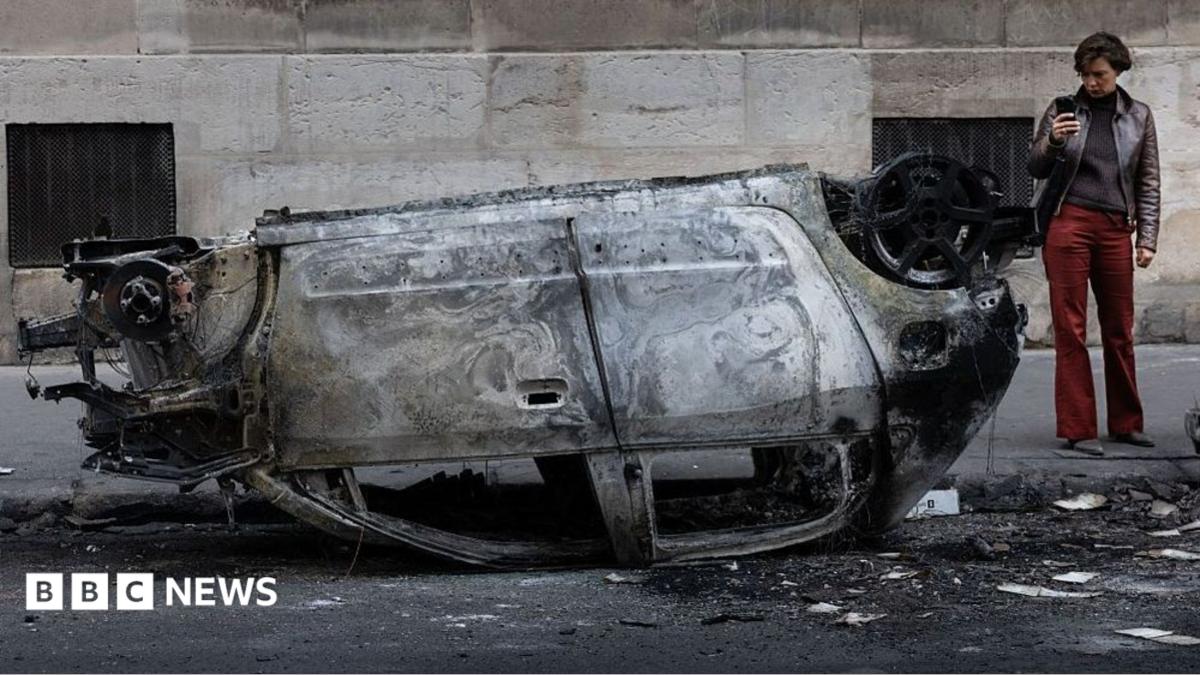
The French Republic has been thrust into acute sociopolitical turmoil following consecutive nights of coordinated urban unrest across major metropolitan centers, including Paris, Marseille, Lyon, and Toulouse. Triggered by a contentious fatal police shooting during a traffic stop in the Parisian suburb of Nanterre, the violence rapidly metastasized beyond localized protests into widespread vandalism, public infrastructure destruction, and clashes with security apparatuses. President Emmanuel Macron and his administration deployed tens of thousands of police and tactical units, alongside armored vehicles, in an effort to restore municipal order.
However, the crisis has highlighted severe ideological fault lines within the French political establishment. The conservative and right-wing blocs have framed the disturbances as a breakdown of civic law and order, demanding stricter judicial enforcement, extended curfews, and expanded municipal police powers. Conversely, left-leaning coalitions and human rights advocates argue that the violence is the inevitable explosion of decades-long systemic marginalization, socio-economic disenfranchisement, and institutional friction between law enforcement and immigrant-dense banlieues. This fundamental disagreement over root causes has stalled consensus-building in Paris, diminishing the administration's political capital at a time when domestic stability is vital for governance.
[Global Trade](/news/us-midterm-elections-geopolitical-impact-global-trade) & Economic Ripples
The economic fallout extends significantly beyond damaged storefronts, generating measurable friction across Western European commercial channels. France's primary retail federation, MEDEF, estimated direct commercial losses at over one billion euros, encompassing the looting of hundreds of bank branches, grocery outlets, and consumer goods distribution facilities. The domestic insurance sector faces substantial indemnity claims, placing upward pressure on commercial underwriting premiums throughout the European Union.
Logistics and intra-European freight transport encountered localized bottlenecks, as night curfews and municipal transit shutdowns interrupted supply chain networks feeding cross-border manufacturing hubs. The French hospitality and tourism industries, which account for roughly eight percent of the nation's gross domestic product, recorded a surge in international booking cancellations ahead of the peak summer season. Furthermore, sovereign risk perceptions edged higher in European debt markets, widening the yield spread between French OATs (Obligations Assimilables du Trésor) and German Bunds, reflecting market skepticism regarding the government's ability to implement fiscal austerity measures amid escalating domestic crisis-management expenditures.
Related Intelligence: Trump Pressures Kyiv for Swift Settlement Amid Escalating Diplomatic Strains
International Reactions & Diplomatic Stances
The global response has blended diplomatic concern with geopolitical scrutiny. The Office of the United Nations High Commissioner for Human Rights issued an official statement urging French authorities to address systemic discrimination and excessive force in policing. In contrast, the French Ministry of Foreign Affairs swiftly rejected the assertion, characterizing allegations of institutional bias as unfounded.
Diplomatic allies across the European Union, notably Germany, closely monitored the security situation, with Chancellor Olaf Scholz expressing concern over the instability within the bloc's second-largest economy. Key global embassies—including those of the United States, China, and the United Kingdom—issued travel advisories cautioning citizens against non-essential transit through affected French metropolitan zones. Furthermore, international credit rating agencies signaled that sustained domestic volatility could hamper long-term structural economic reforms and deficit-reduction targets.
Strategic Outlook & Future Scenarios
Moving forward, the French government faces a delicate balancing act between restoring civic security and addressing deep-seated socioeconomic grievances. If the administration leans entirely toward enhanced securitization without enacting substantive integration and municipal reinvestment reforms, the probability of recurring flashpoints remains elevated. The ongoing friction threatens to accelerate the momentum of populist and nationalist factions ahead of upcoming European parliamentary elections.
On the international stage, sustained instability could diminish Paris's diplomatic leverage within the European Union and NATO, as domestic crises distract from key geopolitical initiatives, including European defense autonomy and strategic economic policy. Unless the state implements targeted urban development and policing overhauls, France risks protracted social volatility, clouding its long-term economic outlook and foreign investment profile.
Join Our Official WhatsApp Channel
Receive live commodity alerts, policy changes, and commercial intelligence directly on WhatsApp.