
French Student Protests Expose Systemic Cracks in Public Education
Mass student demonstrations across France over crumbling school infrastructure and teacher shortages underscore deep-seated socioeconomic inequities in public service funding.
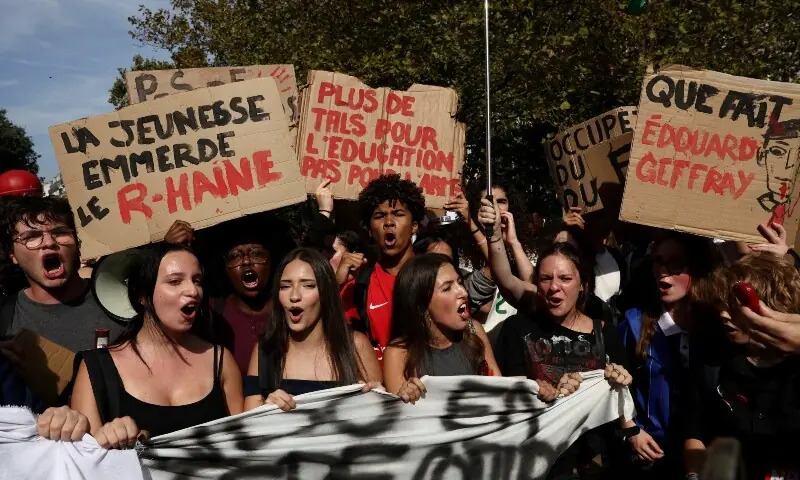
The Core Development
A wave of student-led protests has swept across France, transforming localized grievances into a formidable national movement. Sparked by 17-year-old Maisa and her peers in the deprived northern Paris suburb of Aubervilliers, tens of thousands of students have mobilized to demand immediate government intervention over crumbling school infrastructure, severe classroom overcrowding, and chronic teacher shortages. At the epicenter of the movement is the Lycee Le Corbusier in the Seine-Saint-Denis department, where protesters articulated a grim reality of systemic institutional neglect.
Students detailed harrowing accounts of academic deprivation, including sitting for critical national examinations without assigned subject teachers. The demonstrations quickly expanded beyond Paris, paralyzing secondary education institutions nationwide as police and student groups clashed in urban centers. The protests bring to light structural deficiencies that have festered for years within France’s public education system, disproportionately impacting working-class communities and immigrant-heavy banlieues.
Commercial & Economic Implications
While ostensibly an educational crisis, the French student protests carry profound economic implications for global markets and trade observers, including trade networks in emerging economies like Pakistan. Public sector underfunding and social unrest directly influence consumer confidence, currency stability, and labor market productivity within the Eurozone. For Pakistani textile and agricultural exporters relying on steady European consumer demand, sustained domestic instability in France threatens retail trade channels and wholesale distribution networks.
Furthermore, the fiscal burden of addressing infrastructural deficits and public sector wage demands places immense pressure on France's national budget. As European governments grapple with inflationary pressures and tightening fiscal policies, increased public spending on education could necessitate reallocations affecting international trade pacts, foreign direct investment inflows, and broader macroeconomic stability across the continent.
Related Intelligence: US Capital Punishment Scrutiny Reshapes International Trade and Diplomatic Norms
Stakeholder Perspectives & Market Reactions
Official government responses have struggled to quell the widespread outrage, as education ministry officials attempt to balance fiscal austerity measures with urgent demands for institutional reform. Teacher unions and labor federations have thrown their weight behind the student movement, amplifying criticism of government resource allocation and demanding immediate emergency funding for suburban schools.
Legal experts and civil rights organizations have also raised concerns regarding law enforcement tactics during the clashes, warning that heavy-handed responses risk exacerbating social tensions. Meanwhile, business associations and market analysts are closely monitoring the political fallout, fearing that prolonged social unrest could disrupt domestic commerce, dampen retail trade during peak buying seasons, and undermine investor confidence in the French economy.
Forward Outlook & Key Watchpoints
As the movement maintains momentum, policymakers in Paris face mounting pressure to deliver concrete legislative solutions before the unrest severely damages the administration's political credibility. Key watchpoints include upcoming emergency parliamentary debates on educational budgets, potential nationwide general strikes called by allied labor unions, and the government's willingness to commit substantial capital expenditures to marginalized districts.
For international observers and trade partners, the resolution of this crisis will serve as a critical indicator of Europe's capacity to manage domestic socioeconomic friction without resorting to destabilizing fiscal measures. The outcome will ultimately dictate whether France can successfully reform its public institutions or face prolonged structural stagnation.
Join Our Official WhatsApp Channel
Receive live commodity alerts, policy changes, and commercial intelligence directly on WhatsApp.