
Federal Government Warns Over Security Risks Amid KP Political Crisis
Federal Minister Amir Muqam criticized the PTI-led KP government for severe security deterioration while ruling out immediate governor's rule.
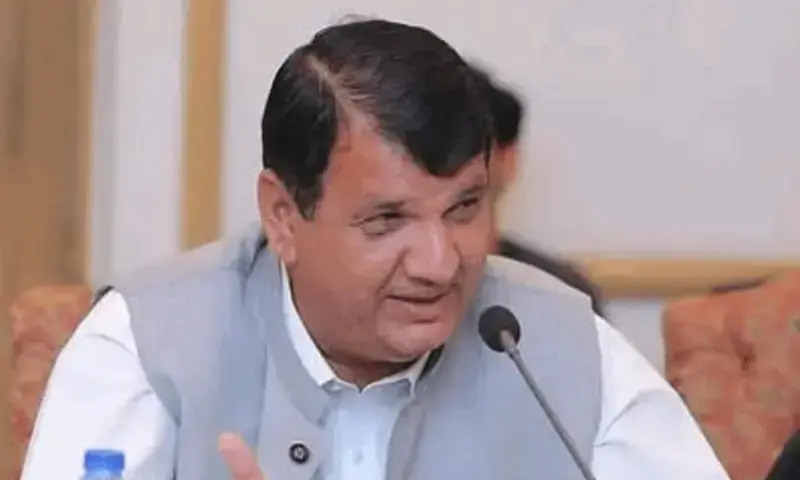
The Core Development
Minister for Kashmir Affairs and Gilgit-Baltistan Amir Muqam launched a scathing critique against the Pakistan Tehreek-e-Insaf (PTI) administration governing Khyber Pakhtunkhwa. Speaking during a comprehensive press conference on Monday, Muqam addressed the escalating political tensions surrounding the opposition's march toward Islamabad and the deteriorating law and order framework within the province. While the federal government has repeatedly faced demands or speculations regarding the imposition of governor's rule or a state of emergency, Muqam clarified the administration's current stance, noting that political expediency currently outweighs drastic constitutional interventions.
However, Muqam did not mince words regarding the severity of the situation on the ground. He emphasized a stark dichotomy between conventional political maneuvering and the paramount authority of the state, asserting that political processes can only survive if state writ remains intact across vulnerable border regions. The minister alleged that the provincial government has fundamentally failed to maintain public order, leaving local populations exposed to mounting security threats as day-to-day governance collapses under political confrontation.
Commercial & Economic Implications
Prolonged political instability and security deficits in Khyber Pakhtunkhwa carry profound economic consequences for Pakistan's domestic trade and regional supply chains. As a critical corridor for commercial transit linking domestic markets with western trade routes, any breakdown in regional security immediately threatens wholesale distribution networks, retail trade stability, and transport logistics. Business sentiment across Peshawar and surrounding commercial hubs remains subdued as merchants grapple with the indirect costs of highway blockades, localized curfews, and persistent political uncertainty.
Furthermore, investor confidence is critically dependent on predictable governance and secure transit corridors. Persistent friction between federal authorities and the provincial apparatus disrupts agricultural and industrial supply chains, ultimately aggravating inflationary pressures on essential commodities. For Kalyar Traders and the wider business community operating within Pakistan, the erosion of administrative control translates directly into higher operational risks, escalated insurance premiums for freight transport, and constrained market liquidity in peripheral economic zones.
Stakeholder Perspectives & Market Reactions
Business councils, trader associations, and industry bodies have expressed deep apprehension over the ongoing confrontation between the federal administration and the KP provincial government. Representatives from major commercial chambers have repeatedly urged political leadership to insulate economic activity from partisan conflict. Trade leaders emphasize that recurring political marches and subsequent administrative clampdowns severely disrupt daily retail operations and inter-provincial commerce.
In official circles, federal representatives maintain that national security must supersede partisan interests. During recent parliamentary and backdoor negotiations aimed at defusing the Islamabad march crisis, government negotiators pressed opposition stakeholders to achieve consensus on counter-terrorism strategies. Legal and constitutional experts observing the discourse note that while governor's rule remains an instrument of last resort under the Constitution, its implementation carries heavy political costs that the ruling coalition is currently hesitant to bear.
Forward Outlook & Key Watchpoints
As political actors navigate the aftermath of the recent opposition protests, several critical indicators will determine the trajectory of governance in Khyber Pakhtunkhwa. Key watchpoints include the federal government's threshold for administrative intervention, the resumption of formal dialogue between political rivals on security policy, and the practical measures implemented by provincial law enforcement to reclaim operational writ in sensitive districts.
Market participants and corporate stakeholders will closely monitor legislative developments and security updates over the coming weeks. The ability of federal and provincial authorities to forge a cohesive framework against terrorism without destabilizing local governance structures will dictate commercial confidence and economic resilience across the region heading into the next fiscal quarter.
Join Our Official WhatsApp Channel
Receive live commodity alerts, policy changes, and commercial intelligence directly on WhatsApp.