
ECC Raises Import Duties on Tyres and Bike Parts Amid IMF Accord
The Economic Coordination Committee has hiked duties on imported tyres and motorcycle parts while approving major supplementary grants following the recent IMF staff-level agreement.
The Core Development
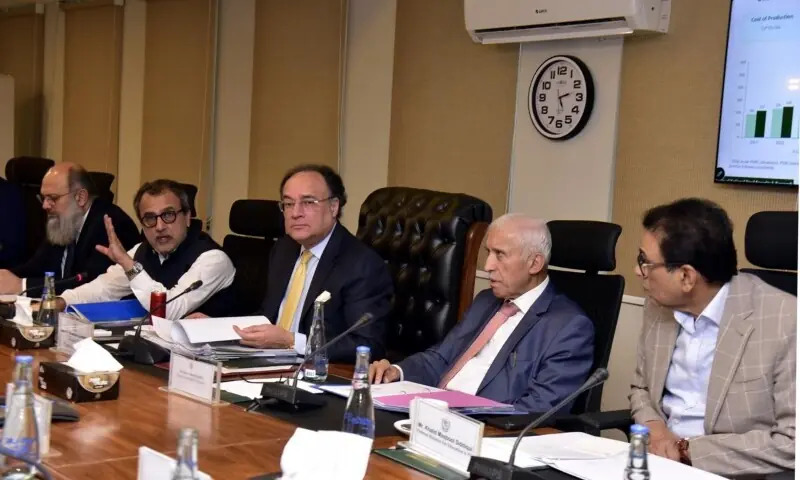
In a decisive move following the successful conclusion of the first quarter of the fiscal year and a staff-level agreement with the International Monetary Fund (IMF), the Economic Coordination Committee (ECC) of the cabinet announced critical tariff adjustments and fiscal measures. Presided over by Finance Minister Muhammad Aurangzeb in Islamabad, the high-level meeting addressed structural trade protections and domestic liquidity management.
Central to the ECC's decisions was the escalation of additional customs duties (ACD) on specific imported goods that compete directly with domestic manufacturing. The administration increased the ACD from 4 percent to 11 percent on the importation of radial tyres and motorcycle parts produced locally. Furthermore, the committee imposed a stringent tariff hike from 11 percent to 31 percent on motorbike parts imported directly by local manufacturers, signaling a aggressive push toward import substitution and domestic industrial safeguarding.
Beyond tariff revisions, the cabinet committee sanctioned crucial financial interventions, including the approval of first-loss coverage mechanisms tailored for small and medium enterprises (SMEs) and small farmers. Additionally, the ECC authorized the strategic investment of Export Development Fund (EDF) resources into government securities and greenlighted Rs57.85 billion in supplementary grants to meet budgetary adjustments.
Commercial & Economic Implications
These sweeping tariff adjustments carry profound ramifications for Pakistan's retail trade, wholesale distribution networks, and inflationary trajectory. By tripling the additional customs duty on specific motorbike parts for local assemblers, input costs for domestic two-wheeler manufacturers are set to rise. Industry analysts warn that these elevated production overheads will likely trickle down to retail markets, potentially driving up motorcycle prices for everyday consumers and fleet operators.
Concurrently, the hike on radial tyre imports aims to shield domestic tyre producers from foreign competition, particularly from subsidized or lower-cost Asian imports. However, wholesale traders caution that restricted supply and higher landed costs could spur inflationary pressures within the automotive aftermarket sector. While the policy successfully incentivizes local manufacturing and protects domestic industrial employment, it risks constraining consumer choice and inflating maintenance costs for commercial transporters and private vehicle owners alike.
Related Intelligence: کراچی میں غیر ملکی کرنسی کی غیر قانونی سمگلنگ کے خلاف بڑا کریک ڈاؤن، اہم شواہد برآمد
Stakeholder Perspectives & Market Reactions
Domestic manufacturing associations have largely welcomed the ECC's aggressive stance on tariff protection, viewing the move as a long-overdue shield against cheap imports that have historically undermined local production capacities. Representatives from the engineering and automotive vendor industries noted that enhanced duty structures will encourage foreign direct investment and local technological integration.
Conversely, importer syndicates and retail associations have voiced apprehension regarding the steepness of the hike—particularly the jump to 31 percent for local manufacturers' raw inputs. Market stakeholders argue that abrupt fiscal policy shifts complicate long-term inventory planning and pricing strategies. Meanwhile, financial experts are scrutinizing the simultaneous approval of Rs57.85 billion in supplementary grants, evaluating how these expenditures align with the stringent fiscal consolidation targets mandated by the recent IMF accord.
Forward Outlook & Key Watchpoints
As the Federal Board of Revenue and the Ministry of Finance operationalize these revised tariff schedules, market observers will closely monitor enforcement mechanisms at major ports of entry. Key watchpoints include the quarterly inflation readings, the volume of legal versus grey-market tyre imports, and the actual disbursement pace of the approved SME and agricultural first-loss coverage schemes.
Furthermore, the integration of Export Development Fund resources into government securities will be tracked to ensure export-oriented subsidies remain adequately funded. The success of these measures will ultimately be judged by their ability to balance industrial protection with macroeconomic stability under the watchful eye of international lenders.
Join Our Official WhatsApp Channel
Receive live commodity alerts, policy changes, and commercial intelligence directly on WhatsApp.