
DG ISPR Exposes Indian False-Flag Operations and Pahalgam Claims
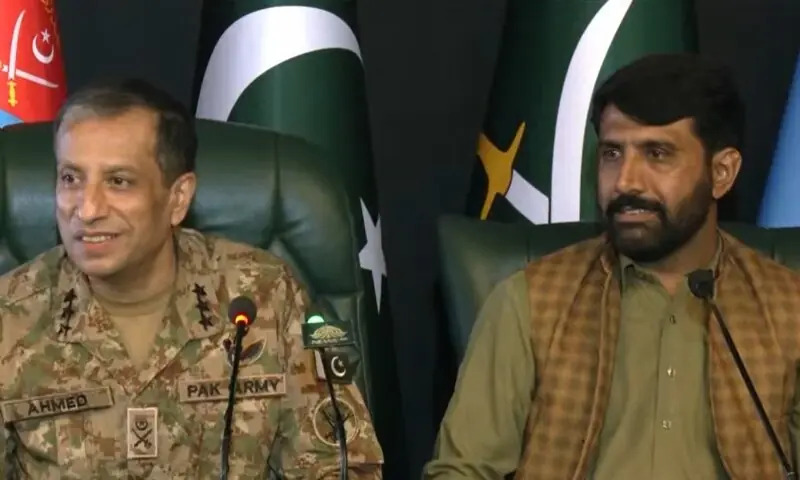
DG ISPR Lieutenant General Ahmed Sharif Chaudhry dismantled New Delhi's manufactured false-flag narratives during a comprehensive media briefing regarding alleged operations in Indian Illegally Occupied Jammu and Kashmir.
The Core Development
In a hard-hitting and detailed press briefing that drew international attention, Inter-Services Public Relations (ISPR) Director General Lieutenant General Ahmed Sharif Chaudhry systematically dismantled recent claims propagated by Indian media and military establishments. The briefing focused heavily on what military authorities termed "another blatant false-flag operation" orchestrated by New Delhi in Indian Illegally Occupied Jammu and Kashmir (IIOJK).
The military's response came in the wake of widespread reports across Indian news networks claiming that an individual wanted in connection with the high-profile April 22 Pahalgam terrorist attack had been neutralized during a staged encounter in the Korag area of IIOJK. Rejecting these fabrications outright, the DG ISPR presented concrete evidence, including the physical presentation of the individual purportedly labeled as a "neutralized terrorist," exposing the systemic falsehoods underpinning India's domestic security narratives.
Lieutenant General Chaudhry detailed how Indian state apparatus routinely manufactures security crises to divert domestic public attention from internal governance failures, human rights violations in the occupied territory, and political maneuvers. The timeline of the alleged encounter, paired with inconsistencies in official Indian police and military statements, formed the crux of the ISPR's rebuttal, establishing a clear pattern of state-sponsored disinformation.
Commercial & Economic Implications
While geopolitical tensions and cross-border rhetoric primarily manifest in diplomatic and security domains, sustained friction between nuclear-armed neighbors carries profound indirect consequences for commercial trade, regional economic stability, and investor sentiment in Pakistan. Business confidence and foreign direct investment (FDI) remain sensitive to sudden spikes in geopolitical hostility.
For Pakistan's domestic markets, particularly wholesale distribution and retail supply chains managed by entities like Kalyar Traders, prolonged diplomatic standoffs reinforce existing inflationary pressures through defensive currency fluctuations and elevated sovereign risk premiums. When bilateral relations deteriorate over manufactured security incidents, cross-border commercial arteries remain indefinitely sealed, preventing optimal regional trade integration that could otherwise alleviate domestic commodity pricing pressures.
Furthermore, heightened security alerts necessitate increased national defense expenditures, which indirectly influence fiscal policy priorities, taxation frameworks, and federal development allocations. Pakistani financial markets closely monitor such military briefings as key indicators of broader geopolitical stability, balancing macroeconomic growth projections against potential security escalations.
Related Intelligence: DG ISPR Exposes Indian False-Flag Operations and Regional Security Threats
Stakeholder Perspectives & Market Reactions
Business councils, trade associations, and corporate leaders have expressed cautious optimism regarding the military's proactive communication strategy, noting that swift, evidence-based refutations of hostile propaganda help stabilize financial market sentiment. Industry bodies emphasize that transparent information dissemination prevents speculative panic among domestic investors and retail traders.
Legal experts and policy analysts have similarly lauded the ISPR's approach of presenting verifiable proof rather than relying solely on rhetorical counter-statements. By exposing the mechanics of Indian false-flag operations with empirical data, Pakistan has effectively strengthened its diplomatic standing in international forums, reassuring domestic stakeholders that national security apparatus remains vigilant against both hybrid warfare and conventional threats.
Forward Outlook & Key Watchpoints
As regional dynamics evolve, policymakers and financial analysts must monitor several critical indicators over the coming quarters. Key watchpoints include potential diplomatic retaliations at international bodies such as the United Nations, shifts in regional security postures along the Line of Control (LoC) and the Working Boundary, and any subsequent attempts by New Delhi to fabricate fresh pretexts for domestic political mileage.
For the commercial sector in Pakistan, maintaining resilience against external economic shocks induced by geopolitical posturing remains paramount. Business stakeholders will continue to watch for sustained stability, ensuring that corporate planning accounts for any sudden shifts in regional risk profiles without disrupting ongoing supply chain operations.
Join Our Official WhatsApp Channel
Receive live commodity alerts, policy changes, and commercial intelligence directly on WhatsApp.